

Earth Day – A New Story
The Denton UU Fellowship
April 19, 2026
The human species is perhaps 200,000 years old. For our first 190,000 years, we were rather insignificant, at least on a global scale. If we altered our environment in ways that proved harmful, we simply moved on to a new undisturbed land and let Nature reclaim and restore what we had damaged.
The industrial revolution and the scientific developments that followed changed all that. Starting about 300 years ago, the human population began to grow at a faster rate, a trend that has continued exponentially since the middle of the 20th century. Now we can modify our environment in ways that no creature – human or otherwise – could have imagined in the past.
As someone who likes electricity, a reliable food supply, modern medicine, and the dramatic increase in life expectancy that science and technology has brought, I see this as a good thing. But it hasn’t been entirely a good thing. “Progress” left behind destruction and waste far beyond Nature’s ability to reclaim and restore, at least on a human time scale.
When William Blake wrote about “dark satanic mills” in 1804, he was expressing a deep spiritual dismay at air that was unhealthy to breathe, water that was unsafe to drink, and forests that had been destroyed to fuel it all… a theme J.R.R. Tolkien would repeat a century later in his descriptions of Mordor. The modern Pagan movement began in part as a response to this disconnection of humans from nature.
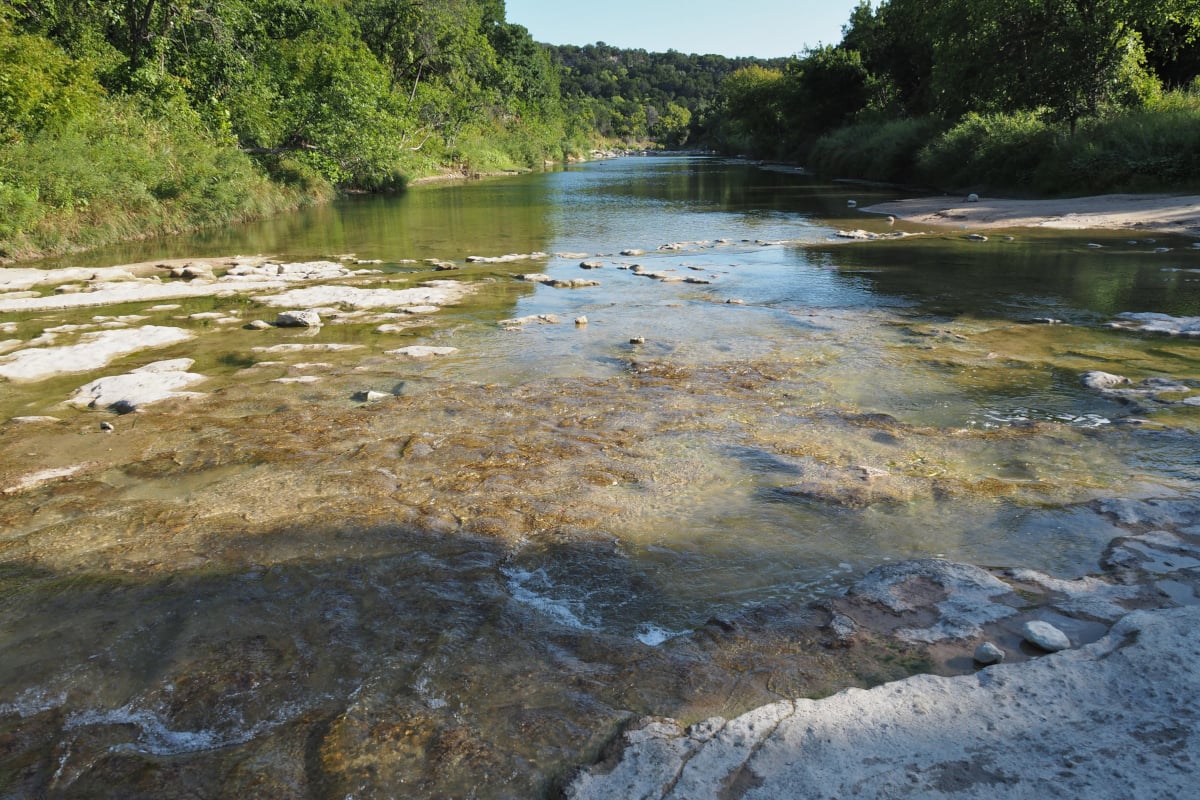
A river on fire
While there have always been people calling attention to the desecration of the Earth and pushing for reforms, the modern environmental movement is generally considered to have begun with the 1962 publication of Rachel Carson’s book Silent Spring. It detailed how the use of pesticides to eliminate disease-carrying mosquitos – a worthy goal – also resulted in the death of birds and other animals. The Cuyahoga River near Cleveland was so polluted it caught fire 12 times between 1868 and 1969. The last time was a galvanizing event for the new environmental movement, and for the country as a whole.
Wisconsin Senator Gaylord Nelson had an idea to use the methods and energy of the anti-war movement to raise awareness and spur action around environmental concerns. He proposed a nationwide “teach-in” on college campuses. He and his associates picked April 22, 1970, and changed the name to Earth Day. The event was a success, and the momentum they generated led to the passage of the Clean Air Act, the Clean Water Act, and the creation of the Environmental Protection Agency. We’ve been celebrating Earth Day ever since.
Celebrating how far we’ve come
In recent years, many people have become cynical about Earth Day. We’ve failed to mitigate climate change caused by the burning of fossil fuels, much less reverse it. It doesn’t help that popular messaging puts the emphasis on individual action, as though any amount of reusable bags, paper straws, and electric cars can make up for the lack of action by governments and corporations. Celebrating the Earth in the middle of “all this” seems premature if not hypocritical.
But as a Pagan and a Unitarian Universalist, I think there’s value in celebrating Earth Day. It helps us remember how far we’ve come. In 1969, my home city of Chattanooga was named the dirtiest city in the United States for air pollution. By 1989 air quality finally met federal standards, and it’s continued to improve. Many of you are old enough to remember the crisis over the depletion of the ozone layer in the 1980s. We don’t hear much about it anymore – because collective action to remove ozone depleting chemicals from the atmosphere worked, and the ozone layer is mostly restored.
Earth Day is an opportunity to celebrate our progress, and to remind ourselves what we can do when we work together.
It’s also an opportunity for us to take a look at the stories we tell ourselves about the Earth, Nature, and our relationships with it all.
Growing up with an unhelpful myth
I grew up in a religion that said the Earth had been created in its current form six thousand years ago. Humans were the centerpiece, and were given “dominion” over it. At first it was perfect, and there was no death. But then two humans ate an apple they had been told not to eat everything went to hell.
This story is a myth. Now, a myth isn’t a story made up by people too “primitive” to understand science. A myth is a story that tells us who we are, where we came from, and how we should live. A myth is a story to live by. And as myths go this wasn’t a bad one.
“Why is life so hard?”
“Well, things used to be fine, and then we screwed it up.”
Which is a poetic way of saying “I don’t know either, but we have to deal with it, so let’s get back to work.” And that was fine until people forgot that these were stories to live by and not historical records to be read literally, and in doing so kept us from finding a myth better suited for our times.
The story of the Big Bang and evolution
We have a better story.
We have a story that says 14 billion years ago, all matter and energy were condensed into a point of infinite density. And then there was a Big Bang, and it all began to expand. And then some of that matter and energy began to condense into stars, and around the stars, planets. And on at least one of those planets – but probably a lot more than one – life began.
First as a single cell organism, then as more complicated life forms. Life began in the ocean, but at some point creatures left the sea and learned to breathe the air. And then some of them went back into the sea – those are the dolphins and whales. Somewhere around 5 to 7 million years ago, the human line diverged from the chimpanzee line. We’ve given those earliest humans names like Australopithecus and Homo habilis. As I mentioned earlier, our species, Homo sapiens, is only around 200,000 years old.
The science behind this is amazing, and fascinating, and supported by evidence. But what’s most important to us this morning are the stories it tells us.
Stories tell us who we are, where we came from, and how we should live. The stories of the Big Bang and of evolution tell us we weren’t placed on the Earth, we grew out of the Earth. We aren’t the center of the universe and we certainly aren’t the head. We’re one part out of many.
This isn’t the story many people want to hear. They want to hear that we’re special, that life is all about us, that we alone are made in the image of the divine.
We are made in the image of the divine. But so are the cats and dogs, the rabbits and birds, the trees and rivers and mountains. The Christian concept of Imago Dei isn’t wrong – it just doesn’t go far enough.
When we understand this new story, when we live by this new story, we understand that there was never a time when things were perfect. Death isn’t caused by sin, it’s caused by entropy. Death exists because nothing stays the same and the process that took me from a child to a teenager to an adult and now beyond doesn’t have an off switch.
Though perhaps, there’s a part of us that like matter and energy cannot be destroyed, but can only change forms when we leave this life for whatever comes next. That’s another sermon for another Sunday.
We don’t suffer because we sin – although we often suffer because we make bad decisions. We suffer because the world wasn’t created for us, not as a species and certainly not as individuals. The process that evolved humans also evolved lions and tigers and bears… and viruses. The fact that we have big brains and opposable thumbs and the capacity for language makes us unique, not special. Not favored. Not the center of any divine plan. Life isn’t all about us – don’t take it personally.
Great responsibility and a growing population
Most of us know the phrase “with great power comes great responsibility” from the Spiderman movies and the comic books that preceded it. The Quote Investigator website was unable to determine a definitive source, but it found numerous uses of that concept beginning in 1793. This is a modern phrase. But even the divine right of kings has always been moderated by the ancient principle of sovereignty: that with the right to rule comes the responsibility to rule rightly.
Our big brains, opposable thumbs, and capacity for language have made us the most powerful species on Earth. All species modify their environment, but none have modified it as dramatically – and at times, as destructively – as we have. Earth Day grew out of the realization that we had trashed our home, that we had made the Earth an unhealthy and unpleasant place for humans to live. Beginning to reverse that was the easy part.
The hard part is realizing that we have driven and are driving other species to extinction. There have been five great extinctions in the history of the Earth. We are in the beginning of a sixth, caused primarily by human activity. Burning fossil fuels and rising global temperatures is one cause, but so are our sheer numbers, which have grown from 1.6 billion in 1900 to 6 billion in 2000 to 8.3 billion today. We are crowding other species out of their habitats… as anyone who’s seen coyotes and bobcats in Texas suburbs understands.
The good news is that birth rates are falling in the West and in East Asia, though they’re still rising in Africa and the Middle East. It turns out that when women are empowered to make their own decisions, many choose to have fewer children. Or no children.
Unsurprisingly, there are some politicians and preachers who see this as a bad thing, either because they’re operating under the illusion that exponential growth can continue forever, because they fear being outnumbered by people they think are inferior, or simply because they don’t like empowered women and they want to force them back into the nursery and the kitchen.
A falling population presents challenges, but they’re challenges we’ve seen before. At the height of its empire, the city of Rome had over a million people. During the Dark Ages it was under 50,000, and it didn’t go over a million again until the 1930s. The Black Death reduced world population by 20% – once it was over, wages went up as employers had to compete for workers.
World population is still growing, but at least we see a way forward that doesn’t involve either mandatory population control or mass starvation.
The Gods show us how to succeed
The story of Earth Day, the story of the Big Bang and evolution, tell us that life isn’t all about us, that we’re nothing special. And for some people, that’s enough.
But some of us want to be special.
Part of being human is a deep desire to not just survive, but to succeed. We went from hunting and gathering to space travel because someone said “I can make things better.” And sometimes they did and sometimes they didn’t and sometimes they created unintended consequences, but they kept moving, kept changing, kept learning and growing.
When we look for examples of how to succeed, how to be special, we can look to the stories our ancestors told about their Gods and Goddesses. Now, I’m a Pagan and a polytheist. I see the Gods as real, individual persons. But like virtually all modern Pagans, I don’t see the stories our ancestors told about the Gods as scripture, and certainly not as something that’s literally true. These stories are myths – they help us understand who we are, where we came from, and how we should live. The value of these stories does not come from historicity. Rather, their value comes from the virtues they teach.
Perhaps no God is more relevant to Earth Day than Cernunnos, whose pendant I’m wearing this morning. He has no ancient stories and his name is recorded only once, on the Pillar of the Boatmen, a Latin and Gaulish sculpture near Paris that dates to the early first century of the Common Era. But he has many stories from our time, stories of first-hand encounters and stories of inspiration and wisdom. Our Gods are not frozen in a book. Cernunnos is for us the Lord of the Animals and the God of the Wild. He calls us to nurture the young, to care for the Earth, and to preserve wild places.
The Morrigan is the Irish Goddess of sovereignty, of battle, and of the aftermath of battle. When the Tuatha De Danann were oppressed by the Fomorians, it is she who said “let us undertake a battle of overthrowing.” As a Goddess of sovereignty, she reminds us that we have the right to rule our lives, and she demands that we rule them rightly, for the benefit of ourselves, our communities, and the world at large.
Odin is the Norse Allfather, who sacrificed himself to himself, hanging on the World Tree for nine nights to gain the knowledge of the runes. He was known to disguise himself as a lowly traveler, moving among his people to test their hospitality. Those who were generous would be rewarded. Those who were inhospitable would receive a rather different reward.
This is a UU Sunday service and in any case, Pagans don’t proselytize. What you believe about the many Gods is far less important than how you live your life, and especially how you treat all the many persons with whom you share this world, some of which are human and many of which are not. But whether you see the Gods as persons, as archetypes, or simply as characters in myths, their stories – both ancient and contemporary – can help us understand how to live lives that are meaningful and helpful. They show us that if we want to be special, it must because of what we do and how we live, not who we are. We can affirm the inherent dignity and worth of every person, and also choose to do the things that will make us extraordinary.
Time for humans to grow up
There is one more story we need to discuss this morning, and that’s the story told by some of the Earth Day cynics we talked about earlier. This story looks at the damage humans have done to the Earth and her many species, looks at our still-increasing numbers, looks at our propensity for short-term and self-centered thinking and action, and concludes that the Earth would be better off if humans went extinct. Some have gone so far as to say that Global Warming is a “fever” the Earth has developed to burn out the human “infection” and purify the Earth.
This is at best misguided and at worst is straight up misanthropy. Should humans go extinct – for whatever reason – it would create an opportunity for another species to dominate the Earth… just as the extinction of the dinosaurs created an opportunity for mammals, and eventually humans. But whatever species stepped into our place would be shaped by the same evolutionary forces that produced humans and human society. There is no reason to expect they would inherently be any more Earth-friendly than we are.
The best chance the Earth has of evolving intelligent, compassionate life is for humans to grow up.
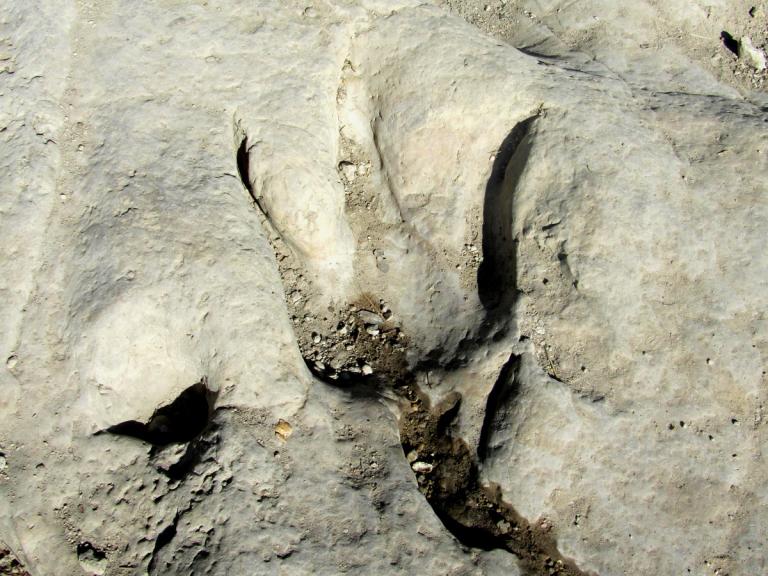
We forget how young we are. On a planet whose age is in the billions shared with species like crocodiles whose age is in the millions, our age is in the thousands. Civilization is in the hundreds. Our high-tech society is younger than many of us in this room.
We are not as far removed from the caves as we like to think… or from the trees.
Evolution moves slowly, whether the biological evolution that produces species or the social evolution that produces communities and nations. Darwin didn’t say it, but it’s still true: evolution doesn’t favor the strongest, but those most adaptable to change.
And so on Earth Day our mission is to give humanity a chance to grow up: to survive, to succeed, to show our fellow humans a better way to live – by living it.
And that begins by telling a new story about the Earth and our place on it.
Benediction
Humans were not placed on the Earth – we grew out of the Earth. Earth Day reminds us to care for the Earth because it is our home, but also to remember our responsibility as the most powerful species this planet has ever known. The best chance the Earth has of evolving intelligent, compassionate life is for humans to grow up – starting with us.
May your Earth Day and every day be full of hope for a better future, and full of action to make it so.





 Ad-Free & Subscriber Log-In