
 Seasons of Grace
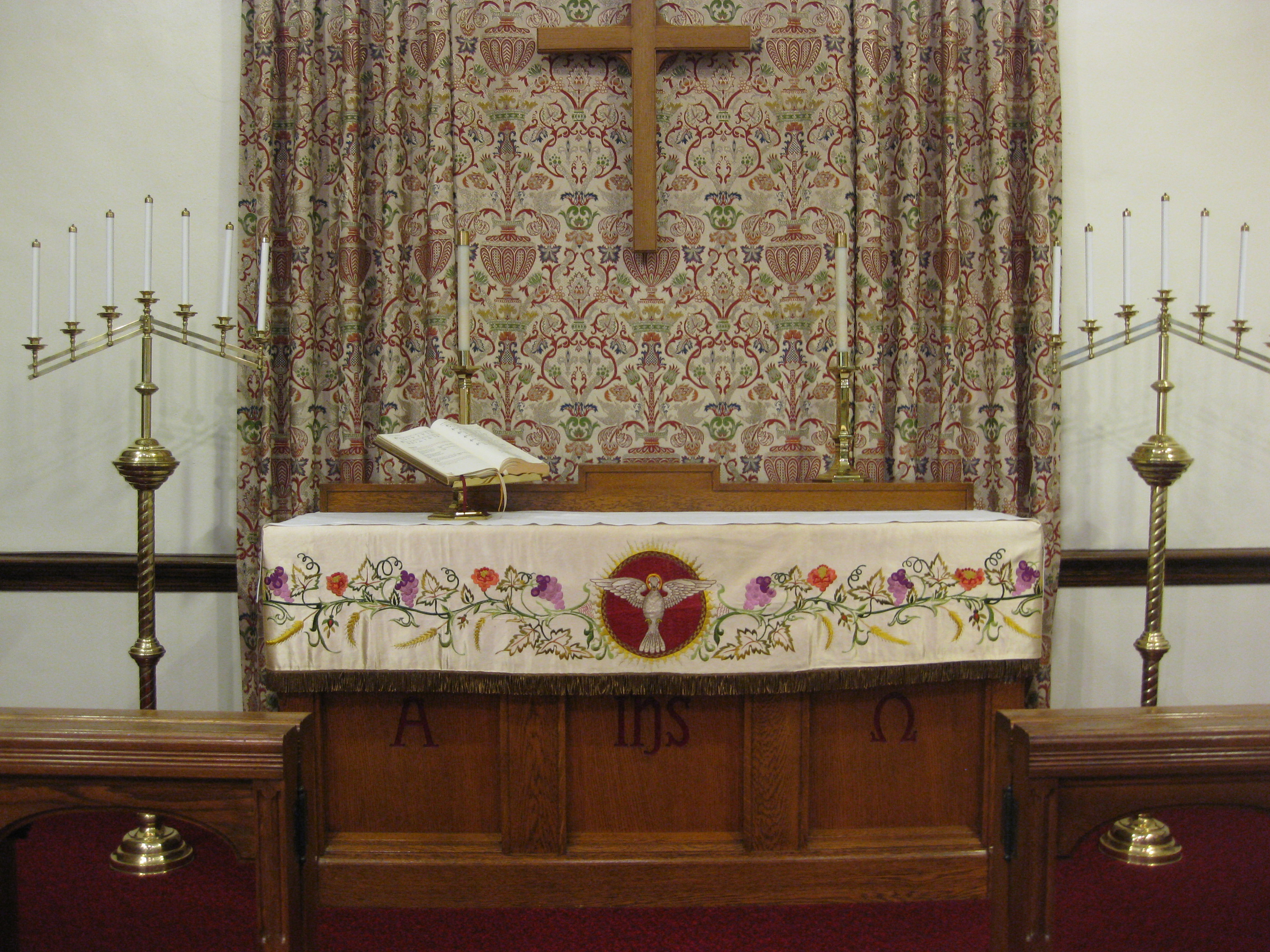
An altar cloth that’s been missing for nearly 70 years is being welcomed home to Germany on June 12.
A letter from Dr. Gary Rohwer, pastor of Atonement Lutheran Church in Dearborn, Michigan, accompanies the richly embroidered cloth and will be read to the Bundestag, the German parliament. The letter explains the cloth’s long history and requests that it be delivered to the Lutheran Church in Germany.
But how did the altar cloth cross the Atlantic and find a home in the suburbs of Detroit?
During World War II, the Allied Forces sent more than 1,000 planes to bomb Germany, including the Thuringian town of Jena. Most of the medieval town center was destroyed by British and American bombers, leaving more than 700 citizens dead and 2,000 injured.
Toward the end of the war, a young U.S. Army soldier stepped across the threshold of a bombed-out church in Jena. There, spread on the altar and exposed to the elements, was a piece of embroidered satin. The soldier, William Woodrow Anderson, grabbed the cloth and took it with him. Later, he’d mail the cloth and other war spoils to relatives back home in the States.
When the War ended, that soldier, William Woodrow Anderson, returned home and found a job in at Ford Motor Company in Dearborn, a suburb of Detroit. He married and raised a family, and occasionally attended services with his wife Grace at her church, Atonement Lutheran Church in Dearborn.
So it was that years later, after coming across the folded cloth, he decided to donate it to the church. The Detroit Free Press reports:
“I had no use for it, and somebody suggested I give that to the church,” said Anderson, now 92 and living in Sun City, Calif., adding that he didn’t realize the significance of the cloth in religious practice.
And so for most of the past century, the altar cloth, hand-embroidered with vines, grapes, flowers and a dove representing the Holy Spirit, has been displayed for military holidays at Atonement Lutheran Church in Dearborn….
On Sunday [May 31], the Dearborn church held a special ceremony at the end of its service to hand the cloth to Fred Hoffman, a German honorary consul. Hoffman will present it in Berlin on June 12 to German officials and church members with St. Michael’s Evangelical Church in Jena, the town where the cloth was taken.
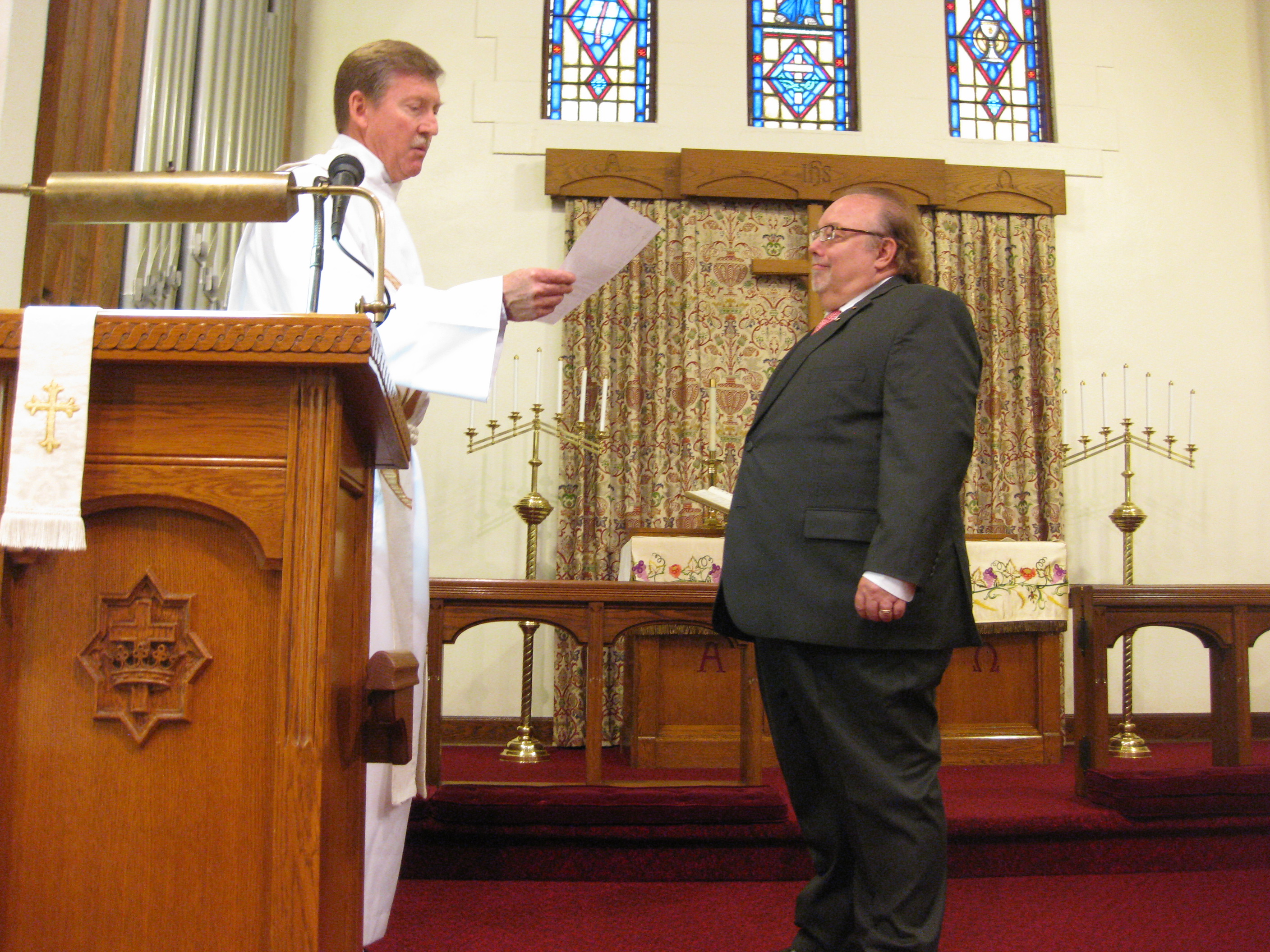
Hoffman saw the cloth as symbolic of the warm friendship which has developed between the United States and Germany. “For some reason,” he said,
“…the return of the cloth is symbolic of the countries developing into ‘best friends’ politically, socially and culturally. For some reason that cloth was preserved and saved all these years so that it could represent a message of atonement, reconciliation, observance of the 70th anniversary of the warm relationship that we now enjoy between the United States and Germany.”
Pastor Rohwer at Atonement Lutheran spoke in his letter about the cloth:
“The cloth eventually came into the possession of Atonement Lutheran Church, which realized its historic significance, and made use of it on its own altar only occasionally. But now it is our pleasure to repatriate this altar cloth, transferring it back to its original homeland and into the possession of the Evangelical Lutheran Church of Germany.”
The return of the altar cloth is timely: In 2017, Lutherans will observe the 500th anniversary of the Reformation.
Photo credit: Roger Kohtz, Atonement Lutheran Church
* * * * *
The Catholic perspective on the Lutheran Reformation is less celebratory.
While Luther highlighted problems within the Catholic Church and proposed needed reforms, Catholics believe that the resultant split into thousands of denominations is not a cause for joy.
Learn more in my post That They May All Be One: From the Reformation to Christian Unity.













 Ad-Free & Subscriber Log-In