
 Kelley Mathews
How can mistakenly believing a historical urban legend lead to a wrong theology? Examples?
Great question. We deal with a lot of issues that have doctrinal and practical implications. For example, we encounter a lot of people who believe the Lord’s Supper was originally just a potluck or “love feast” and have therefore jettisoned a regular observance of the bread and cup in their weekly worship services. Or some have bought into the myth that certain central doctrines of the faith like the trinity or substitutionary atonement developed centuries after the New Testament, thus leading some to think, “Well, if the Christians of the first few centuries didn’t believe these things, then they must not be important to the Christian faith.” Because of that, we need to set the record straight on a few dozen myths and legends.
What is your favorite legend in the book?
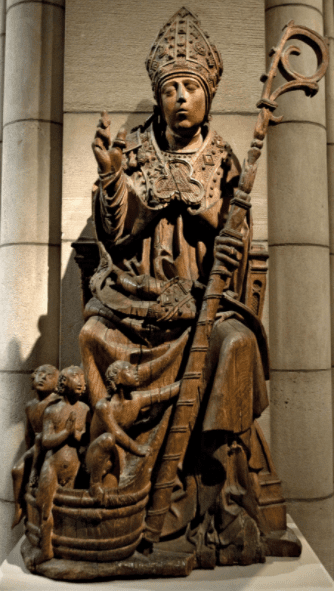
We’ll each answer this one. For me (Svigel), even though we include a lot of vital doctrinal and practical issues, my favorite may be one of the “Mini Myths”—brief features separate from the main chapters that address less significant matters. One of those deals with the common legend—especially seen in memes around Christmastime—that St. Nicholas of Myra (Santa Claus) punched the heretic Arius in the face at the Council of Nicaea in 325. I had to disappoint people, but it probably didn’t happen. Besides that, I really think the chapter on whether the doctrine of the trinity was a late development is probably one of the weightier issues.
For me (Adair), I’m fond of the myth we deal with in our chapter 7—Pagan Philosophy Contaminated Christian Theology. In declaring early Christian theology as the handmaiden of pagan philosophy, some groups have taken the liberty of throwing out any early Christian doctrine (such as the Trinity) that smacks to them of being too “philosophical.” On the other hand, the early Christian affirmation of pagan philosophy where it was telling the truth gives Christians today a winsome blueprint for interacting with the cultures in which we find ourselves.
Can regular people read this book, or do we need to have some background in history and theology?
Anybody can pick up this book and understand it as well as learn from it. We intentionally wrote it in a very user-friendly way. Yes, we include a lot of footnotes and primary source quotes to make our case, but each chapter is short enough to consume quickly and to digest easily. In fact, our colleagues who are church historians would point out that we could write whole books for each of these chapters. But we basically present a brief overview of each urban legend, respond to it directly, then explain the facts by quoting the most important original sources as well as expert treatments on the subject. Then we conclude with some practical application points and resources for digging deeper. The format lends itself to “easy reading.” So, from high school student to seasoned pastor, we think anybody will feel comfortable working through this book.











 Ad-Free & Subscriber Log-In