

Peter Thiel’s Lectures on The Antichrist

Introduction
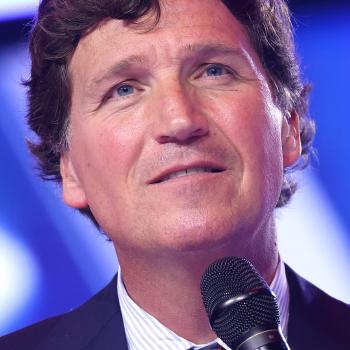
Peter Thiel (pronounced “teel”) is an American entrepreneur with degrees in philosophy and law from Stanford University who cofounded PayPal and
Palantir. Forbes says he is the 103rd richest person in the world. Thiel is a political activist who identifies as being conservative, libertarian, Christian, and gay. He is married to a man. Thiel was raised an evangelical Christian and has departed from it somewhat. He has learned from Carl Schmitt, but especially Catholic René Girard and his mimetic theory, and theologian R. G. Hammerton-Kelly.

Thiel is a foremost proponent of “techno-eschatology,” in which he fraudulently and confusingly uses biblical words, such as Antichrist, Armageddon, and Apocalypse, to explain his worldview of capitalism. He alleges that current “global stagnation” is largely due to over-regulation. For example, he opposes government regulation by mocking young environmental activist Greta Thunberg. Thiel has been conducting a series of private lectures entitled “Antichrist” that have gained media attention.
Peter Thiel’s Techno-Apocalypse vs. the Bible
Armageddon. Peter Thiel uses the biblical word Armageddon to refer to a futuristic collapse of civilization due to technological innovation. Evangelicals popularized the word Armageddon so that it now permeates American culture. Yet this word has been largely misunderstood.
The world’s current fascination with “Armageddon” comes from the Bible’s apocalyptic book of Revelation. It prophesies many divine judgments to occur during the end times. It then mentions “three foul spirits” and says, “These are demonic spirits, performing signs, who go abroad to the kings of the whole world, to assemble them for battle on the great day of God the Almighty. … And they assembled them at the place that in Hebrew is called Harmagedon” (Revelation 16.13-14, 16 NRSV). Many Bible versions have “Armageddon” instead of “Harmagedon.” And many Bible teachers have identified it as Megiddo—a 70-foot-high hill in northern Israel. But many have erred saying the battle is waged there or begins there. The text only says the kings gather there, likely to celebrate their cause and plan their assault, but not to fight there. Other biblical texts place this battle at Mt. Zion and Jerusalem (Isaiah 10.12, 32; 24.21-23; Zechariah 12.3, 9).
Antichrist, AI, and Thiel’s Gospel of Power

The Antichrist. The Bible presents the Antichrist as a man who will lead these kings and their forces to annihilate Israel. He will first make “war” with Christians, putting many of them to death for refusing to worship him as “a god,” bow down to his image, and receive his name or its number on their hand or forehead (Daniel 7.21; 11.36-37; 2 Thessalonians 2.4; Revelation 13.7-8, 14-18). The Bible identifies him with multiple titles in both testaments. The apostle Paul calls him “the man of lawlessness” (2 Thessalonians 2.3, 8-9 NIV). Later Christians coined the term “antichrist” and applied it to him, saying there are “many antichrists,” but one final Antichrist (1 John 2.18, 22; 4.3; 2 John 7). Thiel sometimes confuses Antichrist with a one-world government.
Peter Thiel’s Gospel of Control
A One-World Government. Thiel promotes a concept, likely taught to him in his evangelical background, that there will be an authoritative, highly regulated, one-world government in the end times which he sometimes confuses with the final Antichrist. As a lifelong evangelical and student of biblical eschatology, I do not find this concept in the Bible this side of glory. Rather, they have mistakenly taught this one-world government mostly by misinterpreting the worldwide worship of the Antichrist in Revelation 13 and the harlot riding the beast in Revelation 17. Both Daniel and Revelation are very clear in predicting that a revived Roman empire will appear in the end times to consist of ten kingdoms. Their ten kings will make the Antichrist the head of their empire (Daniel 2, 7; Revelation 13; 17.17). I believe the location of this empire will be in all of Europe, the Middle East, and North Africa, thus not encompassing the entire world.
Thiel steers a “narrow path” between threat of Armageddon and safety of one-world government by advocating a just regulation of artificial intelligence and data surveillance of people. He also proclaims this one-world government concept, as evangelicals often have, to instill fear in his hearers about the formation of alliances of nations. He warns of this by citing the apostle Paul as saying, “The day of the Lord will come like a thief in the night. While people are saying, ‘Peace and safety,’ destruction will come on them suddenly” (1 Thessalonians 5.3 NIV). Due to this false notion of a one-world government, many evangelicals have been anti-United Nations, a resistance that I believe is detrimental to world peace.[1] Jesus taught in his Sermon on the Mount, “Blessed are the peacemakers, for they will be called children of God” (Matthew 5.9).
Ezekiel 38—39 identifies the Antichrist with the title “Gog.” I explain in my book, Warrior from Heaven (p. 9), about the Antichrist by saying, “Although Gog only had political dominion over his ten-nation empire, he had devoured and crushed the whole world by establishing control over virtually everyone and everything on earth. Having achieved a sort of Pax Romana, he proudly boasted, ‘Peace and safety.’ Gog had accomplished it mostly by administering a tightly controlled economic system throughout the whole world. To buy or sell in the marketplace, everyone had to receive Gog’s mark or the number of his name—666—on either their right hand or forehead.” Thiel understandably obsesses over this future Antichrist’s control due to his involvement with Palantir as the world leader of technological innovation in data collection.
Thiel, Armageddon, and the War on Truth
The Restraining. Thiel’s end times perspective centers on a biblical concept he refashions. It is the apostle Paul’s revelation about a restraining of evil until it is removed to make way for the emergence of the despicable, final Antichrist. But this retraining cannot be properly understood without grasping Paul’s context. Some in the church at Thessalonica, which he had founded, had alerted Paul false teachers were saying the literal second coming of Christ had already occurred (2 Thessalonians 2.1-2). Paul cautions, “Let no one deceive you in any way; for that day will not come unless the rebellion comes first and the lawless one,” the final Antichrist, “is revealed, … Do you not remember that I told you these things when I was still with you?” (vv. 3, 5 NRSV).
When Paul taught this to them previously, he was not being original; rather, what he repeats to them here alludes to Daniel 8.23. This text says of certain aforementioned kings, “At the end of their rule, when the transgressors have reached their full measure, a king of bold countenance shall arise, skilled in intrigue.” Most scholars have interpreted this text as having been fulfilled by the Syrian King Antiochus IV in the 2nd century BC. But he was only a precursor of it, so that this prediction will be completely fulfilled by the Antichrist. Daniel’s expression, “transgressors have reached their full measure,” corresponds to Paul’s “rebellion,” and Daniel’s “a king of bold countenance” corresponds to Paul’s “lawless one,” with both referring to the final Antichrist.
Paul says of this lawless one, “And you know what is now restraining him, so that he may be revealed when his time comes” (2 Thessalonians 2.6 NRSV). The word “restraining” translates katechon in the Greek text. Peter Thiel emphasizes this “restraining.” He and many others have rightly characterized it as “a holding back of evil” until this restraining is removed. But who or what this restraining is has been one of the biggest puzzles to solve in the interpretation of the New Testament. Yet Paul indicates that his Thessalonian readers understood what the restraining was. What helps us by adding, “For the mystery of lawlessness is already at work, but only until the one who now restrains it is removed. And then the lawless one will be revealed” (vv. 7-8).
Thiel wrestles with Paul’s katechon concept. He thinks it relates to his involvement in financing technological innovation and that this restraining of evil can be humanly delayed or quickened. But this is inaccurate because we just read that Paul said the Antichrist will emerge “when his time comes.” Here, again, Paul alludes to the apocalyptic book of Daniel. It says repeatedly that certain future events will occur “at the time appointed” (Daniel 11.27, 29, 35). These and “(the appointed) time of the end”—meaning “the end of days” of Gentile supremacy on earth—are expressions that mean these events and their timing have been predetermined by God so that they are not subject to change (Daniel 8.17, 19; 11.40; 12.4, 9, 13). Thus, the restraining of evil will be removed for the Antichrist to emerge according to a divinely, predetermined, time schedule.
As for the identity of Paul’s katechon—the restrainer of evil—church fathers identified it as the Roman Empire and scholars have said it is government. But government will not be abolished in the end times. So, I think the restrainer is Paul’s “mystery of godliness” (1 Timothy 3.16) in contrast to his “mystery of lawlessness.”
When Tech Billionaires Preach the Apocalypse
Connection to Noah’s Flood. This idea hearkens back to Noah’s flood. We read, “The LORD saw that the wickedness of humankind was great in the earth, and that every inclination of the thoughts of their hearts was only evil continually” (Genesis 6.6 NRSV). This prompted God to declare, “My spirit shall not abide in mortals forever, for they are flesh; their days shall be one hundred twenty years” (v. 3). Does this number mean that after the flood, people would live shorter lives, averaging 120 years? Or would God’s Spirit keep on revealing his truth to humans for only the next 120 years, and then the flood would come? The latter seems more reasonable.
In Genesis 6.3, the word “abide” translates yadon in the Hebrew text. It is best translated “strive” (KJV, NASB) or “contend” (NIV). So, just as God decided there would be a time when his Spirit would stop contending with antediluvians, so he will do likewise with those who live in the end times by withdrawing the power of his Spirit to restrain evil. Paul says concerning unbelievers who will live then, “Because they refused to love the truth and so be saved. … God sends them a powerful delusion, leading them to believe what is false” (2 Thessalonians 2.10-11 NRSV; cf. Romans 1.18-32; Revelation 13.11-15).
Peace and Safety. We read above about people saying in the end times, “peace and safety,” and then sudden destruction comes upon them. Thiel puts his spin on this, insisting it refers to the Antichrist assuring citizens of his one-world government of peace due to totalitarian regulation. In contrast, Paul may be referring to the seven-year covenant that the Antichrist will make with Israel that promises it protection (Daniel 9.27). But mid-way he will abandon it, abolish the daily sacrifice at the rebuilt temple in Jerusalem, and set up the “abomination that desolates,” which is surely his image (Daniel 11.31; 12.11; Revelation 13.14-15). The Antichrist will then declare “war” on Jesus Christ’s people, prevailing decisively over them, and it will last about three-and-a-half years to the end of the age (Daniel 7.21; 12.7; Revelation 12.6, 14, 17; 13.7).
Conclusion. I think it is better to ignore Peter Theil’s twisting of scripture, making it support his view of the future, and embrace only the meaning of these texts that their authors intended.
Kermit Zarley (kermitzarley.com) is a retired, tournament-winning, pro golfer who competed on the PGA Tour and its Senior/Champions Tour full time for thirty years. He cofounded and co-led the PGA Tour Bible Study which thrives today. Zarley has written nine books on biblical studies that include his STILL HERE series on Bible prophecy. See his new book, Christ on the PGA Tour (1965-1982), available at amazon.com. Zarley has been a member of the Society of Biblical Literature since 1999.
[1] Many evangelicals foolishly dismiss the UN due to their alleged faults about it. Just because an organization isn’t perfect doesn’t mean we should get rid of it. The world has been way better off having the UN than not having it.














 Ad-Free & Subscriber Log-In