

 Palestinians and the Prophecies of Isaiah
Just as the Bible[1] says repeatedly that God gave the Israelites their land, God also says therein, “Did I not bring Israel up from the land of Egypt” to give it land of Canaan, “and the Philistines from Caphtor” (Crete) to give them land of Canaan, too? (Amos 9.7). Yet Philistines disappeared many centuries later. And in 135 CE, the Romans defeated an Israelite uprising, demolished their nation, and forbade Jews to live there. That caused Jews to scatter throughout the world.
And just as the Bible repeatedly predicted about Israel becoming a nation again—which it did over 1,800 years later, in 1948—in other prophecies it predicts the same about the Philistines and their nation of Philistia. Interestingly, Palestinians derive their name from the Philistines.
Biblical scholars generally agree that its prophecies about the end times, called eschatology, are the most difficult genre in the Bible to interpret. To do so, the interpreter must recognize some rules of hermeneutics. First, a text should be understood literally unless its context has markers indicating otherwise. Second, a text may rightly have more than one application or fulfillment. Third, context and fulfillment are determining factors as to whether a text refers to the end times.
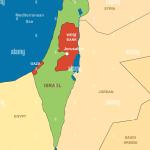
In my view, there are about ten prophecies in the Old Testament, which scholars call “the Jewish Bible,” which indicate that during the end of this age, called “the end times,” there will be a Gentile nation on the west side of the State of Israel. Thus, it will be in the coastal plain about where ancient Philistia existed. Some of these texts identify it as “Philistia” and the people living there as “Philistines.” No matter what one thinks of genetics, who can these people be other than Palestinians?
I wrote a book about this thesis published 35 years ago entitled Palestine Is Coming: The Revival of Ancient Philistia. Ever since, events have been proceeding in the direction I lay out in this book. Now, if the Gaza war ceasefire holds, and the war-torn Gaza Strip undergoes a tremendous reconstruction like U.S. President Donald Trump is talking about, this book could be regarded as prescient except that I would argue that I’m only believing in what the Hebrew prophets predicted thousands of years ago. BTW, as far as I know it is the only book ever published with this thesis and the only book that interprets the following biblical texts in this way.
The Book of Isaiah the Prophet
Jews regard three passages in their Bible as foremost about God sending a Messiah to deliver the nation of Israel from its enemies and make it the greatest nation on earth. These texts are Genesis 49.10, Numbers 24.17, and Isaiah 11.1-4. This text in Isaiah begins by mentioning “Jesse,” the father of King David. It says, “A shoot shall come out from the stump of Jesse, and a branch shall grow out of his roots” (Isaiah 11.1), referring to the Messiah. It then says, “The spirit of the LORD shall rest on him” (v. 2). It then provides details and adds, “He shall strike the earth with the rod of his mouth, and with the breath of his lips he shall kill the wicked” (v. 4). The apostle Paul quotes this passage from the Old Greek version and applies it to the Antichrist by saying, “And then the lawless one will be revealed, whom the Lord Jesus will destroy with the breath of his mouth, annihilating him by the manifestation of his coming” (2 Thessalonians 2.8).
Isaiah next describes the succeeding messianic era, when “the wolf shall live with the lamb, the leopard shall lie down with the kid. … They shall not hurt or destroy on all my holy mountain” (Isaiah 11.6, 9). And in verses 10-12, Isaiah predicts God’s ingathering of diaspora Jews.
The ancients thought more topically than chronologically, as we moderns do, and this is often reflected in biblical prophecies. Thus, in Isaiah 11.13-14 the prophet returns to the topic of the messianic destruction by saying the two divisions of the nation of Israel, Ephraim and Judah, will unite and then, “They shall swoop down on the backs of the Philistines in the west.” Some Bible versions better translate katep in the Hebrew text as “slopes” (NASB, NIV), thus referring to the sloping Shephelah that divides the eastern hill country of Judea from the western coastal plain. So, Isaiah 11.14 indicates that “Philistines” will exist in the coastal plain during the end times.
Isaiah has two other texts that support this viewpoint. One is in the so-called “Little Apocalypse of Isaiah,” which is Isaiah 24—27, thereby referring to the end times. The expression, “on that day,” is a repeated key marker in it that refers to the eschatological “Day of the LORD” when God will manifest his great wrath at the end of the age. Afterwards, Isaiah says to God regarding Israel, “You have increased the nation, O LORD, … you have enlarged all the borders of the land” (Isaiah 26.15). This affirms Isaiah 11.14 saying that at the end of the age Israel will attack its neighboring nations to the west and east and incorporate them and their lands. Again, this indicates Israel previously will not then possess the coastal plain lying below the Shephelah.
In Isaiah 54.1-3, the prophet refers to Israel about the beginning of the messianic age, saying, “Sing, O barren one who did not bear.” This refers to the childless progenitors of the nation, Abraham and Sarah, with her beyond child-bearing age (Genesis 12.1, 7; 15.4-6, 18; 17.15-19). He continues, “Enlarge the site of your tent, lengthen your cords and strengthen your stakes. For you will spread out to the right and to the left, and your descendants will possess the nations.” This affirms Isaiah 11.14 and 26.15, saying Israel will expand to the right, thus incorporating present western Jordan, as well as expand to the left by incorporating Philistia.
King David as Psalmist
The Bible’s book of Psalms consists of 150 psalms that were set to music, and King David wrote half of them. David wrote both Psalm 60 and Psalm 108. Psalm 60.5-12 and Psalm 108.6-13 are verbatim. Two elements in Psalm 108 indicate its context applies to the end times. David writes, “I will give thanks to you, O LORD, among the peoples” (v. 3), referring to all of humanity. And he adds, “I will sing praises to you among the nations.” Both statements can refer to none other than the blessed messianic age. David also writes, “Be exalted, O God, above the heavens, and let your glory be over all the earth” (v. 5). This will not occur until the messianic age as well. Obviously, these statements require that David will be among the righteous dead raised at the end of the age and that he will live in the messianic era (e.g., Isaiah 25.8; 26.19; Daniel 12.2-3).
It seems that what David writes next, in both Psalm 60.5-8 and 108.6-9, refers to the end of the age that will precede the messianic destruction and then the blessed messianic age to follow:
Give victory with your right hand, and answer me,
So that those whom you love may be rescued.
God had promised in his sanctuary:
“With exultation I will divide up Shechem,
And portion out the Vale of Succoth.
Gilead is mine; Manasseh is mine;
Ephraim is my helmet; Judah my scepter.
Moab is my washbasin;
On Edom I hurl my shoe;
Over Philistia I shout in triumph.”
There is much history to unpack here, but briefly. Shechem means “shoulder” or “ridge.” It was an ancient Canaanite city on the slopes of Mount Gerizim, thirty miles north of Jerusalem. When Abraham journeyed to Canaan, here at Shechem God promised him, “To your offspring I will give this land” (Genesis 12.7). Succoth, Gilead, and Manasseh are places east of the Jordan River that the ancient Israelite’s first occupied as part of the promised land (Numbers 32).
Soon after the Davidic monarchy, Israel divided into two parts opposed to each other. The Northern Kingdom, which consisted of ten of the original twelve tribes of Israel, was often identified as Ephraim. And the Southern Kingdom, which consisted of the other two tribes, was identified as Judah. They received those names, Ephraim and Judah, because those were the largest tribes of those divisions. The expression, “Ephraim is my helmet,” indicates that portion of the Jewish nation will be heavily involved in the messianic destruction. And the expression, “Judah is my scepter,” refers to the Messiah being from the tribe of Judah and that he will be Israel’s king (Genesis 49.8-10; Numbers 24.17; Matthew 1.3; Luke 3.33).
Moab and Edom were small nations on the eastside of the Jordan River-Dead Sea and south. God’s actions described here indicate they, too, will be part of his land he promised to Israel. Regardless of what one thinks of these names being applied to the end times, “Philistia” ought to be understood as a Gentile nation existing in the coastal plain. What else can it be other than a Palestinian state? Finally, the context can only apply to the dawn of the messianic kingdom.
Zechariah the Prophet
Today’s Palestinians ought not despair about their successors living in the coastal plain and then being attacked by Jews at the end of the age because they will afterwards have a glorious future as part of the messianic kingdom. Zechariah informs about it in Zechariah 9.1-8. Verses 1-4 describe some of this messianic destruction in the coastal plain to the north, and it then says:
5Ashkelon shall see it and be afraid;
Gaza too, and shall writhe in anguish;
Ekron also, because its hopes are withered.
The king shall perish from Gaza;
Ashkelon shall be uninhabited;
6a mongrel people shall settle in Ashdod,
and I will make an end of the pride of Philistia.
7I will take away its blood from its mouth,
and its abominations from between its teeth;
it too shall be a remnant for our God;
it shall be like a clan in Judah,
and Ekron shall be like the Jebusites.
8Then I will encamp at my house as a guard,
so that no one shall march to and fro;
no oppressor shall again overrun them,
for now I have seen with my own eyes.
The nation of Philistia was known for its five city-states that were, from north to south, Ashdod, Askelon, and Gaza on or near the Mediterranean Sea, and Ekron and Gath inland. Them eating meat with blood refer to Jewish dietary laws forbidding such.
This prophetic oracle uttered by the prophet Zechariah cannot possibly apply to any other period than that of the messianic destruction and ensuing messianic kingdom. For, the Philistines never worshipped the God of Israel, Yahweh (Hebrew YHWH), to be “a remnant” for their “God.” And likewise, the Philistines were never regarded as “a clan in Judah,” which is remarkable. As for “Ekron” being “like the Jebusites,” which latter means citizens of Jerusalem, that certainly never happened either. But most of all, Yahweh guarding Israel so that it will never be subjected to an “oppressor” clearly refers to the blessed messianic age.
Alexander the Great attacked the coastal plain in 332 BCE, and Zechariah 9.1-6 fits that later history. But it does not fit verses 7-8 at all. Thus, it can only be at the end of the age when the Messiah of Israel comes to put “make an end of the pride of Philistia,” so that it will “be a remnant for … God” and “be like a clan in Judah.”
Conclusion
In conclusion, these above prophecies indicate that a Gentile people will be living on the coastal plain, likely just south of Tel Aviv, during the end times and that their nation seems comparable to that of the ancient Philistines. Who can these people be other than “Palestinians”?
[1] All biblical quotations are from the New Revised Standard Version (NRSVue).













 Ad-Free & Subscriber Log-In