


I recently wrote on this for our work newsletter, but sometimes, four simple words—“I see in you” (an ICNU conversation), can change the entire course of a life.
“I think you could be a pastor,” Jerry Shannon said to me. That was an ICNU conversation. I had just returned from a few months on the road and was preparing to head back out with some bands and organizations. Jerry was gently challenging areas of growth in my life, while also calling out potential in me that I couldn’t yet see for myself. My response was probably brash and dismissive. I didn’t want to be a part of that world. More importantly, I didn’t believe in myself—I was broken, and I knew it. Still, Jerry encouraged me to pray about it and start small—maybe share announcements or a short update after I went on tour with an organization and some bands. In that moment, I knew that he saw some potential in me, gave me space to try, and committed to walking with me.
Good Leadership Is Not About the Leader
Regardless of whether he knew it or not, Jerry taught me something in that season: Good leadership is not about the leader. Good leadership is about quietly, faithfully, and consistently calling out the giftings in others and permitting them to step into who God created them to be. I come to believe that this intersects deeply with my desire to lead a quiet life, as I explore it on this blog. It is something I am learning to practice more and more. Leading a quiet life (as outlined in 1 Thessalonians 4:11-12), to me, is not just about withdrawing from the chaos and syncretism of the world, but about resisting the pull toward self-promotion and personal glory. It’s also about faithfully noticing the good in others, calling it out, and creating space for them to grow, just as Jerry did for me. In a noisy, performance-driven culture, this way of leading quietly becomes a countercultural act of love and trust in God’s work through others. It’s the “stuff” that movements are built of.
I believe this works with our children as well.
Discovering the “ICNU” Conversation
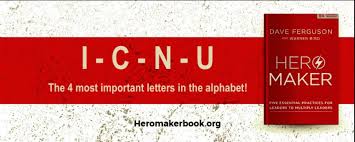
Years later, in HeroMaker, Author Dave Ferguson gave a framework to this life-shaping conversation: the “ICNU” conversation. Dave teaches that great leaders don’t just pursue personal success—they invest in others, multiplying impact by helping others become who God created them to be. ICNU conversations are one of five practices he outlines to help leaders make others the hero. I had the chance to sit down with Dave a few years ago at Exponential. Dave told me how Bob Buford had mentored him during a season of midlife reflection, helping him realize that real legacy comes from seeing the fruit of your life grow on someone else’s tree.
ICNU Leadership That Invests, Not Diminishes
Early in my career, most of my managers were micromanagers. They put down more than they shaped me. They cut out what was in me, not invested in what God had planted in me. Their leadership only confirmed the worst things I believed about myself, and I didn’t need help in that department. But Jerry’s feedback was different. His feedback was an investment and an activation; it is something anyone can do: calling the good out in others. ICNU conversations are a form of leadership and parenting that invests, not diminishes.
A New Scorecard for Leadership
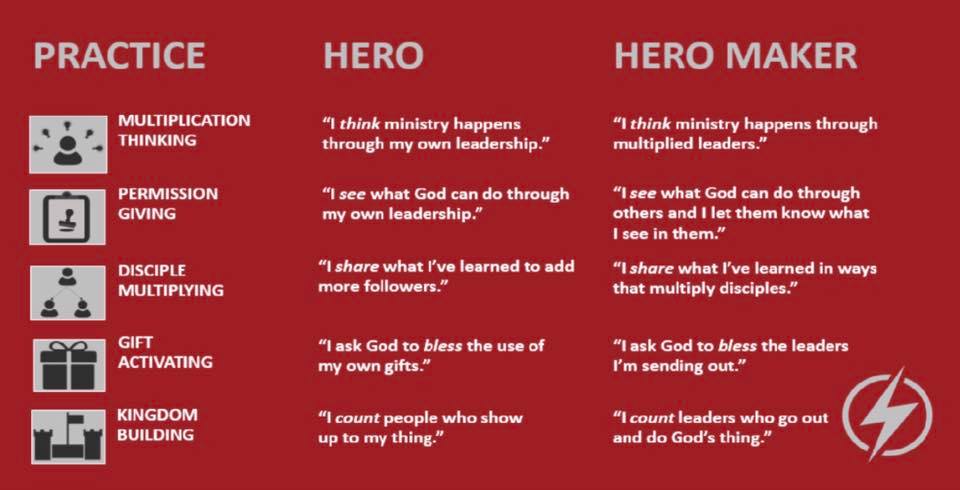
Good leadership, J.D. Greear says, is not about neglecting our own ministry, but about adding “multiplication as an essential element of our scorecard.” Jesus himself pointed to this kind of new scorecard when he told his disciples they would do even greater things than what they had seen him do (John 14:12). Dave Ferguson defines good leadership as “heromaking,” the shift from being the hero to making others the hero in God’s unfolding story—this posture of dying to our success and releasing others into their calling.
Activating the Gifts in Others
One of Ferguson’s key practices is “Gift Activating,” and at the heart of it is the ICNU conversation. It’s a simple but powerful way to name and affirm what we see God doing in someone’s life. It mirrors Jesus’ own commissioning of the disciples in Matthew 28:19–20. In a world obsessed with personality tests and strengths assessments—I could tell you I’m a Type 7w8 on the Enneagram, an ENFP on Myers-Briggs, and that Communication tops my StrengthsFinder list—none of those tools have ever helped me believe in myself the way an ICNU conversation has. Because assessments call out, but they don’t activate.
Flipping the Switch
The ICNU conversation does just that. It looks at the dreams and gifts God has already placed in someone and gives them permission to see it for themselves. As Ferguson puts it, “‘I see in you…’ describes a preferable future,” one that flips the switch for gift-based serving.
Building the Platform
Of course, it can’t stop there. That new spark needs to be nurtured through regular coaching, consistent recognition of gifts, discipling, and ultimately commissioning. But it starts with good leadership: building a platform for someone to stand on, especially when they can’t yet see what’s in them for themselves—seeing your fruit grow on others’ trees by building a platform for who God has called them to be.
Leadership needs a new scorecard, gift activation through ICNU conversations.
And this too is leading a quiet life.
I am working on having more ICNU conversations in my leadership, will you too?

















 Ad-Free & Subscriber Log-In