

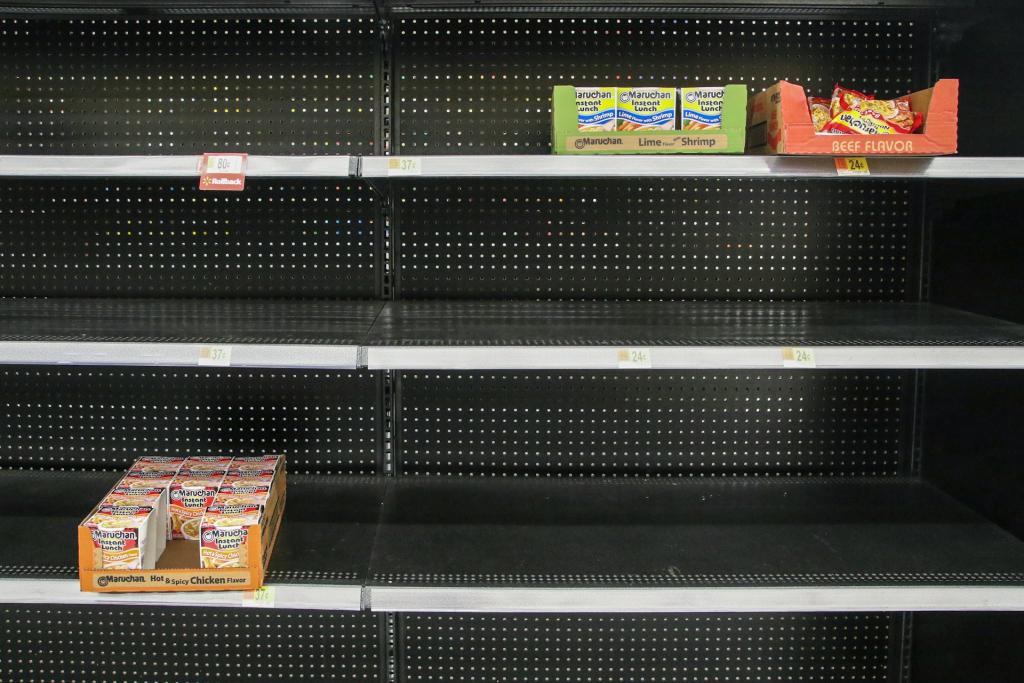
Today, I’m sharing a guest post from Tri Robinson, who reflects on themes that intersect with much of what we explore here—simplicity, attentiveness, and how we live as followers of Jesus in a consumeristic, chaotic, and noisy world. He recently blogged about the threat of food shortage.
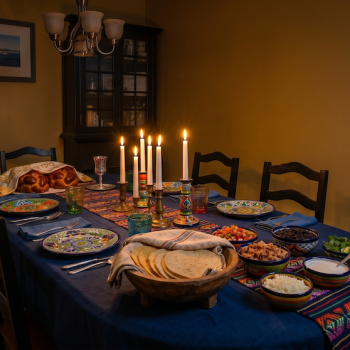
The kingdom of God, which Jesus came to preach and teach, is often pictured as a banquet that welcomes “the poor, the crippled, the lame, the blind” (Luke 14:13–14). Meals were a regular setting for his ministry—places of teaching, fellowship, and invitation. In that sense, the way we extend our tables—through food, provision, and presence become a tangible expression of God’s character as a good and generous Father.
From the beginning, humanity was called “to work it and to care” for the garden in stewardship driven ways (Genesis 2:15). Throughout the story of the people of God, care was always tied to missional generosity—“to share your food with the hungry and to provide the poor wanderer with shelter” (Isaiah 58:7). This is a way God declares his goodness. Even within the law, God built provision for the vulnerable into everyday life, instructing farmers to leave the edges of their fields for those in need, again to missionally display God’s banquet and compassion (Leviticus 19:9–10). In to such a reminder, Tri Robinson’s words on food shortage function not simply as a warning, but as an invitation to live differently—to resist the patterns of the present age and to embody a way of life that reflects the kingdom of God. As followers of Jesus, we are called to put the goodness and good news of God on display, living as ambassadors and image bearers who carry the fragrance of life. The state of the world does not leave us without direction; it gives us a way to respond—to seek and embody the kingdom as it is in heaven.
This week, Tri shared something on Facebook that stayed with me. I wouldn’t frame it in apocalyptic terms, and I’m not an alarmist, but his reflections on food insecurity and the challenges ahead struck a chord. I asked permission to share it here.
Food Shortage: Paying Attention Without Panic
This point of this blog post, highlighting Robinson’s thoughts on food shortage, is about being a call to pay attention without practicing panic.
This blog is about leading a quiet life—to pursue stillness, to mind our own business, and to work with our hands so that we are not dependent on anyone. That call, rooted in Paul’s words to the Thessalonian church, still speaks today.
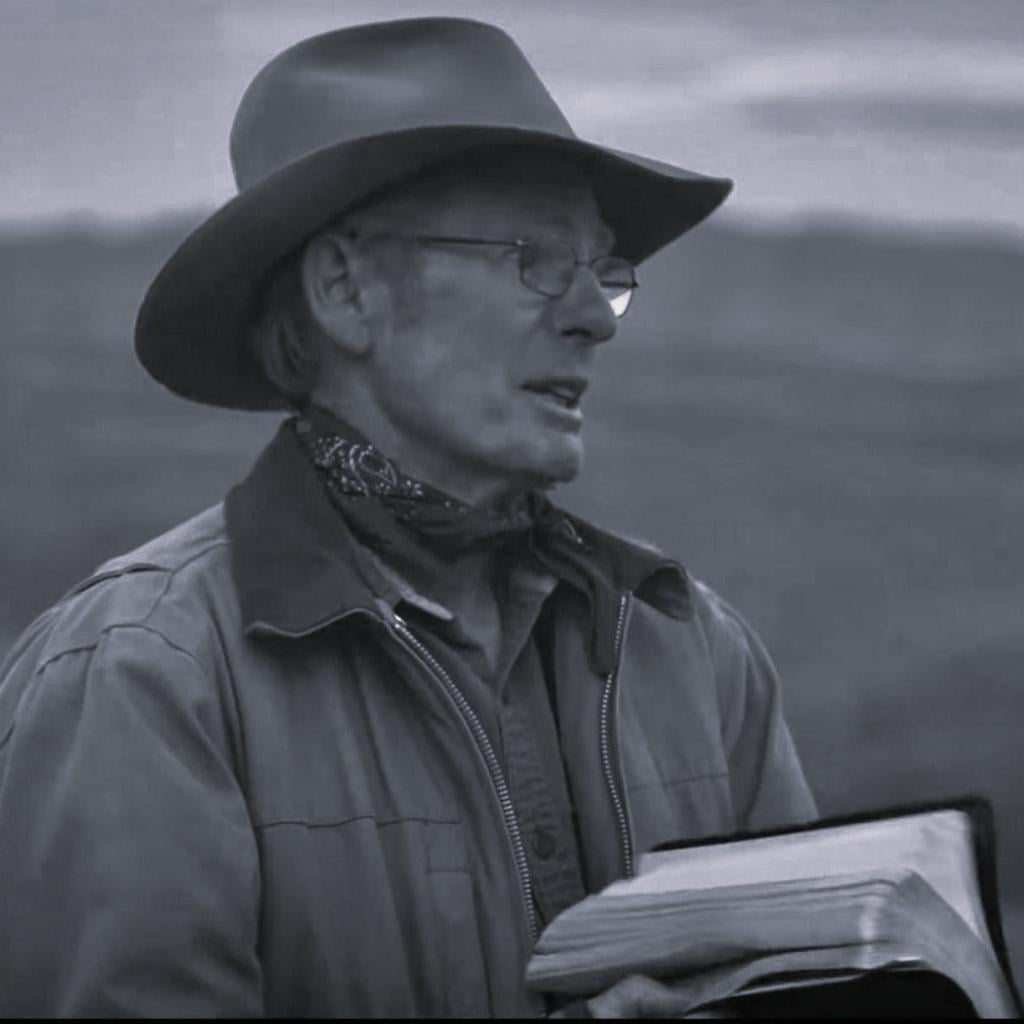
Who is Tri Robinson?
Tri Robinson has held many roles over his life—husband, father, grandfather, teacher, pastor, rancher, author, and environmental steward. I first encountered his work in 2004 when I was returning to the church and attending Lancaster Vineyard Church (PA). At the time, I was wrestling with a range of theological and practical questions, including our responsibility to steward creation. My pastor pointed me to conversations happening elsewhere, including the work of Tri Robinson and Vineyard Boise.
Robinson was asking many of the same questions—working through their implications both theologically and practically. His books, Saving God’s Green Earth (2006) and Small Footprint, Big Handprint (2008), helped frame a vision for simple, sustainable living that frees us to love others well. While I didn’t agree with everything at the time, his work gave needed substance to conversations I believed were important. Looking back, I can see how Small Footprint, Big Handprint shaped me more than I realized. Since then, other works like A Journey of Gratitude and Deconstruction/Reconstruction have influenced me further.
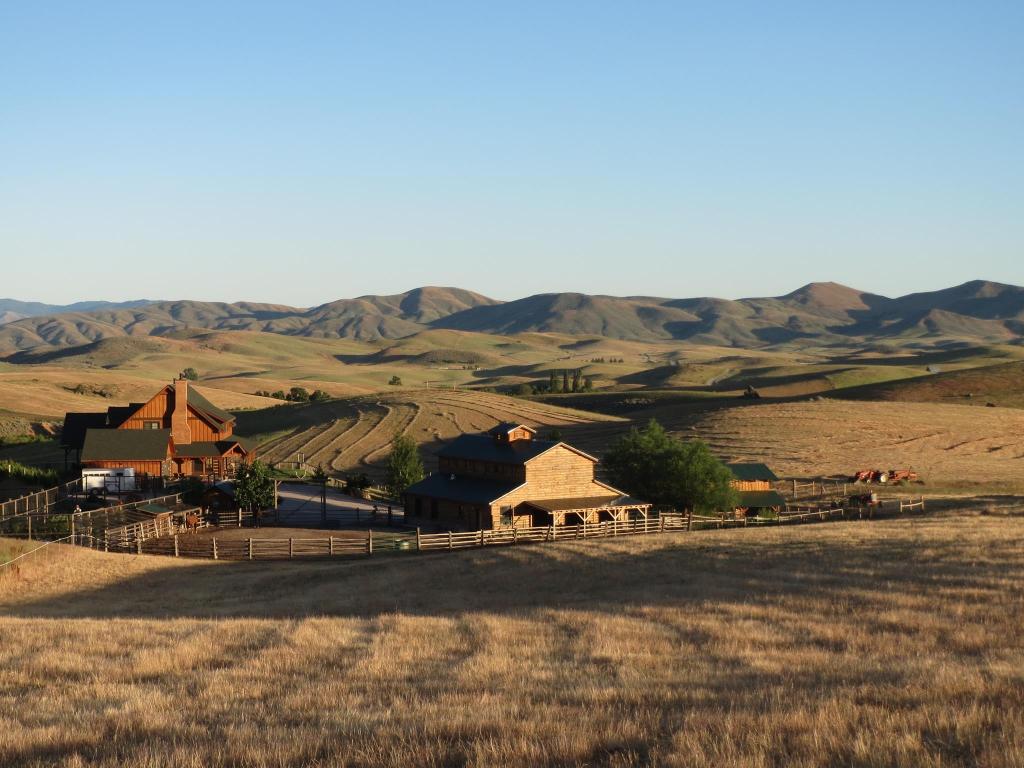
You can learn more about Tri Robinson here and more about Timber Butte Ranch. Also, check out the documentary Cowboy & Preacher about Tri Robinson’s life and call.
Ten top reasons food insecurity will escalate in America
Tri then goes on to give ten reasons he, as a rancher and environmental steward, believes we will be facing food insecurity in the near future.
- A historical transition from the family farm to commercial agriculture.
Before WWII, most of America was made up of thousands of small (160 acres plus) family farms. For generations, farming had been both organic and sustainable, using natural fertilizers and seed which could be harvested from previous crops and used year after year. Farms were small enough to use basic, easily maintained farm equipment, and the children of large families were participants who shared in the workload. After WWII, everything shifted to industrial, commercial farming, which relied on newly engineered chemical fertilizers, pesticides, herbicides, hybrid seed, and technological advances in machinery, production, and distribution. Farming became big business and complex, with many moving parts. This transition put the ability for America to feed itself and other poverty-stricken nations in the hands of the corporate world. - A rapidly changing climate.
The debate is a bygone issue; the climate is changing, and it is having an escalating negative impact on the world’s ability to grow consistent crops. The planet’s increasing temperatures are creating difficult conditions for farmers due to inconsistent temperature ranges, dependable rainfall, insect invasion, and soil degradation. Farmers are more readily losing crops from prolonged heatwaves, drought, flooding, early freezing, and other unpredictable weather disasters. Especially in the western part of the country, the lack of consistent winter snowpack in the mountains has had a direct impact on summer irrigation. - A growing world population – we have more mouths to feed.
Before WWII, the world population was approximately two billion people. Today it has passed eight billion and is on its way to nine. Feeding the world population continually grows in complexity. It is estimated that nearly ten percent of the world is now experiencing chronic hunger. The distribution of food worldwide is a growing, complex problem, often interrupted by war and armed conflict, as we are currently experiencing in the Middle East. These disruptions not only impact the developing world, but America as well. - Global tariffs are disrupting the flow and production of food worldwide.
The burden of recent tariffs is causing hardship for American farmers, not only because of the loss of overseas markets, but also because of the expense of necessary imported parts needed to maintain heavy farm equipment. One example: John Deere parts are now primarily manufactured in China. - The escalating price of fuel.
Most farm equipment in today’s world depends on vast amounts of diesel fuel, which has recently escalated to upwards of six dollars a gallon due to the conflict in Iran with the US and Israel, which has caused the disruption of the Strait of Hormuz. Diesel fuel powers not only tractors, but other equipment such as harvesters, irrigation pumps, and grain trucks. Seventy percent of America’s food distribution relies on large truck transportation, which also requires affordable diesel. - Chemical fertilizer shortage.
For the same reason diesel fuel relies on passage through the Strait of Hormuz, chemical fertilizer is petroleum-based, and one third of the world’s production must pass through it as well. Even if the strait opened today, the effects of the war will have a lasting impact on American farming. In order for this year’s spring crops to be planted, fertilization is essential within the month. Without it, there may not be a crop to harvest. - The rapid disappearance of the American honeybee.
We have known for some time that honeybees in America have been on the decline, but their disappearance has experienced an alarming acceleration in the last year. Already, there are barely enough bees available to pollinate major food crops across the country. It was recently reported that over 50% of bee colonies collapsed in one year in America. Bees are responsible for pollinating 70% of America’s major crops. It is reported that this die-off is a result of a class of insecticides known as “neonics,” said to be 1000 times more lethal to bees than DDT. - The absence and decline of migrant farm workers.
Due to an escalation of immigration policies and enforcement, American farmers dependent on field workers are facing a major shortage in the coming harvest year. In 2025, migrant labor has been reduced by over one million workers due to deportation and an increasing culture of fear among their population. - The dominance of hybrid and genetically modified (GM) seed in America.
In recent years, scientists working for multinational corporations such as Monsanto Corp have developed GM hybrid seed. This is seed resistant to agricultural poisons such as pesticides and herbicides. (A commonly known herbicide is Roundup, which is extensively used to kill weeds in crops.) Hybrid seed has many beneficial qualities when it comes to the size and color of fruits and vegetables, but unlike natural heirloom seed, hybrid seed cannot be regenerated by the local farmer year after year. As a result, farms are forced to return to hybrid seed producers such as Monsanto for new seeds every year. From the beginning of man, farmers extracted heirloom seed from their last year’s crop independently from commercial seed producers. All to say, these multinational corporations have purposely developed a monopoly among American farmers for seed production and availability. This is a dangerous trap for the future of agriculture. Many countries around the world, even poor countries, have recognized the problem and have passed laws which ban GMOs within their borders. America has not. - The rapid loss of fertile, available, affordable farmland.
I live in Idaho near what is called the Treasure Valley. I came to Idaho in the 1960s as a college student. The Treasure Valley at that time was covered with productive farms. The population of the capital city, Boise, was 40,000 people, and across the valley there was a plethora of small farm communities. Everything was primarily related to agriculture and food production. Today, Boise is a million people, and the valley has become a massive metropolitan city covered over with blacktop and housing sprawl. It is only one small example of what has happened across the nation. The USA has much undeveloped land, but much of it is unfarmable mountains or desert, while the valleys which were covered with Class A fertile soil are often developed over. Farmable land is disappearing while a hungry population is growing. Young people who desire to become farmers can no longer afford the quality farmland needed, even if it was available. This is just one more scenario which frightens me for future generations, as well as the future of American food production.
As I sit with this (Jeff McLain), as a pastor and one called to a quiet way, I’m reminded that the goal isn’t anxiety, but faithfulness. This matters because it calls me back to a quieter, steadier way of life—one rooted in trust, shaped by stewardship, working with our hands, and ready to serve others when the moment comes. It also gives me a way in which as the church can step into needs within our neighborhoods in some incarnational and intentional ways.
Small Footprint, Big Handprint
Again, back to Robinson’s words with slight grammar clarity.
Over twenty years ago, I preached a seven-part series called Small Footprint / Big Handprint, which was later compiled into a book with the same title. The thesis of the message was an encouragement for people to live a more simplified, sustainable life; to become less burdened by materialism and debt (small footprint), and to render down their lives so they might be in a better position to impact the world around them (large handprint).
Many in our congregation took the message to heart. One chapter spoke of seeing what storm might be brewing and, in response, taking steps to prepare for it. Some who had a bit of land planted gardens and raised small flocks of chickens in their backyards, even within city limits. Those who didn’t have the space joined with friends, used property behind our church, and started a community garden. Through the years, that garden, which became known as “The Garden of Feeding,” fed literally thousands of people. Some even sold expensive homes and downsized to smaller homes which had more property and the ability to start small farmsteads.
I write this because I see “clouds rising in the west,” and I believe a perfect storm is brewing. I don’t write as a fatalistic pessimist. I am writing to offer some hope and solutions to those who are open to hearing it and willing to respond. Many people become overwhelmed with the coming storms and do nothing, while others will rise up with action—not only doing what they can to prepare for calamity, but also putting themselves in positions to become “a big handprint” amid the many coming trials.
My book, Small Footprint / Big Handprint – How to Live Simply and Love Extravagantly, is still available on Amazon and Kindle. I am told Kindle is quite a bit less expensive.
A Faithful Way of Living
It may be that Tri appears more alarmist than I would. I am still wrestling with all of his thoughts. Though, I shared them that night with my wife because they felt important. Instantly, I felt like sharing them with others. Tri is calling us to live differently now. I am asking this question, “What does faithful, embodied discipleship, lived in a quiet way, look like if things get harder?“
As I come back to where I began, this doesn’t push me toward urgency for urgency’s sake or toward fear-driven reaction. We are called to cast our cares on our good Father (1 Peter 5:7). We are called to trust, like the birds, that there will be food tomorrow (Matthew 6:26). Jesus promises that we will face hard times (John 16:33), which is why we pray for deliverance in the midst of trial and temptation (Matthew 6:13). And yet, to lead a quiet life—to live in light of 1 Thessalonians 4:11–12—is to live in a way that does not make us dependent on others, but independent in such a way that reveals our deeper dependence on God. Anyone who gives a cup of cold water to a disciple or “little one” in Jesus’ name will be rewarded (Matthew 10:42). To know is to prepare. To be prepared is missional. To have is to share and to demonstrate.
Again, the awareness of the chaos in our world brings me back to the quiet way—to be still more than seen, to listen more than speak, to resist the pull to match the noise of the world with more noise of our own (Psalm 46:10). Missiologist Mike Frost calls this living “questionable lives”—lives that cause others to ask about our hope and dependence despite the storms and chaos (1 Peter 3:15). This kind of warning presses us deeper into the life Paul describes—a life that is attentive, grounded, and formed over time. “Man does not live on bread alone” (Matthew 4:4), and to pray for our daily bread is to pray not only for needs ourselves, but to pray it with and for others as well (Matthew 6:11). The missional quiet way is to live a life where we mind our own business, work with our hands, and live in such a way that our presence becomes a quiet witness—one that allows us to extend what we have and share the goodness and good news of God (1 Thessalonians 4:11–12).
And maybe that’s where the call to action really is—not in dramatic shifts, but in deliberate ones. Proverbs speaks of preparing with wisdom: “Be sure you know the condition of your flocks, give careful attention to your herds, for riches do not endure forever” (Proverbs 27:23–24). To take small, faithful steps toward stewardship. Living on mission is not an idle life. It includes more than how we share the gospel in words; it also includes how we earn our food and where it comes from. Paul reminds the Thessalonian church that those who are unwilling to work, who become busybodies, should not eat (2 Thessalonians 3:10–12). We are called to live quiet lives, working and earning our living faithfully (1 Thessalonians 4:11–12).
Let us not forget the call to steward. The first vocation in the scriptures was given to Adam and Eve—to work in the garden of Eden and to care for it (Genesis 2:15). Creation is not disposable or to be thrown away; it is entrusted to us as a beautiful creative work of a good God. One day, the landowner will return and ask what we have done with what we were given (Matthew 25:14–30). That includes not only our resources and gifts, but also the land itself—something God created with purpose and entrusted to our care.
So we simplify where we can. We learn again how to provide, to share, to prepare—not out of fear, but stewardship, and out of love for our families and for others. The scriptures reminds us that a clear witness to the world is how we care for our households (1 Timothy 5:8). How will you care for your household, and the places you live, work, worship, and play? As followers of Jesus, we are not just called to endure what may come, but to be ready to serve within it calling others to repent and believe the good news of the Kingdom of God. We cannot ignore the image of Acts 2:44–45, which gives us a picture of a the church community who shared what they had and cared for one another’s needs. There are real needs ahead. Robinson calls us to a small footprint and a big handprint—a quiet life that, when needed, becomes a steady presence for others in the midst of whatever unfolds.
- Read my review of A Journey of Gratitude by Tri Robinson
- Review my thoughts on Deconstruction/Reconstruction by Tri Robinson
- Learn more about Tri & Nancy Robinson
- Explore Timber Butte Ranch.
- Watch the documentary Cowboy & Preacher about Tri Robinson’s life and call.
- Buy Small Footprint, Big Handprint on Amazon
- Purchase Saving God’s Green Earth on Amazon
Discuss in the comments: What does faithful, embodied discipleship, lived in a quiet way, look like if things get harder?
Thanks for reading. I’m Jeff McLain, and I write the Lead a Quiet Life blog on Patheos, exploring Christian spiritual formation and the call of 1 Thessalonians 4:11–12 to lead a quiet life in a noisy world. If this post resonated, share it, leave a comment, or connect with the Lead a Quiet Life page on Facebook. You can also learn more about me at jeffmclain.com.












 Ad-Free & Subscriber Log-In