

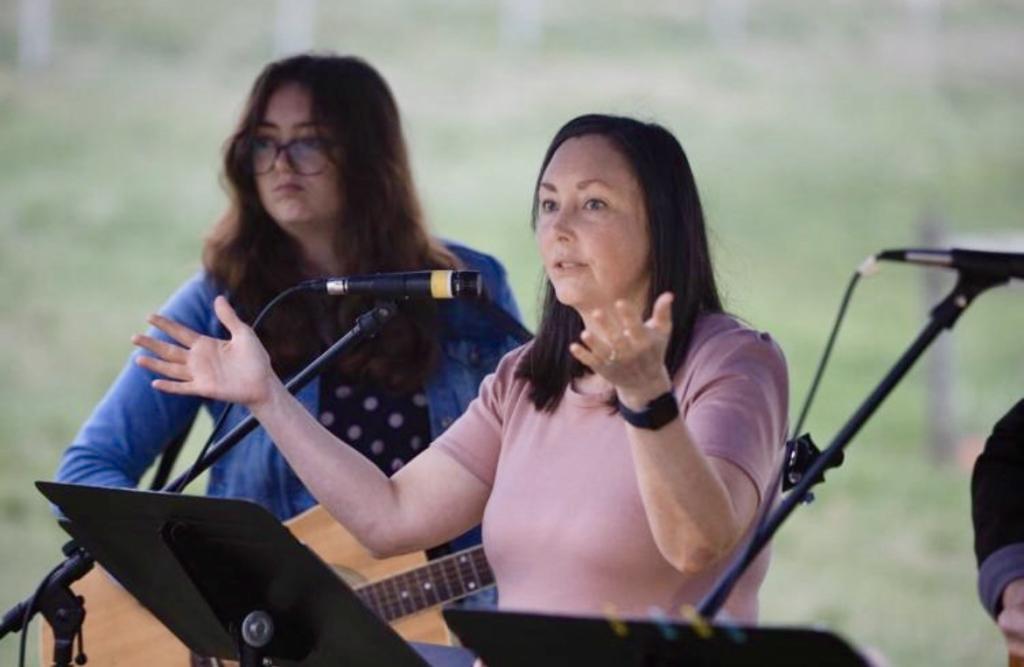
The church is not just where we believe—it’s where we become.
Many people are deconstructing not because they’ve rejected faith, but because they’ve never been given a place to embody it. I believe that some deconstruction isn’t about losing faith—it’s about never being invited to live it.
I love when someone names something in another person that they couldn’t yet see in themselves—a grace, a gifting, a capacity that’s been there all along but hasn’t been called out.
When that happens, the naming of a grace, gifting, or capacity in someone’s life often creates a place to step into. We need places where we then step into these named areas. It is important to find a place to try it out, to grow in our capability, and to use it to serve others. It is to find a place to explore what God has put in someone’s life that they begin to come alive in new ways.
More often than not, that place is the local church.
Not always. But often.
And I think we’re losing some of that.
As churches grow larger and more programmed, fewer people find space to explore the grace, gifting, or capacity that God has given them. Professionalism creates fewer spaces for people who are not professionals. The bigger space the local church becomes, it inherently becomes a place that is easier to attend than to participate. In churches like this, it is easier to consume than to contribute and it is easier to stay hidden than to be formed in new ways.
I believe that the church, at its core, is meant to be a place where our giftings is practiced.
This does not mean the grace, gifting, or capacity God has given you is only to be lived out in the church, nor that the church is the highest sense of calling for your grace, gifting, or capacity. Rather, I believe the scriptures show we are all to be active participants of the grace, gifting, or capacity we have in the places we live, work, and play—but also where we worship.
The church is a place where people just don’t confess and believe the gospel, but they begin to live it out in real, tangible ways. One tangible way is the way we use the grace, gifting, or capacity we have through how they serve, lead, encourage, create, and care for others.
I think the less space we have for people to step into their grace, gifting, or capacity, the less people that discover their grace, gifting, or capacity. Overall, we inhibit the work of God and the Kingdom of God, which from the start of time has been given to us as image bearers and ambassadors of God’s goodness and good news.
Paul reminds us that “we have different gifts, according to the grace given to each of us” (Romans 12:6). Those gifts aren’t theoretical. They are meant to be used—in community, for the sake of others, and for the glory of God. Yes, they play into our vocations, and our hobbies, but they are also to be invested in the places we gather with others.
The local church is one of the primary places where the practice of our grace, gifting, or capacity happens.
The local church should be a workshop, not a waiting room.
Dennis G. Campbell said, the church should be a learning community. Campbell shares:
“Many clergy have been trained to be primary, professional ministers in their congregations, but what we desperately need today are clergy who will oversee ministry in partnership with laity. The church needs teams of clergy and laity who will consistently and effectively recruit, train, and empower people to carry out the ministry of the church in the community beyond the Sunday worship service.”
We need clergy who recruit, train, and empower….beyond the Sunday worship service.
Calling Out What Others Can’t Yet See
One of my favorite parts of pastoral ministry is calling out those gifts in others.
Sometimes it’s obvious. Sometimes it’s buried under doubt or insecurity. But when someone begins to step into it—when they sense that God might actually be at work through them—it changes something.
I am not saying I have always done it well. It’s hard to lead in this way. There are mistakes that are made along the way. However, it is my story and when I have done it well and seen it launch something beautiful, I realize what value the local church has.
Your grace, gifting, or capacity from God is more than preaching, teaching, small groups, greeting, and worship teams.
The local church is where those unique grace, gifting, or capacities are named easiest because our lives are rooted in community together. I’ve seen it happen again and again.
And I want that to be at the heart of my ministry.
Dave Ferguson talks about this in Hero Maker—that part of leadership is shifting the scorecard. Not just measuring what we build, but who we are raising up. Not just addition, but multiplication.
I am a pastor, because someone did that for me.
Someone saw something in me I didn’t see in myself. Someone called it out, gave it space, and invited me to step into it. That’s part of how I became a pastor.
They named, built space, gave permission, and then discipled it. The community, those that were around also became a shaping force in who I became and how I understood my grace, gifting, or capacity as a leader.
I didn’t plan on this. Some days I still imagine a different path. Look, I am waiting for God to call me to sell t-shirts on the boardwalk.
Until then, I have come to believe there is something deeply right about serving God in the way you were created to—especially within a local church community.
This doesn’t mean all of you can or should preach, or lead worship. I have met people who wanted to preach that they shouldn’t. If you have heard me sing, you know despite my love for worship, no one should let me lead worship.
Your grace, gifting, or capacity may not be what you think or want it to be. This is the role of a faith and small community invested around you.
Most people don’t need more information—they need someone to name what God has already placed in them
In Everybody Gets to Play, Dan Wilt says, ““Simply having intellectual knowledge does not lead people to live meaningful, satisfying lives.”
Rather, we need more people playing in the areas God has gifted them, to be formed in greater ways.
Theological Grounding: Formed for a Purpose
When Paul writes to the church in Colossae to “set your minds on things above” (Colossians 3:1–2), Paul is not calling us to disengage from everyday life, but to see our approach to how we live and the places we live differently. A reoriented mind leads to a reoriented life.
There is a call to seek first God’s Kingdom, to live with eternity in mind, to keep God’s will and way at the center of who we are and what we do.
That reorientation shows up in two significant movements in a life lived in response.
First, there is a putting to death of what no longer belongs—patterns, desires, and ways of living that are out of step with the life of Christ (Colossians 3:5). Second, there is a putting on of a new way of being—“compassion, kindness, humility, gentleness and patience” (Colossians 3:12). We are taking off one way of life and putting on another. This is not abstract spirituality. It is embodied, relational, and lived out in community. It needs more than just consuming a church experience, it needs the invested discipleship of the local church.
Paul goes further in this way of reorienting ourselves. He describes a people shaped by the peace of Christ, marked by gratitude, and formed by the message of Christ dwelling richly among them as they teach and encourage one another (Colossians 3:15–16). This is a picture of the church—not as an event to attend, but as a community where formation happens together. We are living our faith, and our transformed realities, evangelistically and towards each other.
And then it culminates in a sweeping vision of a second significant movement: “Whatever you do, whether in word or deed, do it all in the name of the Lord Jesus” (Colossians 3:17). The things we say and do need to be acts of evangelism, discipleship, and worship.
That statement removes any division between the spiritual and the ordinary. All of life becomes the arena of faithfulness.
This is where the graces, giftings, and capacities God has given us fits.
The graces, giftings, and capacities that we have been given are not separate from our formation; they are one of the primary ways that formation is expressed. As we are shaped into the likeness of Christ, we also begin to serve in ways that reflect Christ’s character and mission, which also drives us into greater formation. We need space to live into these things. We need permission and community investment to make these steps. Paul makes this clear elsewhere: “We have different gifts, according to the grace given to each of us” (Romans 12:6). These gifts are not earned. They are given. And they are given for the building up of others in the places we live, work, and play—but also in the places we worship.
The church, then, is not simply a place of belief. It is a place of formation and participation.
It is where we learn to live under the lordship of Jesus in every part of life. It is where our character is shaped. And it is where our graces, giftings, and capacities are discovered, practiced, and offered for the sake of others.
To follow Jesus is not just to think differently. It is to live differently—together.
It is a way of naming graces, giftings, and capacities in others, so we can live those graces, giftings, and capacities to others.
This is how goodness and good news spreads.
Again, the church is not just where we believe—it’s where we become.
This is where our theology and gifting becomes embedded. In How to Think Theologically, “Christians learn what faith is all about from countless daily encounters with their Christianity—formal and informal, planned and unplanned. This understanding of faith, disseminated by the church and assimilated by its members in their daily lives, will be called embedded theology. The phrase points to the theology that is deeply in place and at work as we live as Christians in our homes, churches, and the world.”
In the church, we can find ways to embed our theology as we learn to assimilate it by living it out.
Four Years at River Corner Church
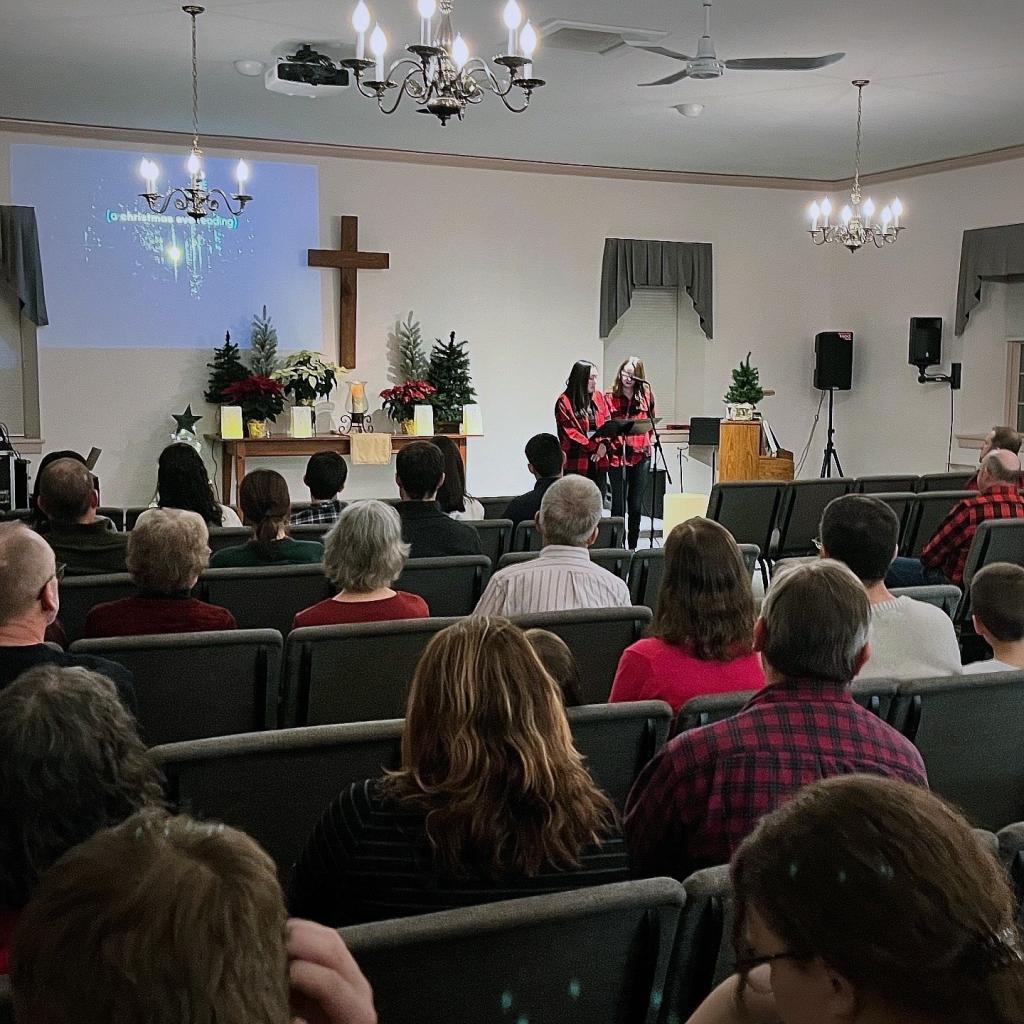
That’s part of what I’ve been reflecting on as I mark four years at River Corner Church.
The beginning of April was defined by my 44th birthday, and the anniversary of the past four years at River Corner Church as a pastoral leader.
I started at River Corner Church on April 1, 2022.
It has been four years of a simple community of Jesus followers.
Four years of worshiping, learning, serving, and walking through life together.
Four years of highs and lows—of joy and loss, of people coming and going, of growth that is sometimes visible and sometimes quiet.
We have lost some deeply loved people in the midst of this journey and gained others.
And in the middle of all of it, one consistent thread:
We’ve been learning how to call things out in one another.
Not perfectly. Not consistently. But intentionally.
Some of the most meaningful moments haven’t happened on Sundays, but around tables, in conversations, and in ordinary life.
The past four years have been focused on giving a new lease of life to this church. They also gave me a new lease on leadership. I think the next season is about practicing becoming the kind of community where people can discover what God has placed in them.
I think the next season is also about inviting new people into our church community, and forming the grace, gifting, or capacity God has given them.
A Season of Healing and Clarity
As I reflect on the past four years at River Corner Church, I said this has become a new lease on life not only for the church, but I think for me. This is what I mean by that. Personally, this season has been one of healing and clarity.
Before saying “yes” to River Corner Church, I was considering leaving the area. My family loved Pennsylvania more than I did at the time. But somewhere along the way, that changed. I’ve grown to love this church and this place in this season.
I love gathering with this community. Our conversations are honest. There’s a simplicity and authenticity here that feels like a gift. We are laidback and unpretentious, which has given room for our faith to grow, as well as that of our children.
God has used this community to reaffirm my own calling—to steady some of the insecurity I carried from past ministry experiences and to root me again in what I believe I’m meant to do.
Over the past four years, I have come to a clearer understanding of my calling and gifting. That is important to name. Even when our grace, a gift, a capacity is named and formed, it needs ongoing forming and growth. The church provides that.
As I serve as River Corner Church, it has allowed me to work on finalizing a rule of life, values, a ministry philosophy, and a personal philosophy has helped anchor the grace, gifts, and capacities God has given to me.
It has been a season of growing clearer and more confident in my capability.
As I reflect what the next season for River Corner Church should include, many things come to mind. However, part of this next season has to be naming those graces, giftings, capacities in others. Then giving them space to grow.
Being part of a small church community has caused my kids to grow in some ways that encourage me. Only God knows what the future looks like for them. In the meantime, I have been encouraged by the way a small church has given them confidence in biblical study with adults, leading worship, running sound and tech, but also growing confident in what the local church is supposed to be as a place of prayer and worship.
There’s something about a smaller church where people can’t disappear—and that’s actually a gift. We’ve had to rely less on programs and more on presence.
I want to spend my life calling out what God has placed in others.
I want to help people see it, name it, and step into it.
Not just for the sake of the church as an institution, but for the sake of the Kingdom of God expressed in everyday life.
An Invitation to Step In
I don’t know exactly what the future holds—for this church community or for me (and our family). I do believe this has been a season marked by serving out of the grace that God has given us.
I hope I’ve loved and served this community well. And I hope to continue doing so for as long as God has us walking together in Jesus’ church, cause, and calling.
If I could encourage you in one direction, it would be this:
Find a local church where you can explore your God given grace, gifting, and capacity.
The church community is not just a place to attend. Not just a place to observe. The church is a place to invest and participate.
Find a community small enough that you can be known—and where there’s space to try, to fail, to grow, and to serve.
The church isn’t just a place you go.
We need to stop thinking like this.
It’s a place where you learn how to live out who God has made you to be.
Find Your Place. Join Us
And if you’re near us, or looking for something simple and rooted:
We gather on Sundays at 10am at River Corner Church. We’re a laid-back, unpretentious community trying to follow Jesus in ordinary life.
River Corner Church is a simple community of Jesus followers, rooted in everyday life, and trying to find the sacred in simplicity.
You’d be welcome to join us.
Closing Thoughts
So maybe the next step isn’t complicated. Pay attention to what God has placed in you. Pay attention to what you see in others. Name it. Make space for it. Step into it. Because when those small moments happen—when grace is named and lived out—people begin to come alive. And that’s where it all began.
In a smaller church, every “yes” matters—and every person shapes the community.
I really do believe many are walking away not from Jesus, but from a faith they were never given the chance to practice but were told to consume.
Take a moment and reflect in the comments:
- What’s a gift or capacity in you that someone else helped you recognize?
- How has your local church helped (or not helped) you discover your gifting?
Thanks for reading. I’m Jeff McLain, and I write the Lead a Quiet Life blog on Patheos, exploring Christian spiritual formation and the call of 1 Thessalonians 4:11–12 to lead a quiet life in a noisy world. If this post resonated, share it, leave a comment, or connect with the Lead a Quiet Life page on Facebook. You can also learn more about me at jeffmclain.com.













 Ad-Free & Subscriber Log-In