

There is a consistent pattern throughout Scripture: God calls the people of God to settle into the promises and places God has called them, with a life shaped by God’s presence.
In the garden, humanity is formed to live with God as enough (Genesis 2). In exile, when everything familiar is gone, God tells the people of God to build houses, plant gardens, and live faithfully in a foreign land (Jeremiah 29:4–7). When the people of God are finally brought toward the promised land, the invitation is simple—trust God and step in—but fear and insecurity hold them back (Numbers 13–14).
Again and again, the call is not toward complexity, but toward a steady, dependent life with God.
This way of life continues into the New Testament. Jesus is not anchored to a place—in fact Jesus has “no place to lay his head” (Luke 9:58)—but we see Jesus is anchored in a sustaining and anchoring relationship with the Father. Paul echoes this “quiet way” posture, calling believers to contentment with simple provision (1 Timothy 6:8) and urging them “to make it your ambition to lead a quiet life” (1 Thessalonians 4:11–12). In fact, those who don’t, shouldn’t eat (2 Thessalonians 3:10).
This quiet life is not passive. We aren’t called to be the “quiet in the land,” as sometimes is said to describe the Amish, Mennonites and other similar groups. The quiet life is deeply intentional and a way of resistance in chaotic and noisy cultures.
It is a life formed in stillness with God. To learn to be still with God is what makes God’s name exalted (Psalm 46:10). To lead a quiet life is to live a life not consumed with comparison or distracted by the noise of others. A life marked by faithful work, presence, and a steady witness. This quiet way resists the constant pull toward more—more platform, more attention, more activity—and instead embraces a slower, quieter dependence on God.
At its core, it is a life of right vision and intentional formation.
A life lived like this also is one that learns to trust God before everything is fulfilled. A life that holds onto His promises even when they are not yet fully seen (Hebrews 11). This way of life is a life where faith is shaped more by hearing than by sight (Romans 10:17). Faith comes by hearing.
This is one way where Ezekiel 37 meets us.
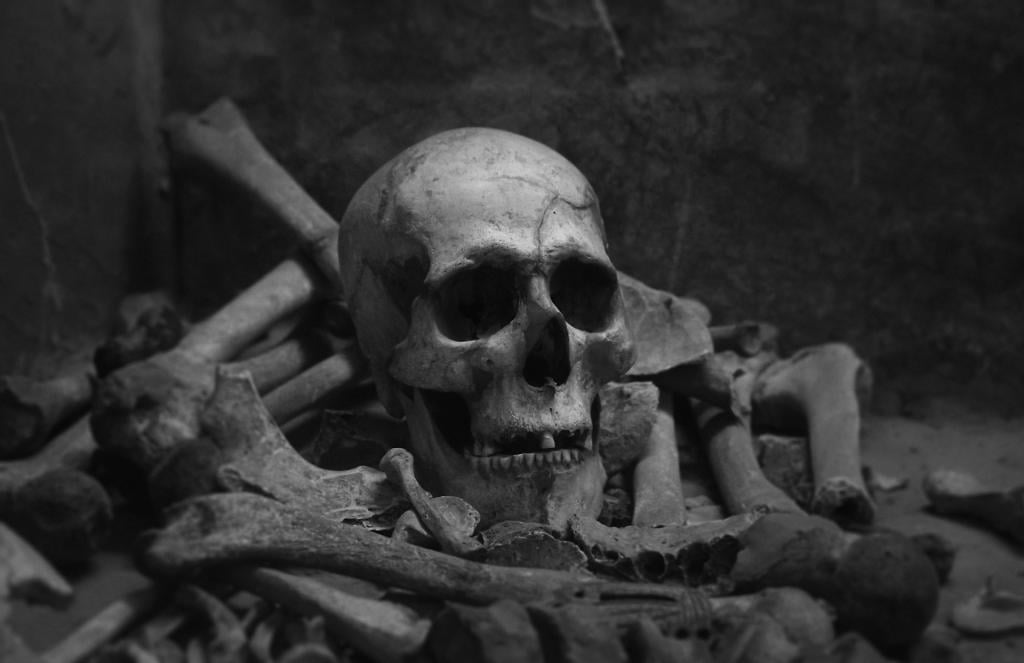
The valley of dry bones is not just a dramatic vision—it is a picture of people whose lives have fallen into disrepair and despair. It is into that reality, that God speaks, moves, and begins to restore.
There is a promise.
There is a sound.
There are signs.
There is a process.
In this vision, God breathes life—but the people of God must learn to notice what God is doing and step into it.
Before I get into Ezekiel 37, let me say this: a quiet life, a simple way, is not about withdrawal. It is about resistance—resistance to the noise, the pressure, and the illusion of control that the world tries to form in us as a way of life. For me, a quiet way is about living with a God-given vision, guided by the voice of God, and sustained by complete dependence on God in the moments where life is so dry and hope left decades ago.
And in that kind of life, even the smallest movement—the faintest rattling—matters.
A Warning About The Lens for Ezekiel 37
There are several ways people interpret the vision in Ezekiel 37. There are certainly some who connect this a prophecy to nationalistic thinking, and that it was fulfilled in 1948 when the modern nation of Israel was formed. They see this as the plainest reading, which ignore parts of the text to make it. There are others read it primarily as an end-times passage, pointing to a future resurrection. Though I believe in a future resurrection and the hope the Messianic era would bring, the bodies are uncovered in this vision. Many others understand it through a Messianic lens—seeing it fulfilled in and through Jesus. Joel said God would pour out his Spirit, and Isaiah said that Spirit would bring life and restoration, and Jesus promised that same Spirit to us to remind us of all he said and did, and to continue the mission.
That latter angle is the direction I take. Not because the other readings have no merit, but because they often create tension with the immediate context and purpose of the passage. This vision was first given to a broken people in exile. It needed to speak to them before it spoke beyond them. In this story, God is not offering abstract speculation, God is speaking into real despair. In this post, I am only looking at Ezekiel 37 as a vision of restoration—one that shows how God begins to reassemble what has fallen apart, and ultimately how God breathes life back into the people of God through the Holy Spirit. God did it. God continues to do it. God will do it finally in the end, which is really the beginning.
The lens for this blog post is that God doesn’t just promise change—God gives the people through the prophet a vision that shows His promise for transformation. God lets them hear the sound of their story being put back together. Bone to bone. Piece by piece.
And this restoration is not merely political or geographical. It is deeply spiritual. It finds its fullest expression in the Messiah—where God’s Spirit is not just near people, but actually transformatively within them and they are brought back to life. This is a vision meant to reframe their despair. And it can speak to ours too.
The hand of the Lord was Near Me
Ezekiel 37 is one of the most well-known passages in Scripture. If you grew up in church, you probably heard the story early on. Maybe you even sang the song about the bones connecting right after you sang Father Abraham. Sadly, what often gets reduced to a children’s lesson is actually a deeply honest picture of despair. The fall of Jerusalem left God’s people shattered. Their way of life was gone. Their identity felt lost. Their relationship with God felt distant. And in their grief, they began to say, “Our bones are dried up and our hope is gone.” They weren’t just discouraged. They felt finished.
The image God gives Ezekiel matches that reality. Not just bones—dry bones. Exposed. Unburied. Bleached by the sun. This is not recent loss. This is long-term despair. After years and years of struggle, hope had faded. You may know that feeling. There are things in your life that you have wrestled with for a decade or more and the hope got up and went a long time ago. There are seasons where you can’t see tomorrow, let alone five years from now. Everything feels uncertain, unstable, and beyond your ability to fix.
That is where Israel is.
And yet, the passage begins with this statement: “The hand of the Lord was on me.”
The word describes the hand of God that reaches out. The same word is used to describe the “pointer” used to read the Torah so that we keep our distance out of reverence. Though God is far away, in the wilderness moments, God is not absent.
The Spirit Leads Us Into Hard Places
The first thing the Spirit of God does is brings Ezekiel into the valley. That is how the Holy Spirit works so often in our lives too. It is not a place Ezekiel would have chosen for himself. It is not hopeful or comfortable. It is a place marked by loss, failure, and finality. And yet, this is where the Spirit leads him.
We see the same pattern in the life of Jesus at the start of His ministry (Matthew 4:1–4). Sometimes the Spirit leads us into places that feel like despair—not to crush us, but to reveal truth. God is not trying to beat us down. He is showing us what is real and teaching us what we depend on.
The valley exposes what is true.
When Only a Miracle Will Work
God asks Ezekiel a question: “Can these bones live?” From a human perspective, the answer is obvious. No. Actually, it is more emphatic than just “no.” Ezekiel could see. He has eyes. These bones are not just dead—they are long gone. There is nothing left to work with. Yet, his response is one we cannot ignore. Ezekiel responds, “Sovereign Lord, you alone know.” God is Soveriegn, he is above all things with power and authority. God knows. This is an intimate knowing, inside and out, like what takes place in a sexual relationship. God has complete knowledge of the things we don’t, even about ourselves.
This is one of the moments that Ezekiel would probably struggle to say, “I believe in miracles…” as he overlooked the valley. Yet, we all know those moments. There are moments in life where we know only a miracle will work. You’ve said it before. “It would take a miracle for this to change.” Ezekiel stands in that exact place and refuses to pretend he has the answer. We need to do the same. How Ezekiel responds matters most.
Instead, of pretending to know, Ezekiel places it fully in God’s hands.
That is what faith looks like.
God, you know, and I want to know what you know. You are sovereign, I am submitting to that.
Ezekiel is modeling a still life, a quiet way, he is leading a quiet life dependent on God.
Stillness Positions Us to Hear God
Ezekiel hears God because Ezekiel is waiting on and walking with God. Ezekiel is attentive. He is listening. He is present. God doesn’t just show him the problem—a valley of dry bones—God gives him vision and instruction. God reveals the plan, which God then plans to enact through people. God has always done that. We were graced to be ambassadors of God’s Kingdom here and now, image bearers, carries of God’s good news and goodness in the world. God forms us in the image of Jesus for the sake of others. To wait in and walk with God will position us to hear God, and then we are to catch the vision and walk it out for the reconciliation and restoration of others, which also becomes part of our own healing journey in some God ordained way.
If we are not cultivating stillness, we will miss what God is saying.
We cannot participate in what God is doing if we are not listening for His voice (Romans 10:17).
Restoration Is a Process
When I read it this past week, I noticed something. What follows the prophesying is not instant transformation. It is not the throw the bones in the microwave for thirty seconds and get your hot pocket kind of transformation. We want that kind of transformation, but more times than not it is a process.
- First comes the vision.
- Then the bones come together.
- Then tendons and flesh appear.
- Then skin covers them.
- But there is still no life.
- Finally, the breath—the Spirit of God—enters them.
- Then they stand.
- Then they become what they were meant to be i the place God promised them to be.
This is how God restores. Slowly. Intentionally. In stages.
We often want immediate change, but God is forming something deeper.
There Is No Life Without the Spirit of God
Before the breath comes, the bodies look complete. Structure is there. Form is there. Everything appears right. However, there is no life in the bones. Them bones are still not alive. For me, this is the warning embedded in the passage. It is possible to look put together and still be spiritually lifeless. Going further, they were in a group, which tells me it is possible to be part of a community that has activity and structure, but lacks the breath of God.
Real life comes only from the Spirit.
Four Movements of a Spirit-Filled Life
This passage offers a simple pattern for how we respond to God.
- Sit in stillness.
- See with spiritual eyes.
- Say what God has commanded.
- Settle into the life God gives.
Stillness helps us hear.
Seeing allows us to see beyond what is in front of us.
Saying is about obedience calls us to speak and act on what God says.
Settling is learning to live in the place God has given, sustained by the Spirit of God.
Warnings We Should Not Ignore
There are also clear warnings in this vision. You cannot bring life back to your own bones. Take serious note, you cannot define what is possible apart from God. Vision matters, but it must come from God—not just our desires (Proverbs 29:18). And not everything that looks “alive” actually is alive. So, for that reason, be careful what shapes you. Be careful what voices you follow. Be careful what kind of community you build your life around.
Only the Spirit of the living God brings true life.
Listen for the Rattling
Since I was a child, I have wandered about the sound of the rattling bones. I can imagine it. It’s creepy and exciting all at the same time. There is a moment in the story where something begins before life fully appears. There is a sound. A rattling sound.
There is a movement that begins before full life appears.
Sometimes the first sign that God is at work is not a finished miracle, but a subtle shift. It starts with a change in the way we speak, or think, or a change in our habits. There are real tangible signs that God is at work in our lives. They are subtle because they are not the promised land yet.
However, there is something to encourage us along the way. Something that makes us say, “I saw the sign, it opened up my eyes, I saw the sign.”
In order words, this story reminds us to: Listen for the rattling.
To quote from a conversation between God and another prophet, God says, “For I am about to do something new. See, I have already begun! Do you not see it? I will make a pathway through the wilderness” (Isaiah 43:19, NLT).
Or to quote from God the Father Himself in the vision of John known as Revelation, “”And the one sitting on the throne said, ‘Look, I am making everything new!”” (Revelation 21:5, NLT).
The signs of the coming together sound like rattles. Moments of excitement. As Peter said to his church spread out in persecution, “So be truly glad. There is wonderful joy ahead, even though you must endure many trials for a little while. These trials will show that your faith is” (1 Peter 1:6-7, NLT).
Listen for the rattling.
God Brings Life, We Live It
But it’s not all about feeling and sounds, in these dry moments where all we hear is the rattling, there is responsibility. Ezekiel had to speak. The people had to stand. And then they had to live in what God restored. God brings life—but we walk it out.
And we are called to walk it out.
God brings life—but we live it.
So wherever you find yourself today—In a place of dryness, uncertainty, or waiting:
Remember:
- The hand of the Lord is still on you.
- The Spirit is still at work.
- And what looks dead is not beyond the reach of God.
- Only God can bring breath.
- And when God does, everything changes.
For now, pay attention to the rattling.
A Quiet Way of Life
And in the end, we arrive back where we began. The call is not to chase noise, force outcomes, or manufacture life on our own. It is to settle—to live quietly, faithfully, and attentively in the places God has given us, trusting that the presence of the Spirit of God is enough. The same God who formed life in the beginning, who sustained His people in exile, and who raised dry bones in a valley, is still at work today. God still longs to put his vision and Spirit into our lives in a way that drives us towards greater contentment. Meanwhile, as we wait and sit in the stillness, our role is not to control the process, but to remain with God—to sit in stillness, to listen, to respond, and to walk forward in dependence. To look for and be encouraged by the sound of rattling that we hear. This is the quiet way. This is the simple life. And in that kind of life, even now, God is still bringing breath.
Join the Conversation
I’d be interested to hear how this is landing with you.
Where might God be inviting you into greater stillness right now?
Where have you ignored or resisted the leading of the Spirit?
Where are you beginning to notice signs—small or subtle—of the story God is writing in your life?
Take a moment to reflect, and if you’re willing, share in the comments.
Thanks for reading. I’m Jeff McLain, and I write the Lead a Quiet Life blog on Patheos, exploring Christian spiritual formation and the call of 1 Thessalonians 4:11–12 to lead a quiet life in a noisy world. If this post resonated, share it, leave a comment, or connect with the Lead a Quiet Life page on Facebook. You can also learn more about me at jeffmclain.com.













 Ad-Free & Subscriber Log-In