


This is Part Five of the Sojourn Series. You might enjoy reading the earlier chapters before this one. In this story, I share about discovering what it means to live out the Gospel missionally—in neighborhoods, coffee shops, and even among those who have lost everything.
Looking back, I think I was always missional, even before I knew the word.
Even during my spiritual sojourn—gathering with friends around sacred books from other faiths—I felt an ache to make the world better because of whatever truth we found there. Gandhi inspired me deeply in that season: “Be the change you wish to see in the world.” I believed truth should transform, not just inform.
When I finally returned to the Church through the Vineyard, that same impulse found its home. I began to see the Gospel not as a ticket out of this world, but as good news for this world. The Kingdom of God wasn’t something distant—it was breaking in here and now. The Kingdom was something that needed to be announced, demonstrated, and embodied.
Missional In Our Backyard
In those early Vineyard days, I believed the Gospel should make a difference in our neighborhoods. Church, I thought, should be incarnational—planted in the soil of our communities, not just renting space there.
So, I started small in that season of experimenting with my ideas and theology.
We organized an ongoing park cleanup for a neglected public space, handed out groceries, and tried to show love in tangible ways. We passed out bottles of water downtown, prayed for strangers, and called it “servant evangelism.” Behind it all was a conviction that the Kingdom of God was invading this world, and we were invited to collaborate with it.
Those days were messy, sincere, and formative.
Missional Books That Broke Me Open
A few books during that season cracked something open in me.
Frank Viola. Neil Cole. The Search to Belong by Joseph Myers. All the writings of Andrew Murray. They all challenged my ideas of what church could be. They shook me loose from my memories of a church defined by programs and pews.
Then came John Wimber’s Power Healing, Power Evangelism, and other Vineyard classics. They taught me that the Holy Spirit was not just for the sanctuary but for the streets. Taking it to the streets was a value we celebrated; this good news is not just for the frozen chosen, the interior and insular crew. I began to expect God to show up in the ordinary—and I think God did.
After California: Wrestling with Church Again
When Katie and I returned from California in 2011, I was disoriented. Our church planting efforts had fallen apart. Between the cost of living, health, and other challenges, we just never got our feet under us or on the ground. As I returned to Lancaster, I had these words on my mind that I believed were from the Lord, words given to me in the desert as we drove home. These words were “Create and share community.” That is all I wanted to do when I returned. I hosted concerts, authors, and taco nights, using these opportunities to reach new audiences and launch conversations on faith. Meanwhile, I personally wrestled with what church should look like and whether I still fit in the movements I’d known.
A friend handed me a Mike Breen book from 3DM. Honestly, my first reaction was resistance. Something about the tone rubbed me wrong. But over time, Breen’s work—along with the missional writing of Alan Hirsch—started to stir something deep. I attended a 3DM training weekend expecting to critique it, but instead, I left awakened.
I began to see my neighborhood differently. Discipleship became a focus. Even better, my understanding of being missional and a discipleship voice deepened within me.
Mission wasn’t about events or strategies. It was about rhythms—about how we live, love, and listen where we already are.
Learning to Love My Neighbor
When I began pastoring at East Petersburg Mennonite Church, my job was divided into thirds: young adults, families, and neighborhood connections. I was tasked with helping a 300-year-old church become missional.
I leaned on everything I’d learned—Viola, Breen, Hirsch, Frost, Runyon, Pathak—and applied it to a small-town setting. Like The Art of Neighboring said, the church doesn’t need to start its own party—it needs to show up where the party’s already happening.
So, I (as a pastor) joined the borough’s events committee.
We gave our parking lot for community gatherings. We served food, coached teams, volunteered, and opened our church doors for anyone who wanted to belong.
I often sat at the corner of local bars, turning conversations into confessions. I tried to embody the Gospel through proximity and presence. Some people found belonging. Others left when it didn’t feel like home. One person told me, “We love you, Jeff, but your church feels like someone else’s family reunion.” That one still stings.
Turning an old church toward mission is slow, holy work.
From the Neighborhood to the Margins
By 2020, I was tired and sensing transition. The world was in chaos—polarized, uncertain, post-pandemic. A fellow pastor’s words at a Panera hit me hard: “You can only stretch an old wineskin so far.”
I knew it was time to let go.
I began serving part-time as Director of Pastoral Ministries at Water Street Mission while still finishing my role at East Petersburg Mennonite. On August 31, 2020, I ended one season and fully entered another.
At Water Street, I found myself pastoring on the margins—walking with men and women experiencing homelessness, addiction, and loss. It felt familiar. I was back among the spiritually searching, just like I had been years before. Only this time, I carried the presence of Jesus with me.
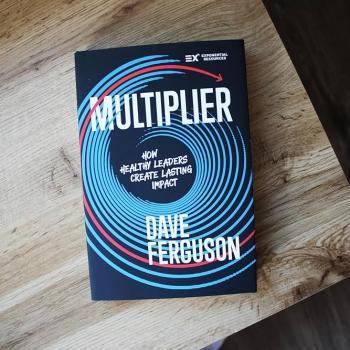
My ministry became incarnational—flesh and bone faith lived in the streets. I found mentors in people like Father Gregory Boyle (Homeboy Industries), and the missional network at Exponential, though I’ve grown weary of how many “experts” in those spaces never seem to get their hands dirty.
Now, five years later, I still serve in that work. It’s the church on the street. It’s the Acts 17 kind of faith—the kind that meets people at the philosopher’s stone of their own searching.
A Greater Missional Way of Life
At this stage, I’m no longer looking for the next model, resource, or conference. I’ve seen enough. I’ve read enough. More will be said about this in the next blog post.
The way forward, I think, is simpler and smaller.
It’s about faithful presence.
It’s about living out the Kingdom in neighborhoods, workplaces, shelters, and homes.
It’s about being the church that doesn’t just talk about mission—but lives it quietly and persistently.
Like I said before, the quiet life isn’t retreat or apathy.
It’s resistance. It is downward mobility. I think this kind of questionable living is more missional than anything in this day and age.
It’s the still, contagious life of God that transforms the world one conversation, one neighbor, one act of love at a time.
Coming Next: Becoming Post-Everything
Every movement—Vineyard, Mennonite, Missional—has shaped me. But in the next part of this journey, I’ll share how God began to strip even those labels away.
There comes a point when faith must move beyond movements, beyond systems, and beyond slogans.
That’s where I found myself—learning to live and love in the margins of it all.
Let’s Reflect Together
- When did mission first start to feel like part of your faith story?
- Where have you found God already at work in your neighborhood?
- How are you learning to practice faithful presence where you live, work, worship, and play?












 Ad-Free & Subscriber Log-In