

This is Part Two of the Sojourn Series. You might enjoy reading the first Part before this one. In this story, I speak about my journey into the Vineyard Movement.
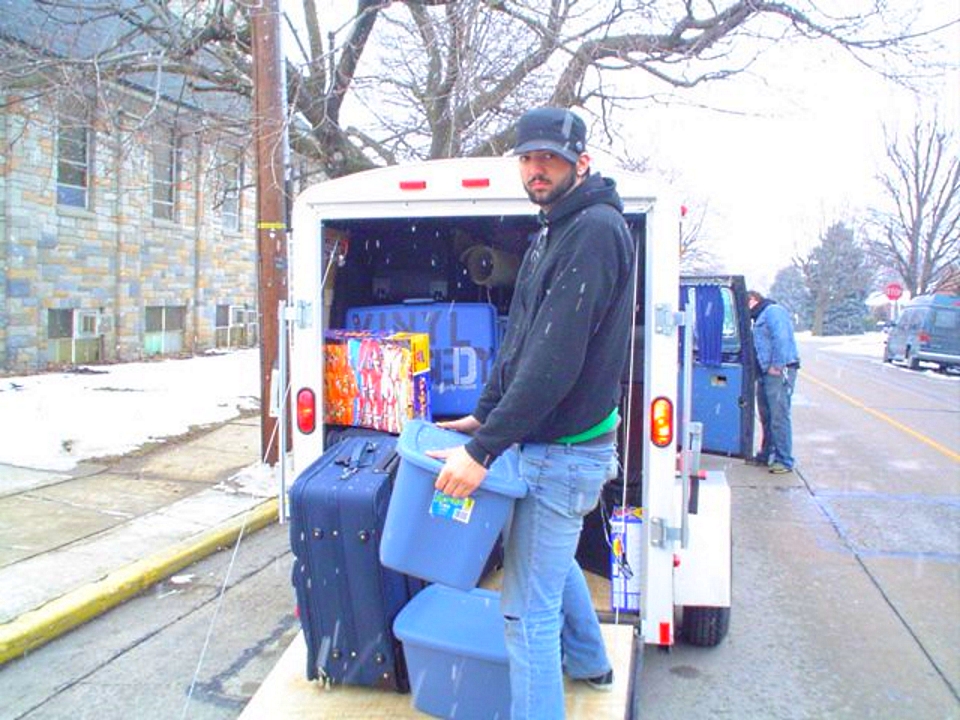
By the time 2003 came around, I was hooked on making the road my home. A few weeks on the road with organizations and bands set me alive in ways I didn’t know were possible. By 2004, I would quit my job at the theater and spend eleven months on the road. The traveling bone in me was alive and restless. I was hitchhiking between cities, sleeping wherever I could, following bands, engaging in activism, and supporting whatever cause or concert seemed worth being part of. Life was all about the experiences. I camped in urban streets among the homeless and in the dunes in the middle of winter. I ate out of dumpsters and resold collectibles I found in them. The open road had its own rhythm: gas station coffee, trucker diners and conversations with strangers, cold nights under bridges, and the comfort of movement itself.
If adventure was my main propulsion, the need for meaning was my second. I wanted to belong somewhere, even if that place was temporary. Each city and opportunity had its small pockets of community: activists, musicians, wanderers. We were a family of sorts, bound by guitars, cigarettes, shared meals, and endless questions. I was learning about others’ faiths, way of life, and paradigms.
There were moments of beauty on that road, but also moments of loneliness that burned through my soul. When I stopped moving long enough to think, I could feel a quiet ache growing inside me. For all my searching, I still hadn’t found a home.
The Dream That Started It All
It was around this time that I moved out of a townhouse and into a small studio apartment, and something unusual happened. I had been preparing for another long road trip when an unexpected desire began to stir in me—the desire to find a church community again.
I resisted it. I had spent years convincing myself that church wasn’t for me. My past experiences had left too many scars, and I had no interest in reopening them. But that longing wouldn’t go away. One night, I had a vivid dream. I remember parts of it now, twenty-one years later. The feelings the dream brought, I still remember vividly. I have always been someone who has had seasons of vivid dreams, but this one stood out. In it, I was walking through a local orchard. The dream was simple, yet filled with a strange peace. Waking up, I knew there was something called the Vineyard Church, that these were people for me to find community with, and that this dream was otherworldly. When I woke up, the words “Vineyard Church” were pressing on my mind.
At the time, I had no idea what a Vineyard Church was. I wasn’t paying for internet because I was saving every dollar I could for the road. So I dug through my trash for one of those free internet trial CDs—Juno or AOL, whichever came in the mail that week—and installed it on my old computer.
Typing “Vineyard Church” into Search.com (because Google wasn’t the king yet) led me to a small church plant just a few miles away. I learned the story through various websites about the Vineyard Movement. They had just begun meeting on Sunday mornings in a rented space. Something in me knew I needed to go.
The First Sunday Back
Walking into that Vineyard gathering for the first time was its own act of courage. After all the experiences I had written about in my first Sojourn post—the bizarre churches, the leech sermons, the tracts about beer and hell—I had developed what could only be described as a low-grade church PTSD.
Before I even crossed the threshold, I was already battle-planning my escape route. I scanned the room for exits, calculated how fast I could make it to my car if things got weird, and positioned myself as far back as I could without looking suspicious.
The church met in a building for another non-profit. It didn’t have its own property yet. They had only recently started meeting for Sunday worship after being just a Bible study for years. The space smelled faintly like disinfectant and wood. The chairs were folding, the lights fluorescent, and my expectations appropriately low.
As I sat there, still half on guard, I began noticing faces I recognized—people I’d worked with at different jobs over the years. They must have been Vineyard all along, but I’d never known it. They had never exactly let their freak flag fly.
Then came the moment that changed everything. The pastor, who in those days reminded me of a thinner Pillsbury Doughboy, walked up to greet me. He radiated spiritual warmth, a kind of kindness that was simple and genuine. He shook my hand in a way that said, You belong here, even if you’re not sure why yet.
I don’t know if he greeted everyone that way or if that was just how I received it, but I think he gave a side hug on the way in or out, and his presence just seemed to disarm me. Then, after a lifetime of feeling ignored by the church, he invited me to coffee. Everything began to unravel. For the first time in years, I didn’t feel the need to keep one eye on the exit. My heart softened. The church wasn’t my enemy.
I knew I was coming back. This was unlike anything I had been part of.
That small Vineyard Church community reminded me that church could still bring value to a person’s life. It wasn’t about programs or performance but about presence. People showed up for each other. In a world that often leaves us scattered, I began to believe that the local church could still be a place where people find belonging — where healing and honesty meet in the same room. Many of us would eat out together several times a month, and our wing and chili cookouts were special moments in our lives together.
A Strange Kind of Grace
Over the next few months, when I wasn’t traveling, I kept showing up. I wasn’t sure why. I still had my doubts, my sarcasm, and my restlessness. But something about that small community felt honest. It wasn’t loud or flashy. It was a place where people prayed quietly, worshiped sincerely, and didn’t try to impress anyone.
The pastor became a friend and mentor. He listened to my questions and didn’t rush to fix me. I could sit across from him with a cup of coffee, rant about church, challenge his theology, and he would smile and ask me more questions.
For the first time, I didn’t feel like I had to fake anything to belong.
I started helping set up chairs and tear down equipment after services. I invited my friends, the same ones I used to drink and debate with. One Sunday, I got baptized. It wasn’t a dramatic conversion moment. It was quiet, steady, like slipping back into something I hadn’t realized I’d missed.
What I was discovering was more than community; it was the quiet gift of being seen. The church, for all its imperfections, gave me space to start becoming whole again. It didn’t fix me, but it gave me room to breathe, to experiment, and to find God. I think that’s what church can still be for others, too — a safe place to start over, to learn grace by experiencing it.
Becoming Vineyard
In late 2004, that little church did something wild. They asked me to do announcements and even preach once. I don’t think they knew what they were getting into. My first response probably included some choice words and a few hand gestures that didn’t belong in church. But eventually, I said yes.
I discovered that sharing the story of Jesus felt natural to me, like finding a language I’d always spoken but forgotten. By 2005, I was spending some extended time in Southern California, chasing a girl (who would later become my wife) and hitchhiking up and down the coast.
While there, I ended up taking a job in the café and bookstore of one of the original Vineyard Churches, the one where the whole movement had started. I didn’t realize it then, but God was writing something deep into my soul. The people there were as warm and special as the church community back home.
Those six months shaped me. Late one night, while walking down Main Street in Huntington Beach, I had another vision-like experience. It was quiet but powerful. I sensed God calling me to return to Pennsylvania, to serve that small Vineyard church I’d come from, and to learn from its pastor as an understudy.
It wasn’t what I wanted. But I knew it was right.
The Return
So I took a train across the country, limping home both literally and spiritually. I was excited about what lay ahead, but sad to leave California. I was convinced God would take me back there eventually. By the winter of 2006, I was back in Pennsylvania, interning under the same pastor who had welcomed me years earlier. I started attending Vineyard Leadership Institute and church planting boot camps. At the same time, I was securing an apartment and getting ready for Katie to move back to Pennsylvania, this time as my wife.
Church was still weird to me. Transparently, I would show up to leadership meetings with a six-pack of beer, partly out of nerves and partly because I still didn’t know how to exist in “church world.” But that pastor kept letting me in. He gave me room to grow, to fail, and to be honest.
Before long, I was preaching regularly, leading small groups, and serving wherever I could. I began to see the church not as a perfect system but as a family of broken people trying to follow Jesus together.
Something in me had shifted.
About the Vineyard Movement
The Vineyard began in the late 1970s in Southern California, emerging from the Jesus Movement as a gathering of people hungry for authentic worship and real encounters with God. Founded by John Wimber, a former musician turned pastor, the movement quickly became known for its laid-back style, contemporary worship music, and emphasis on the Kingdom of God being both “now and not yet.” The Vineyard valued heartfelt worship, openness to the Holy Spirit, and doing the works of Jesus—healing, serving, and caring for the poor—in everyday, ordinary ways. It wasn’t about hype or hierarchy but about creating spaces where people could experience God’s presence and belong before they believed. Over the years, Vineyard churches spread across the world, remaining a movement marked by humility, compassion, and a longing to see God’s kingdom break into ordinary life.
The Way Home
I didn’t realize it at the time, but this season in the Vineyard was God’s way of teaching me grace—not the clean, polished kind, but the messy kind that meets us where we actually are.
Looking back, I can see how God’s hand was steady through it all, through the disillusionment, the detours, and the doubts. Like the Shepherd in Luke 15, He had come looking for me, not to scold or shame, but to bring me home.
“The Lord will fulfill his purpose for me; your love, O Lord, endures forever.” (Psalm 138:8)
Coming Next: Becoming Anabaptist
When that first Vineyard chapter closed, I didn’t expect to find myself among Mennonites. But God has a way of surprising us with quieter stories. The next part of this sojourn takes me into a slower pace, a simpler faith, and a deeper understanding of community.
Let’s Reflect Together
-
When have you walked into a new space with skepticism, only to find warmth instead of judgment?
-
What person or place helped you begin to trust again after being hurt by faith or community?
-
How has grace met you when you least expected it?

















 Ad-Free & Subscriber Log-In