

Chapter 7: Quest for working with opponents
▶ 60 Second Read: Moving from ideological warfare to structural partnership.
The Core Pivot: Moving from ideological warfare to structural partnership.
The Adversarial Trap: Loki misdirects the group on the bus, convincing them that business and government are the permanent enemies to be conquered through high-sounding academic arguments and intellectual force.
The Reality Check: Armed with youthful idealism and spreadsheets on supply-chain metrics, the students pitch factory owner Nathan on their macroeconomic theories. He rejects them instantly as clueless academics trying to optimize an industrial machine they’ve never seen run.
The Strategic Shift: Nathan hands them a masterclass in diplomacy: “Don’t force your product on me. Be my partner. P-A-R-T-N-E-R. Understand my problems first.” * The Floor Walk: Floor manager Nick reveals their true bottleneck—an entry-level assembly line sitting dark due to employee turnover, shift-coordination friction, and immediate personal crises.
The Engineered Pipeline: The students step into action as system integrators. They outline a concrete, decentralized network using a student-led hub-and-spoke transit carpool, a centralized dispatch communication node, secure legal proxy mailboxes for IRS compliance, and local charity partnerships for industrial clothing and hygiene stability.
The Tactical Breakthrough: Impressed by an operational system that solves his labor crisis rather than preaching charity, Nick agrees to pilot the program with three workers.
The Theological Insight: Back in the Vault, the students realize they had been treating the community as an opponent. They synthesize a radical interpretation of Jesus’s command to “love your enemies.” Loving an opponent isn’t weak surrender; it is a high-level cognitive shift to see their point of view, find common objectives, and build a workplace for the soul on shared terrain.
Themes: Idealism vs. Utility, Structural Social Integration vs. Superficial Charity, “Loving the Enemy” as Strategic Cooperation, The Soul as an Active Workplace.

Chapter 7: The quest for working with opponents
It had taken two weeks of pitching ideas, talking to the business school and local charities, and working out a solid plan that addressed all the issues. But they had done it. Now it was time to implement it.
Loki told them on the bus, “Business and government are the enemy. Your job is to out-argue them. Force your efficiency model onto them.”
They met briefly in the Vault with Professor Torn for a pep talk.
“Truth often needs a translator,” Torn began. “If your mission is ignored by those in power, you may be speaking a language, such as morality, that they have discarded, while ignoring the language of utility and security that they use to justify their existence. ‘Translating’ your work isn’t compromising your integrity—it’s weaponizing your mission so it can survive in a hostile environment.”
They braced themselves for the war ahead.
“Look at your current goals. Who are the ‘gatekeepers,’ those in business who make the decisions? What are the metrics they care about? Show them how your ‘why’ satisfies their ‘what.'”
This wasn’t the first group Torn had sent out on a humanitarian mission armed with convincing facts. But he knew the story all too well. Facts and convincing arguments weren’t worth a cup of coffee in the real world. Many missions ended right there. Would this one be successful? Internally he smiled at his group, thinking they would find a way. He nodded at them and they left, youthful idealism and confidence on full display. He hoped they returned without their idealism destroyed.
They went to three factories they had targeted as possibly needing workers. The first owner was “busy.” The next two slammed the door in their faces as soon as they heard the word homeless. The fourth owner granted them five minutes.
They paraded confidently into Nathan’s office. It was nothing like a corporate style office with ostentatious trimmings suggesting wealth, but instead looked nice but cluttered and busy.
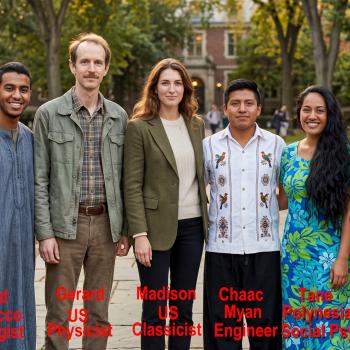
“What we’ve been working on is business efficiency, stability, and output, and how this will eventually relieve the tax burden for supporting others,” Madison said.
“And the great PR this will give companies because employee money gets spent in the community and makes communities more resilient. So everyone benefits,” Tane added.
Nathan looked doubtful and uneasy, like he had just let a carnival barker into his office, but let them continue.
Gerard went first, tapping his tablet. “My physics analysis, if you’ll allow me, is I’m framing the ‘closed loop’ of homelessness as a “Supply Chain Failure.” If a manufacturer can’t find stable labor, their supply chain is brittle. I believe the integration of ’employable’ workers isn’t as a charity act, but a risk-mitigation strategy for local manufacturing. If we stabilize the worker, we stabilize the factory output.”
Nathan looked at him quizically, seeming to be waiting for a clearer picture.
Tane followed. “My focus is on “Workforce Stability.” My data shows that the cost of ‘churn’—constantly replacing burnt-out, exhausted workers—is higher than the cost of implementing a structured re-entry program. It’s about keeping the talent we already have from slipping into the streets.”
Madison looked up from her historical records. “And this relates to “National Security.” The Roman Empire didn’t fall because of barbarian invasions; it fell because it spread its financial obligations too thin in too many places, and lost its domestic base by ignoring the ‘masterless men’ who felt they had no stake in the empire’s survival.”
Nathan looked at his watch.
Zaid finished the pitch. “And the Multiplier Effect. Every dollar we ‘waste’ on supporting re-entry is actually an investment that cycles back into the local economy five times. I’m documenting it as a fiscal stimulus.”
The room went quiet.
Nathan looked at them like they were crazy. “You have no idea what his business is about or how to make it work better. I went to business school at night, got my B.S. I know high-sounding language when I hear it. I think you’re well intentioned but clueless. You have fancy ideas that have no basis in this world. You’re trying to optimize a machine you’ve never even seen run.”
They apologized, murmuring among themselves, looking defeated they turned to leave.
Nathan took pity on them because they were trying to do something good.
“Guys, you should probably get some sales jobs and learn how to speak to prospective clients. This was sad. I want you to listen to me for a moment. If you want to get this right, use a better strategy. If you want to sell me on an idea, don’t force it on me–I have people blowing in here all day long trying to convince me how their product is better. NO. Be my partner. P A R T N E R. Understand my problems and show me how I can do things better. Then you might get somewhere.”
The group looked down at the floor. “Sorry for taking up your time. I guess we need a better understanding of what you do,” Madison said.
“You mean well, so I’m going to help you out. I’ll get one of my floor managers to show you around.”
****
“Nick, these are five college students who think they might be able to help us solve problems on the factory floor. Hint, they’re trying to get jobs for homeless people.”
“Homeless? I have enough headaches without them coming in here.”
“Shove some reality in their face. I know you’ll enjoy that. Maybe something good will come of it.”
“Would you be willing to show us your problems and if we have solutions, give us a chance?” Chaac asked. “I’m an engineer.”
Nick nodded and walked away, beckoning them to follow.
“If it’s problems you want, I’m overstocked on those.”
They entered the manufacturing floor. It was brightly lit with overhead neon lights. Workbenches formed an assembly line where workers sat assembling components into widgets and soldering circuit boards on wave solder machines. The air smelled of solvent, and the machine noise was a harmony of endless thumping, transporting them from the quiet classroom into the mechanized guts of the real world.
He stopped in front of a machine. “This machine uses tantalum to make capacitors. Tantalum comes from the Congo. I can’t get it here, so production is weeks behind. If they aren’t having armed conflict, then strict government export regulations get in the way. If not that, then they’re having a human rights crisis. When they get over that, we have very fragile global shipping routes to deal with. This is a frigging nightmare. Can your homeless people fix that?”
“We’ll work on it.”
“I won’t hold my breath. No one has solved it yet. Do you see that assembly line over there with all the lights turned off?”
They nod affirmative.
“It’s not that we don’t have the material. We have stacks of it and plenty of orders to fill. This is what makes me doubt your plan. We use entry-level workers on that line and for packing, sorting, and basic assembly. It’s simple stuff. But we can’t keep these people. The moment a better job comes along, or they have some crisis like they’re kid gets sick, they’re gone. They don’t even call in or sometimes even receive their last check. They just stop showing up like aliens abducted them. We’ve lost two big contracts because of THEM.”
Tane looked at the others and they smiled. “The thing about the homeless is they are mostly trained people who had a life crisis and lost everything. Most are incredibly reliable.”
“So where do I call them to come in for an interview if I wanted to? Because if they don’t have a cell phone and I can’t call them for a last minute shift change, they’re useless to me.”
“We’re working on that aspect and have a solution. We have a team from the business school working for extra credit, who are going to do several things. They set up a Centralized Dispatch at the school. We give you a single contact number. If you need to adjust a shift or tomorrow’s headcount, just call. The students will contact them to pass the shift change to the employees ASAP.”
“I guess that could work. I don’t know if I trust students either.”
“If they screw up they lose their credits. They like credits,” Madison advised.
“Well, what about a street address? We have to be able to communicate with them by mail. The law requires a physical address for withholding, and we’re not going to run afoul of the IRS.”
Chaac replied, “The students created a designated legal proxy for a physical mailbox. This provides the workers with a legally compliant, static street address to put on their tax and payroll forms. All corporate paystubs, safety certification cards, and onboarding documents route to this secure lockbox, satisfying corporate compliance while keeping the worker active on the line.”
“Huh!” He exclaimed in pleasant surprise. “I think maybe you have half a shot at this. But the biggest problem of all might be getting them here. I mean, they’re all over town, and they’re transient.”
Tane smiled at him. “The business school created a hub and spoke system that gets them to a central pickup point that is keyed to fifteen minutes early for local shifts. They have designated gathering points and times for volunteers to get them to the hub. If we get this going, hopefully the city will pick this up with small busses.”
“Yeah, good luck with the city. Anyway, maybe that could work to get them here. But will their clothes and cleanliness fit our environment? We don’t need people dressed for a fashion runway, but they need to be clean, hair trimmed, and not dressed in rags.”
“There again we’re making progress,” Tane said. “Organizations like Dressed for Success or local clothing banks frequently receive high-quality donations, but they are often overrun with corporate office wear (suits and ties). The students are setting up partnerships with them to explicitly source “Industrial Baselines”—sturdy jeans, plain t-shirts, and thick socks. And not just that, the students are coordinating with the local community center, YMCA, and churches to secure dedicated early-morning shower access slots for the workers right before the morning carpool departs. They will fit in.”
“Wow. And haircuts?”
“A local barber college is partnering with a mobile charity van to set up a temporary clinic at their community hub.”
They could see he was impressed, and it felt good to them. “If I may, how is all of this going to be financed. Obviously there has to be money involved.”
“You’ve probably heard of micro-loans that are used to help individuals get their businesses started,” Zaid said. “Well, the business school agreed to give the students a micro-endowment to get this started. Then when the new employees get paid, the check obviously comes to the student group for pickup. They ask for a portion to be repaid.”
“And get this. With a paycheck or two in hand and looking respectable, the person can then rent a hotel room or an apartment for one to three of them and get off the street and rebuild their life. Problem solved.”
“Will they work shift work? The next shift I need to fill starts at 11 PM three days from now.”
“They will. And one of the best parts is they are generally already trained or skilled and can be promoted to fill your upper-level jobs.”
“And many of these homeless are veterans. Studies show they consistently demonstrate exceptional discipline, punctuality, and loyalty. You would be lucky to have them.”
Nick studied the group and thought about it for a moment. “I’ll pass it by Nathan. We’ll try three of them. If they can get by personnel and are clean, respectful, show up and do the work, maybe this high-concept idea of yours might work.”
The radical truth that human dignity is a prerequisite for a stable economy seemed like it might be on the march.
***
They returned to the Vault for review with Torn. Torn wanted to go over the business planning and analysis to see if they’re working the education they’ve received.
“Wait, wait, wait,” two of them said in unison. “We just discovered something very important,” Madison said. “Business leaders want people who are on their side, not just talking a good game with outside ideas, but truly understanding what their business is about and being an actual partner in improving it.”
Torn said, “This reminds me of something Jesus said. Do you know what it is?”
Tane smiled. She knew. “We’ve been looking at this all wrong. We’ve been thinking of business and the city as our opponent and not really seeing their point of view. But you know, Jesus said to love your enemies.”
Chaak broke in. “Enemies are people who are opposed to each other and even sometimes come into violent conflict. But if we can see their point of view and see if we can help them realize their goals or where we can work together on things we both agree on, maybe that’s a better way.”
“Loving an opponent doesn’t mean weak surrender,” Torn said. “It means shifting perspective to see their point of view, finding common objectives, and working together on shared terrain.”
“And it means once again Loki misdirected us,” Madison said.
It was Friday and a day to admire what they had achieved this week. They looked at each other in admiration, no longer discouraged by the real world, but ready to rebuild the system from the inside out.
Our answer is God. God’s answer is us. Together we make the world better.
Author’s Website with life and spiritual resources: Dorian Scott Cole .com
Recent website articles
- Theology of Catastrophe: a dissertaton style paper on why catastrophes happen.
- Ekklesia: a new format for a Jesus Gathering.
- Systematic Theology for the 21st Century
- Major Decision Matrix











 Ad-Free & Subscriber Log-In