

Chapter 8: The Quest for Doing it Right
The Triangulation of Public Value
In Chapter 8, by conducting a structural review using the “Five Whys,” they drill past surface labor shortages to expose the “Pharmacy of Control”—a bureaucratic web that profits from managing dependency rather than restoring personal agency. Backed by a powerful Harvard framework of Public Value, Professor Torn challenges the group to anchor their economic design in the pursuit of Public Value. True societal transformation requires more than providing a material baseline for survival; it demands the engineering of a mutual social contract rooted in dignity, autonomy, and right relationships. But as the students prepare to scale their blueprint, a new threat emerges: the corporate and union grapevines have mobilized, stoked by the hidden whispers of Loki. The team must now transition from academic theory to active change management as they prepare to confront entrenched institutional gatekeepers.
The Insight: True systemic change cannot be achieved by merely treating surface symptoms or forcing isolated fixes. To break the cycles of institutional dependency, an architecture must account for the full spectrum of stakeholders—aligning the material baselines of public policy with the deeper, psychological demands of human dignity and mutual responsibility.
The Action: When managing complex structural transitions, do not treat opposing stakeholders as static enemies. Identify their core vulnerabilities—whether it is a manufacturer’s margin or a union’s protectionism—and utilize precise, human-centered design to rewrite the problem into a shared value proposition.
The Task: Map the institutional gatekeepers in your own ecosystem. Identify where protective boundaries or defensive habits create unnecessary friction, and outline a multi-criteria strategy that respects their operational needs while driving systemic progress.
Themes: Systemic Problems, Public Value Frameworks, and Strategic Change Management.
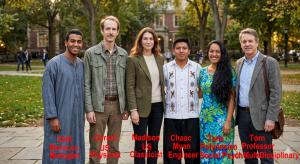
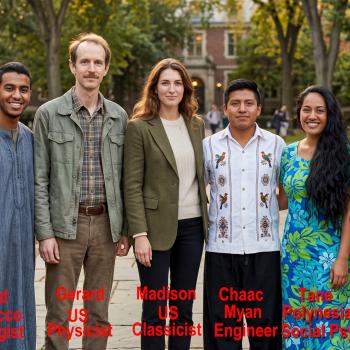
Chapter 8: The Quest for Doing it Right
The five students piled onto the bus in a jubilant mood. Loki was quiet. His usual barbs had been demoted to ping-pong ball sharpness.
They picked up Daniel Q. Walker. He no longer looked down but acknowledged each one of them. This was a major step forward.
As the bus pulled away from the curb, Gerard said, “What’s the matter, Loki? Cat got your tongue this morning? We got three homeless people hired.”
“That’s three in an ocean,” Loki muttered. “And is it God’s work or man’s work? You don’t know what you’re doing until you get right with God.”
The group ignored him.
When they entered the Vault, Professor Torn was there, and so was Nick, the manager from the factory. Nick acknowledged each of them and Daniel as they walked through.
As they settled into their chairs, Torn said, “Nick asked to observe, and we welcome him.”
“Hi, Nick,” everyone said.
“This group amazed me,” Nick said. “It made me want to see how this works.”
“You’ll see it in some depth today,” Torn said. “It’s time to review the entire process and see if we’re on track.”
Torn looked at the group. “This may seem basic since it’s in the back of everyone’s mind all the time, but let’s look at the Five Whys of why homeless employment is a problem and what it can solve. Why 1—let’s call it The Surface Metric: Why are manufacturing lines sitting dark?”
Tane replied, “Because entry-level transient workers have an incredibly high turnover rate. The homeless are good candidates to stop that because they are very motivated to be reliable.”
“Amen to that,” Daniel said.
Torn nodded. “Why 2—The Immediate Friction: Why do they stop showing up or fail to report shift changes?”
Madison replied, “Because they lack active cell phone plans and stable transportation to receive schedules or reach the plant. We fixed that by using students at the business school to handle the coordination.”
“Why 3—The Infrastructure Gap: Why don’t they have reliable phones or transit?”
Chaac replied, “Because they lack a permanent physical address to secure steady banking, cell contracts, or local structural stability. We fixed the permanent address problem by having the business school students create a designated legal proxy for a physical mailbox. This provides the workers with a legally compliant, static street address to put on their tax and payroll forms.”
“Why 4—The Administrative Barrier: Why can’t they just use local shelters as a permanent address to clear corporate HR and IRS guidelines?”
Madison answered, “Well, they mostly live on the street, not in shelters. But standard shelters are designed as short-term ‘hospital-type palaces’ for temporary survival, not as legally compliant corporate mailboxes or long-term operational anchors. There’s a hole in the system.”
“Why 5—The Root Systemic Fault,” Torn pressed. “Why has the city left them on the street or built temporary survival shelters instead of legal, high-stability residential workshops?”
The students looked at each other, not sure how to reply.
Zaid finally spoke up: “That’s a hard question with roots in a lot of things we’ve discussed. There’s a kind of ‘Pharmacy of Control’ that includes the city, the state, the federal government, the aid organizations, and the ‘Not In My Backyard’ people. It somehow benefits from managing the problem as a dependency or political issue, rather than investing in human-centered, scalable partnerships that restore personal agency.”
Nick looked at them. “I kind of get what you’re doing. But I deal mostly with plugging capacitors onto circuit boards and shipping products on time.”
Torn said, “We believe that we’re all responsible for solving problems. What you and Nathan did is incredibly important in this process. You opened your doors, took the risk, and everyone benefited. So by being here, you’re learning just how vital this foundation is.”
Nick nodded in agreement.
“Human-Centered Design? We touched on this already. Have we achieved this?” Torn asked.
“We started at a high level and asked what we could do,” Chaac said. “Loki rubbed our noses in the reality of the street. So we started there. I would say that while we aimed for the stars conceptually, we brought it down to a deeply human level.”
“I agree,” Torn said. “How about Multi-Criteria Decision Analysis? Did we check that box?”
Madison replied, “Everywhere we turned, there was a multitude of new criteria. There was the high-level problem, the person on the street, and the decision-makers in government and business.”
Tane added, “And we probably misdiagnosed the role of those stakeholders initially, thinking of them as opponents. Thanks to Nick, we realized we are all on the same side—we just have different considerations. That was a huge wake-up call. Thank you, Nick.”
They all applauded Nick.
Tane continued, “And the primary stakeholder, the person on the street—Daniel. He made us see the many practical aspects of the problem from his direct experience.”
They all applauded Daniel. He smiled and gracefully bowed.
“Stakeholders. Check,” Torn said. “Now, ‘Triangulation’—proving a theory is sound from every possible angle of reality. And this may be a shock, but we must apply Grounded Theory to the spiritual and psychological side of this research.”
“This is our new challenge,” Madison admitted. “We haven’t dealt with many of the other stakeholders yet, and I’m not sure we’ve even identified them all. We need to talk to the city. And this directly impacts scalability, which we haven’t fully looked at.”
“There’s another critical stakeholder we’ll get to: the unions. We’ll save that for the end,” Torn said.
The group looked around at each other in surprise.
Torn stood by the window for a moment, looking out toward the distant skyline where the corporate towers met the older brick of the industrial district.
“Then we need to look at our final objective, which is our first objective, and the spiritual side of this as well,” Torn said, turning back to face them. “Creating public value. This is the capstone and Grounded Theory. It’s why we’re here. It’s why our community institutions exist, and it is preparatory for talking to public leaders.”
He walked to the center of the room, his voice dropping into a lower, more deliberate register. “According to established governance frameworks—designed with the intent of enabling security, life, liberty, and the pursuit of happiness—public leadership must ensure a society’s ability to provide for basic material needs. Water, food, economic opportunity, and security. Guaranteeing those minimums is what allows a person to step out of a desperate, daily scramble for survival and finally live a dignified, autonomous life.”
Daniel applauded. Then Nick did.
“But material comfort is only the first half of the equation,” Tane noted. “From a social psychology point of view, public value is fundamentally about right relationships. Relationships are the framework of how individuals relate to one another. This is reflected in the collective institutions we build to manage our interdependence, which is entirely unavoidable. None of us are in this alone. We depend on each other for everything: the work that provides our living, our homes, our education. It’s all interrelated.”
Madison added, “It defines what we can reasonably expect and demand from our fellow citizens, and what they can demand from us. This is the absolute bedrock of fairness and justice.”
Gerard leaned forward. “So, from a physics point of view, economic security isn’t the final goal. It’s just the scaffolding—the pipes everything flows through.”
“Precisely, Gerard,” Torn said. “We secure individual rights only at the price of accepting our agreed-upon responsibilities to one another. That mutual contract is the rock on which our security against chaos is built. Living up to those duties is where true human dignity and autonomy come from. It is only when we act justly toward others that we can legitimately feel steadfast in the defense of our own rights.”
Torn looked at each of the five students, letting the weight of the doctoral mission sink in. “The desire for well-being, dignity, and autonomy is deeply embedded in the human spirit. Your challenge as architects isn’t just to build an efficient pipeline. It is to design a society where every citizen can secure their own material needs, achieve the dignity that comes from their own success, and discover the ultimate autonomy that only comes from acting justly toward their fellow human beings.”
The room went quiet for a moment as that sank in.
“I wonder why Loki isn’t preaching this from his negative pulpit?” Chaac asked mockingly.
Everyone laughed.
“That’s a good point,” Madison said. “Isn’t human dignity and autonomy the essence of a true transformational mission? Getting us past the guilt and things that drag us down? And isn’t acting justly toward others the core of what historical wisdom demands of us?”
Gerard looked at her in amazement. “Over and over, you’re bringing us back to these systemic spiritual foundations. Who are you?”
Madison laughed. “I told you, I’ve been thoroughly educated by my parents, church, and history. I just reject the selective injustice side of what people choose to practice. That’s the anti-blueprint message.”
Tane said, “In all the creation traditions we’ve looked at, you know the Adam and Eve ouster from the Garden, the ‘End of the Nursery’ is seen as the beginning of Sacred Work. For the Maya and Inca, humans weren’t just ‘punished’ residents; they were Time-Keepers and Stewards of the Earth. That’s a massive shift from the ‘punished interpretation. It’s the responsibility the Bible teaches. Our individual growth maintains the integrity of the world. Human maturity is a systemic necessity: if we fail to fulfill our developmental ‘job,’ the sun, which symbolizies the very order and movement of the universe, metaphorically ceases to move.”
“That’s it in a nutshell,” Zaid said. “Our quest is always for a higher purpose, doing it right.”
The group puzzled over that for a moment. Then Torn breached a new topic.
“The Dean tells me the unions got wind of what we’re doing,” Torn announced. “They have ‘concerns.’ So, they are our next major stakeholder, and we are going to meet with them.”
“Well, with unions, we have to keep in mind their main mandate is keeping work locked up and secure for their members,” Tane said. “It can be very hard for them to look outside their box.”
“How did they hear about this already?” Chaac asked.
“Probably the union grapevine. Someone saw an outside placement on an assembly line and assumed they were displacing an active slot,” Nick reasoned.
“Or Loki told them,” Madison said, an angry glare flashing in her eyes. She slammed her notebook shut. “Loki! He was on the bus telling us to treat them as an adversary. I bet my inheritance he’s over at the union hall right now whispering in the leadership’s ear, stoking their tribal fears to create maximum entropy.”
“Can you prove it?” Gerard asked.
Madison bit her lip, looking at Torn, then deflated slightly. “No. Not yet.”
“Then we back off the accusation and focus entirely on getting union support,” Torn said firmly, packing his briefcase. “The opposition wants a war of ideology. We aren’t going to give them one. In fact, it may be to our benefit that this has surfaced early so we can address this immediately. You’re going to use every single tool we’ve talked about, deploy everything we’ve learned—and everything you know about breaking through barriers to change—to negotiate an understanding. We want their support, not animosity. So grab Dorian Cole’s book Unleash Movements that Matter: Break through barriers to change and see if there is anything that can help. The meeting with the union representatives is two days from now. We need to ace this test.”
Our answer is God. God’s answer is us. Together we make the world better.
Author’s Website with life and spiritual resources: Dorian Scott Cole .com
Recent website articles
- Theology of Catastrophe: a dissertaton style paper on why catastrophes happen.
- Ekklesia: a new format for a Jesus Gathering.
- Systematic Theology for the 21st Century
- Major Decision Matrix
 Open and Relational Theology







 Ad-Free & Subscriber Log-In