

Part 2 of Finding Yourself series
Institutions today are much like people: they struggle to define themselves and their purpose in a rapidly changing environment.
Change has always existed and always will. While the core of love, often represented by the Divine, remains constant, people and societies evolve, sometimes slowly and sometimes dramatically during a crisis. People may hold onto old problems, but shifting the direction they are headed is essential, even if it doesn’t lead to instant perfection. It’s the same with the church.

The Divorce Rate as an Example of Societal Maturity
Divorce offers a clear example of society finding itself through adaptation.
The US divorce rate, which peaked around 50% in the late 20th Century (the ratio of annual marriages to divorces), has fallen significantly. This drop is strongly correlated with people marrying later in life.
The average age of first marriage is now around 27, meaning couples are generally more mature and have a clearer sense of self and partnership needs. This is reflected in the statistics: The annual rate of divorce has dropped by over 20% since 2000, with current rates being the lowest in decades.
Purdue expert: Overall divorce rates lowest in decades but ‘gray divorce’ soars
This progress didn’t happen in a vacuum. The spiritual and social transitions of the 20th Century, including women’s liberation, the right to vote, increased access to birth control, and the ongoing work to end discrimination based on race, sex, and other factors—created a much better, more equitable world.
We also found that most women can do most of the things that men can do, and vice versa. Women really aren’t any different in the eyes of God and the eyes of men. There isn’t any reason to hold women back.
We found that divorce isn’t necessary much of the time. People do things that harm marriages, but when they work through these problems they end up with much stronger marriages. That wasn’t available in Jesus’ time. There was no counseling except when priests were asked for help, and that advice was much less tolerant.
Adding women to congress and the courts made us a much kinder, gentler world. We need that! Well, I have a female friend who reminds people she has thirty acres, a shovel, and a gun, but she’s an exception.
We’ve made progress by abandoning traditions that were harmful, trying new approaches, adopting and adapting, and applying the central principle of love more thoroughly. Part of finding yourself, as an individual or an institution, is knowing when to let go of old traditions and let love lead. lose your soul How to lose your sou
How to lose your soul
Don’t be fooled. Young people are very pragmatic and determined, and violating their trust drives them away. I have studied and written about new generations, and funded research into their values with Springtide Research Institute. While their core democratic and spiritual needs are much like those of older generations, their expression of those needs is profoundly different.
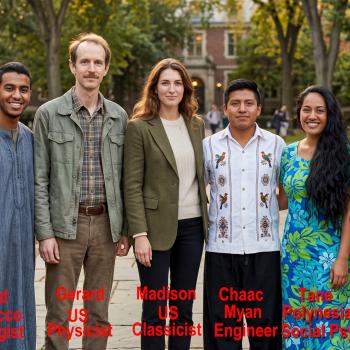
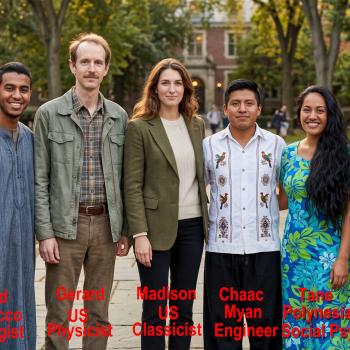
They demand authenticity and trust; if they lose either, they simply disengage. What they absolutely will not tolerate is the mistreatment of others, making them the most ethnically diverse and accepting generations in history.
These values are non-negotiable. They require their faith and their church to be built on a firm foundation, demanding a real, authentic spiritual experience, not merely an institutional substitute.
The rise in their attendance at religious services is not a sign that old, hurtful ways are winning again. It is a sign of two things:
-
A deep spiritual need, just like the rest of us.
-
A response to the necessary changes that occurred within the church that offer a more authentic religious experience.
Divorce and Institutional Soul Searching
Situations change, but the rule of love remains constant. The pace of social change, driven by technology and social shifts, has been exponential since 1900.
Consider the example of divorce again: In Jesus’ day, men possessed legal ownership over women in that region. Jesus challenged this idea, but it has taken over 2,000 years for society to fully grasp and implement gender equality.
When societies and later, churches, approved divorce, they created an escape hatch. While that hatch was sometimes overused, it meant that women who were mistreated or trapped were no longer forced to stay in abusive or suffocating marriages. Men, in turn, learned to pursue relationships based on partnership, not ownership.
The church, like any institution, has difficulty integrating such profound change. It can often shortchange love by relying too heavily on the verbatim rules of the Bible, never stepping back to realize that love is the rock and the rule. Instead of rigidly relying on fixed sayings, we must understand and apply the principle of love as the world changes around us.
Failing to do so only causes division with those whose vision of God’s love is clear. The message that the church can’t change simply says the church is no longer useful in today’s world and unable to cope with societal changes, or love after societal changes.
Conclusion
Just as no man is an island, neither is the church nor any other institution. The purpose of the church is to stand for and exhibit the love of God. To fulfill this purpose, the church must cope with change just as individuals do. This doesn’t mean that God has changed, but that instead of relying on outdated rules, we must sincerely love all others.
The challenge is this: How do we truly love all others in a rapidly changing world? We need to pay close attention to societal changes and find how the rule of love fits within them.
“Our answer is God; God’s answer is us; Together we make the world better.”
— Dorian Scott Cole
“With hate we have more to lose than gain. Break the cycle.”
— Dorian Scott Cole
“Our answer is God; God’s answer is us; Together we make the world better.”
– Dorian Scott Cole
“With hate we have more to lose than gain. Break the cycle.”
– Dorian Scott Cole
Author’s website: DorianScottCole.com












 Ad-Free & Subscriber Log-In