

From Activism to Architecture
In these chapters, the students transition from “Moral Crusaders” to Systems Engineers. Realizing that the “System” is blind to moral pleas, they apply the principles of Sun Tzu and Darwinian Adaptation to transform their mission. They move from “fighting” the wind to “tacking” against it—using the system’s own focus on efficiency and stability as the fuel for their humanitarian project.
By developing a “Business Case for Dignity,” they create the Garments of Skin—economic models for supply chain resilience and workforce stability that the Dean cannot easily dismiss. They learn that change is not won through polarized debate, but through Strategic Alignment and the patient planting of seeds in the fertile soil of shared values.
The Insight: The “Rudder” of a small, focused group can change the direction of a massive “Sail.” Compassion is not just a feeling; it is the most efficient way to reduce systemic entropy and increase national output.
The Action: When facing a “Wall of No,” stop pushing. Look for the Active Lever. How can you frame your “Truth” in a way that solves the “Problem” of your opponent? Use the “Yes, And” technique to build a golden bridge for them to cross.
The Task: Identify your “Trojan Horse.” What is a moral goal you have that is being blocked by a “System”? Can you translate that goal into the language of efficiency, stability, or resilience? Remember: Be wise as a serpent, but harmless as a dove.
Themes: Strategic Adaptation, Systems Resilience, and the Logic of Change.
Chapter 6: Quest – Preparing to Defeat the System
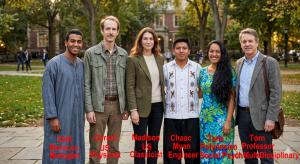
The homeless man on the street timidly followed the group into the classroom. He had insisted on a shave, a haircut, a bath, and fresh clothes before appearing with them in public. They had gladly obliged, helping him rebuild his appearance from head to foot. As they paraded in, Professor Torn watched them carefully from his desk.
“Professor Torn,” Madison said, stepping forward. “Meet Daniel Q. Walker. He’s agreed to serve as our strategic advisor on the logistics of the street.”
Professor Torn stood and took Daniel’s hand, which Daniel presented with slight reluctance. “Good to know you, Daniel. And welcome. Please, sit with us and be comfortable. We’ll have a nice lunch brought in later.”
Daniel gave an uneasy smile at Torn’s hospitality. He waited until the students took their seats, then sat slightly away from the main circle, keeping his back near the wall.
Gerard took the lead. “Daniel, walk us through the system. What is it actually like when you try to cross the threshold into a standard job application?”
Daniel looked at the circle of expectant faces, his thumbs running over the clean fabric of his new sleeves. “What jobs? The automated systems online reject me the second I leave the address field blank. And if I go down to the physical unemployment office, I’m caught in a loop. I don’t have a phone for them to call me back on. My ID was stolen in a shelter sweep last winter, and to get a replacement, I need an address to mail it to. The system treats me like an administrative ghost. Even if I borrow clothes or find something clean in the trash, the unemployment office tells me I’m simply not qualified for anything currently available.”
Zaid said, “I’m sure what you say is true, but then I have to ask myself if there are any possible jobs that you could do that you haven’t thought of?”
They thought for a minute. Then Tane said, “Government offices don’t think outside the box. They have strict qualification guidelines. Maybe what’s needed for you is some kind of ‘Greater Opportunity Office’ that can see your aptitudes, talents, skills, and potential, and then look for apprenticeship opportunities or government-subsidized employment—”
“And someone who can start a business using your and other unemployed people’s skills,” Chaac added.
“Not to be a downer, but that takes money to get started,” Torn noted.
“And they have to find me first,” Daniel countered. “They aren’t looking on the street—nobody sees me there except as a nuisance. I’ve got no home, no phone, no place to clean up regularly. Until I get a job that pays me a living wage, they tell me I can’t have those basic tools. It’s a closed loop.”
“Whew!” Madison said. “Other communities are recognizing how counterproductive that is. If you give people a stable foundation and what they need, usually they secure employment within a reasonable time and become self-supporting. Instead of blaming them, if you help them, the systemic problem disappears.”
“There’s a spiritual ideal in there somewhere,” Tane reflected.
“From a physics point of view,” Gerard observed, “what we have with the street is pure chaos, disorder, entropy. The catalyst is a stable casing—a place to stay—to bring order back to the system.”
“And our ‘Greater Opportunity Office’ is the added chemical that binds new opportunity to hidden qualifications,” Tane chimed in.
“So we need a chemist in our group now? Is this a covalent, ionic, or metallic bond?” Zaid asked with a grin.
Everyone laughed. “Luminous bond,” Madison said. “Enlightenment.”
“Motivational bond,” Chaac said. “Some kind of power to make it go.”
After the laughter died down, Torn spoke up. “We have a philosophy of what’s needed, and I think it’s solid. Now we need a strategy to make these things happen. We have the immediate problem of the Dean pressuring us to conform to… let’s just call it practical economics. He’s receiving pressure from government officials—we don’t know who yet. Plus, we have employers we must please. Any ideas?”
Daniel perked up. “‘To win one hundred victories in one hundred battles is not the acme of skill. To subdue the enemy without fighting is the acme of skill.’ In other words, excellence in strategy means overcoming the enemy’s resistance without engaging in direct combat. So says Sun Tzu in The Art of War.”
The group looked at him in absolute amazement. Finally, Madison said, “You’ve read The Art of War? It’s one of my favorites.”
Daniel nodded quietly. “I was in the Army before I got married and had kids. It wasn’t required reading, but a lot of the infantry guys liked it. We quoted it all the time.”
“There is deep wisdom there,” Torn mused.
“And for our philosophy, and strategy, we have to adapt to our environment,” Zaid said. “Adaptation enables us to survive and continue the life cycle. At least, that’s my interpretation of Darwin, and also the concept of ‘the struggle’ in my Muslim upbringing. Our environment forces us to adapt, which triggers personal growth.”
“Isn’t that Lamarckism?” Tane asked.
“Semantics for our purposes,” Zaid replied. “Physical adaptation is just heightening responses we already possess to navigate the environment. Lamarckism is an outdated theory—we now know those acquired traits don’t alter our DNA, so they aren’t passed down. Mutation is what creates entirely new abilities for unforeseen environmental needs.”
“What about fish that live for centuries in deep caves and lose their eyesight? Isn’t that Lamarckism?” Gerard asked.
“No, the loss of eyes and pigment is driven by genetic mutations and natural selection over thousands of generations, not by individual fish using or not using their eyes during their single lifetime,” Zaid clarified.
“So there are actual operational examples of transformation in real-time? Interesting,” Chaac said.
“Well, I always viewed Darwin’s theory as proof that only the strongest are selected. That corresponds directly to physics and the most powerful primary mover,” Gerard remarked.
“In engineering, a small, smart force can redirect or even reverse a massive force,” Chaac countered. “Think about a sailboat. It has a huge canvas sail providing the raw propulsion. But the tiny rudder determines the true direction. By using a tacking technique, you can actually sail indirectly into the very wind that propels you.”
“Good point, Chaac,” Torn said. “Practical execution beats pure theoretical physics every time. Where does that leave us strategically?”
“It means we adapt or die,” Madison said. “But what are we willing to concede? Do we entirely change course, or do we uselessly tilt at windmills like Don Quixote, wasting our momentum?”
“Chaac’s sailing analogy is excellent,” Torn noted. “Consider Jesus’ words: ‘Be wise as serpents and harmless as doves.’ He meant exercising tactical caution while maintaining absolute moral integrity. Don’t compromise your core principles, but consider the structural impact on your opponent. You might be able to leverage power to win it all, but where does that leave the relationship?”
Tane flashed a sly smile. “Exactly. Consider the classic wiles of women, and how we historically secure what we want through diplomacy without ever using physical force.”
The group laughed and nodded in agreement.
Chaac leaned forward. “So this means, in choosing a road to travel, we might want to take the quiet mountain path rather than the blocked, paved highway, when both ultimately lead to Rome. We overcome the system’s resistance without triggering a direct battle.”
“Smart. I like it,” Madison said. “It’s not like being in a standard debate class where there must be a definitive winner and loser. We engineer it so everyone wins. That’s a direct alternative to our polarized culture, where it’s always ‘my way or the highway.'”
“So which path is forward?” Torn asked.
“Quoting Sun Tzu again,” Madison said. “‘If you know the enemy and know yourself, you need not fear the result of a hundred battles.’ And he also noted, ‘Build your opponent a golden bridge to retreat across.'”
“That is an exceptionally wise strategy,” Torn mused, writing the phrase down. “Build your opponent a golden bridge. If you can’t get your adversary to move in the exact direction you want, provide them with an attractive, alternate route—a scenic detour—that still might end at the same destination. We learn from history. Very good, Madison.” He smiled warmly at them. “Forgive me, this is your project, but sometimes I am deeply impressed by my group.”
“I’m all about putting theory into production,” Chaac said, tapping his notebook. “It’s great to talk strategy, but how do we logistically implement this?”
“Know the stakeholder. What do they think about? What dictates their stability?” Tane asked.
Torn spoke up, wanting to ensure they understood the real-world boundaries. “The ‘System’ doesn’t respond to emotional pleas. No standard corporation has a legal mandate to prioritize social good; their core objective is to operate within the law and maximize income. However, the system does respond immediately to arguments regarding efficiency, stability, and workforce output.”
“Yeah, like national GDP actually measures human happiness,” Madison muttered. “Not! It’s just a metric for beating your chest.”
“Or stock valuations,” Gerard added. “They often have no relevance to daily factory operations, but they can sure crash the economy.”
“If we can’t appeal to basic morality, and global GDP is too abstract, that leaves us with localized efficiency and stability,” Chaac analyzed. “How can we couch our mission explicitly in terms of efficiency and stability for the local economy?”
“Let’s take our framework directly to local business owners and gauge their feedback,” Chaac proposed.
“Let’s not underestimate them,” Tane added. “They’re human beings. They have to put corporate operations first, but if they see a mechanism to help people while simultaneously benefiting their bottom line, they might listen. Plus, it serves as excellent public relations.”
Tane paused, pulling out a book. “I’ve been reading a strategy text by Dorian Cole called Unleash Movements that Matter: Break through barriers to change. He breaks down how seemingly powerless people actually possess significant leverage. One of the core principles is borrowing the ‘Yes, and’ technique from improvisational theater. Instead of arguing with people and making them defensive, you validate their reality, go with the flow, and then steer the conversation toward your objective while adding your data. The other person learns something and saves face. As the book suggests: if they say ‘I hate cake,’ you say ‘Yes, so let’s leave the cake and just eat the chocolate icing.'”
Everyone laughed.
“We absolutely have to deploy that technique,” Madison agreed.
“If you’re going to take this directly to local businesses, you had better be incredibly well prepared,” Torn warned, looking over at Daniel. The students all nodded in agreement.
They invited Daniel to join them for every session, agreeing to pay him a small consultation fee out of their own pockets and cover his meals. Having grown accustomed to them as real people with real concern for him, Daniel readily agreed.
“To make this an operational reality, who are the core stakeholders and decision-makers we need to map out?” Torn asked. “We will be spinning our wheels if we pitch the wrong offices.”
“Cities have economic development commissions, mayors with their entourage of officials, prominent employers, and of course, real estate groups who often act as automatic naysayers,” Tane listed.
“Mayors rarely endorse experimental programs unless major employers back them first,” Madison added. “They are naturally risk-averse, so they default to listening to the vocal naysayers in the absence of corporate power.”
“Then our strategy is clear: we approach the employers first and build a bulletproof case for hiring the structurally unemployed,” Tane summarized.
“But don’t we still have to find a stable physical baseline for them to stay?” Madison asked. “And that inevitably loops back to city zoning and the mayor’s office.”
“Or an independent citizen’s collective to manage the logistics,” Tane offered.
Daniel shook his head, his tone serious. “The moment you start trying to place the homeless into a visible building or an open encampment, the local NIMBY groups will mobilize. They will get it shut down by city inspectors as a public nuisance immediately. I’ve watched it happen firsthand on three different streets.”
The group fell silent, absorbing the weight of the obstacle. Finally, Chaac broke the quiet. “Then before we set foot in front of a single employer, we need an engineered blueprint that addresses these logistics behind closed doors.”
With the path forward clear, they packed up their notes and headed out to a nearby restaurant to continue discussing the endless details and ramifications before going home to let it all cook overnight.
________________________________________________
This article series is based on my new research paper: Original Sin Versus Workshop for Growth.
Our answer is God. God’s answer is us. Together we make the world better.
Author’s Website with life and spiritual resources: Dorian Scott Cole .com
Recent website articles
- Theology of Catastrophe: a dissertaton style paper on why catastrophes happen.
- Ekklesia: a new format for a Jesus Gathering.
- Systematic Theology for the 21st Century
- Major Decision Matrix

Open and Relational Theology








 Ad-Free & Subscriber Log-In