


We do not experience our lives apart from the stories we tell of our lives. Our stories—how we make sense of our lives—are all that we have. Because there is no separating ourselves and story, I would go so far as to say: We human beings are story. I don’t say this as a way to reduce human life in some way, but rather as a way to elevate story. Because I believe story warrants such elevation. It’s a challenge to imagine a human who exists apart from or devoid of story. I can’t do it. Even human discourse that is supposedly solely facts-based, such as scientific experimentation or reportage of events by non-partisan eyewitnesses, necessarily relies on story.
Between Existentialism and Literalism: Learning to Live in the Balance
I remember being challenged in my twenties by, on one hand, existentialist thinkers who dismissed all need for gospel narratives to recount actual events, instead prioritizing readers’ discovery of personal meanings in the texts; and on the other hand, by literalist thinkers who demanded that gospel accounts need be historically accurate in order to have any value. I struggled somewhere in the balance between these views. Over decades, I’ve settled into that middle.
History, Storytelling, and the Making of Meaning
My middle-ground values history and learning from the experiences of others as passed down to us (history) but recognizes that the passing down involves storytelling, with all of the interpretation and forgetting and re-remembering that storytelling entails, and all of the re-interpretation that occurs when we reflect back and back on old stories with new insights, savoring new crumbs of learning we’ve picked up along the way. This is true both in how we take in learning from others, and in how we assimilate and share our own experiences.
Dreams, God, and the Narrative Language of the Soul
I’m so convinced that story-telling is how we inherently operate, that I see story everywhere. I wonder if the very essence of God is, in some way, story; and if so, how? The universe itself is telling a story. Certainly, our dream lives reveal that our deepest consciousness is, at its essence, a storyteller. According to our dreams, our consciousness speaks using the mechanics of story: metaphor, plot, character, setting. These building blocks of narrative are the building blocks of dreams, and astoundingly, a key language through which Spirit speaks to humanity. What does the fact of our dreaming tell us about God? I don’t know the answer, but I love the question.
When Fiction Becomes Scripture
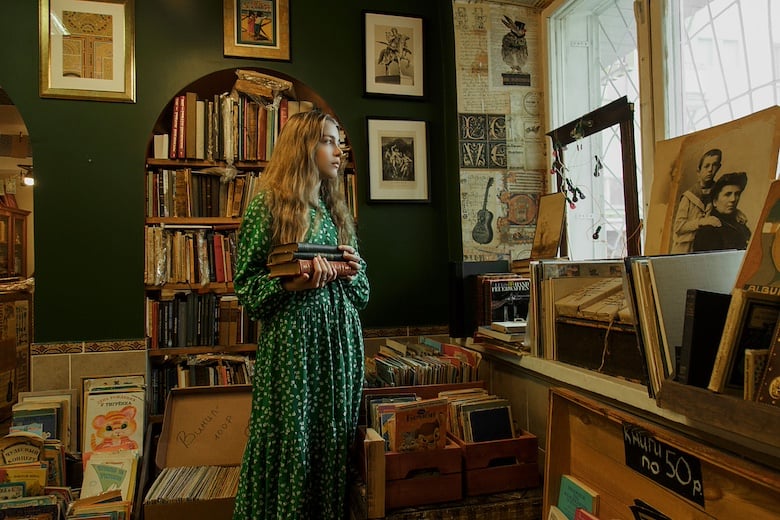
Occasionally I come across a story—a work of fiction or personal narrative—that resonates for me with such essential truth that I’d call it scripture. This was my experience when I first read The Brothers Karamazov thirty years ago. It was one of the few books I’ve read then turned right around and read again. I felt this way again recently, after re-reading Wendell Berry’s Jayber Crow (Counterpoint, 2000). There is a chapter in that book titled “The Way of Love” that is so beautiful and truthful, it rivals for me any passage of scripture I’ve read. Come to think of it, a lot of the chapter has a tinge of Jesus’ teachings. Surely the narrative was influenced by Berry’s Christian understandings. But for me, what makes the chapter sing is how it’s a story told by a particular fictional man we have come to know through story, the title character Jayber Crow, in whose voice the novel is narrated. The chapter’s power comes from the fact that Jayber’s ideas are shaped in the crucible of a very real (fictional) love relationship. It is the story of Jayber’s love that makes Jayber’s ideas sing louder than they could as an essay—say, as an exposition of an author’s life philosophy or teaching. I will reveal no more about Jayber Crow’s plot (no spoilers!). Yet in any case, Jayber’s story is what lends his words particular truth.
The Power of Jayber Crow: Truth Spoken Through a Particular Love
I will quote two passages where Jayber waxes theological. But, frankly, the fact that the words come from a particular man whose particular human love I’ve come to know through story, makes them so much more potent for me. Surely more potent than abstract teaching by someone unaffected by deep love. This is the power of story—how, in story, truths are contextualized; they are folded into the lives of characters. If you have not read the novel Jayber Crow and come to know the character, I expect the following passages won’t resonate quite like they do for readers of the novel (and I highly recommend reading it). But I share the passages as examples and for their beauty. In the chapter “The Way of Love,” Jayber ponders:
“If God loves the world, might that not be proved in my own love for it? I prayed to know in my heart His love for the world, and this was my most prideful, foolish, and dangerous prayer. It was my step into the abyss. As soon as I prayed it, I knew that I would die. I knew the old wrong and the death that lay in the world. Just as a good man would not coerce the love of his wife, God does not coerce the love of His human creatures, not for Himself or for the world or for one another. To allow that love to exist fully and freely, He must allow it not to exist at all. His love is suffering. It is our freedom and His sorrow. To love the world as much even as I could love it would be suffering also, for I would fail. And yet all the good I know is in this, that a man might so love this world that it would break his heart.” (pp.253-4)
And:
“Hell itself, the war that is always among us, is the creature of time, unending time, unrelieved by any light or hope.
“But love, sooner or later, forces us out of time. It does not accept that limit. Of all that we feel and do, all the virtues and all the sins, love alone crowds us at last over the edge of the world. For love is always more than a little strange here. It is not explainable or even justifiable. It is itself the justifier. We do not make it. If it did not happen to us, we could not imagine it. It includes the world and time as a pregnant woman includes her child whose wrongs she will suffer and forgive. It is in the world but is not altogether of it. It is of eternity. It takes us there when it most holds us here.
“Maybe love fails here, I thought, because it cannot be fulfilled here….” (p.249)
Stories as Soul Factories
Powerful stories are like soul factories. They are constructing our souls and our characters either for strength and beauty, or decrepitude. Stories make us who we are, which is why stories have been vehicles for spiritual formation since the oldest of days, and why those who want to corrupt us are also great purveyors of story.
Moral Courage and the Stories We Believe About Ourselves
I once heard the account of a man who’d been rescued and taken in as a child when he was orphaned and threatened by the Nazis in the 2nd world war. As a grown man, he was curious why certain people risked so much, risked their own lives, to take in and protect children like him. No one had to do this. So as a man, he researched the question. He found that people who risk themselves to help others have just one thing in common. It isn’t formal religion, it isn’t politics, it isn’t wealth or poverty or any other demographic category. People who help in a risky way do so because they believe that is just “who they are.” They do it because that is the “kind of person” they want to be.
Becoming Who We Are Through the Stories We Tell
Who we are, what kind of persons we want to be, depends so much on the stories we hear and the stories we tell about our own lives. It depends on the examples and characters we surround ourselves with through story. Such stories aren’t something adjacent to our lives; they are our lives. Stories shape our lives and simultaneously play them back to us, so that our stories are how we know who we are. What do the stories of your life tell about who you are?
If you liked this article, please leave me a comment below; I am interested in your perspective. To support my writing, please subscribe and share with a friend!
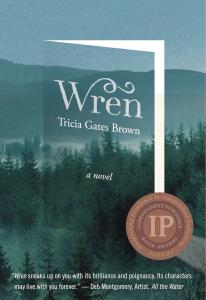
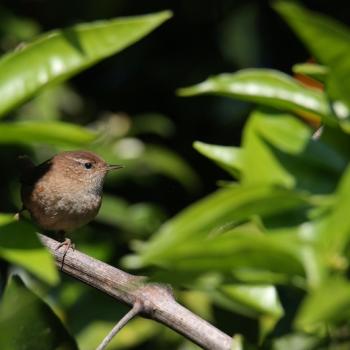
Wren, winner of a 2022 Independent Publishers Award Bronze Medal
Winner of the 2022 Independent Publisher Awards Bronze Medal for Regional Fiction; Finalist for the 2022 National Indie Excellence Awards. (2021) Paperback publication of Wren , a novel. “Insightful novel tackles questions of parenthood, marriage, and friendship with finesse and empathy … with striking descriptions of Oregon topography.” —Kirkus Reviews (2018) Audiobook publication of Wren.

















 Ad-Free & Subscriber Log-In