

It is Easter, and I celebrate and proclaim resurrection.
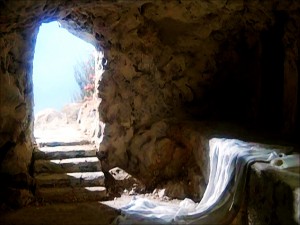 I am not referring to a peculiar event which some claim happened in history roughly 2,000 years ago, in which a human (or, according to some, a just barely human divine entity) was raised to life in a body he didn’t need, before being exalted to heaven where such a body is out of place, to be seated at the right hand of a God who most would say is everywhere and has no literal left or right.
Too many focus on this story, typically ignoring just how truly puzzling (not to mention seemingly unbelievable) its details are, and insist on its literal truthfulness. Indeed, faith is defined by many as lowering one’s standards sufficiently to allow assent to be given despite the difficulties, or as ignoring those difficulties altogether. Those are very dubious and dangerous definitions of “faith.”
Yet I understand why some want to do that. Easter Sunday is the “happily ever after” of the Jesus story.
Nonetheless, as a liberal follower of Jesus, I have to acknowledge that many of those who have followed on the path of Jesus have been killed for their stance. I think in particular of the Martin Luther King.
He was not rescued from death through a bodily resurrection. But his spirit lives on in the impact that he had and continues to have.
If Jesus is worth following, it is because of the life he lived – a life that classic creeds have happily ignored, jumping from a miraculous birth to his death, as though miracles were the only things that really matter.
A liberal Christian perspective considers that it matters how Jesus lived, and that it matters how we live – and that our lives can have an impact not because we are miraculously saved from death, but because we have lived in such a way that those famous words become true: “if you strike me down, I will become more powerful than you could possibly imagine.”
Transcending death not merely by living forever, but by really dying, and yet still living on through the power of how we lived in the intensity of our limited years – that can be resurrection, immortality, eternal life, in an even more powerful sense than the more popular meaning of simply “not dying.”
A faith that allows for hope that even death can be transcended, and not merely survived, has the power to transform lives. Far from being a disappointment compared with the hope that one’s ego will never be extinguished, I believe it offers an even more powerful message, one that is worth proclaiming. It is not the self-centered “believe/do this to acquire immortality” but rather the call to self-sacrifice, “take up your cross and follow me” – being willing not merely to die believing that death doesn’t matter, but precisely because death does matter, but need not be the end in any sort of absolute sense, making one’s self-sacrificial life matter all the more.
Elsewhere around the blogosphere, on matters of Jesus, Easter, resurrection, Christology and the like, the following posts are worth noting:
Roger Wolsey reflected on the insurrection of the resurrection.
Kate Cooper blogged about Jesus, Mary Magdalene, and Glastonbury.
Anthony Le Donne shared a link to an interview with him in Macleans, on whether Jesus was married.
Otagosh has a post with the title “Bad Boy Bart vs. the Barbarians.” Nijay Gupta has begun reviewing Ehrman’s book, while Daniel Kirk has finished his review series.
And finally, please, please don’t think that adding the word “quantum” to the Easter story is helpful.












 Ad-Free & Subscriber Log-In