

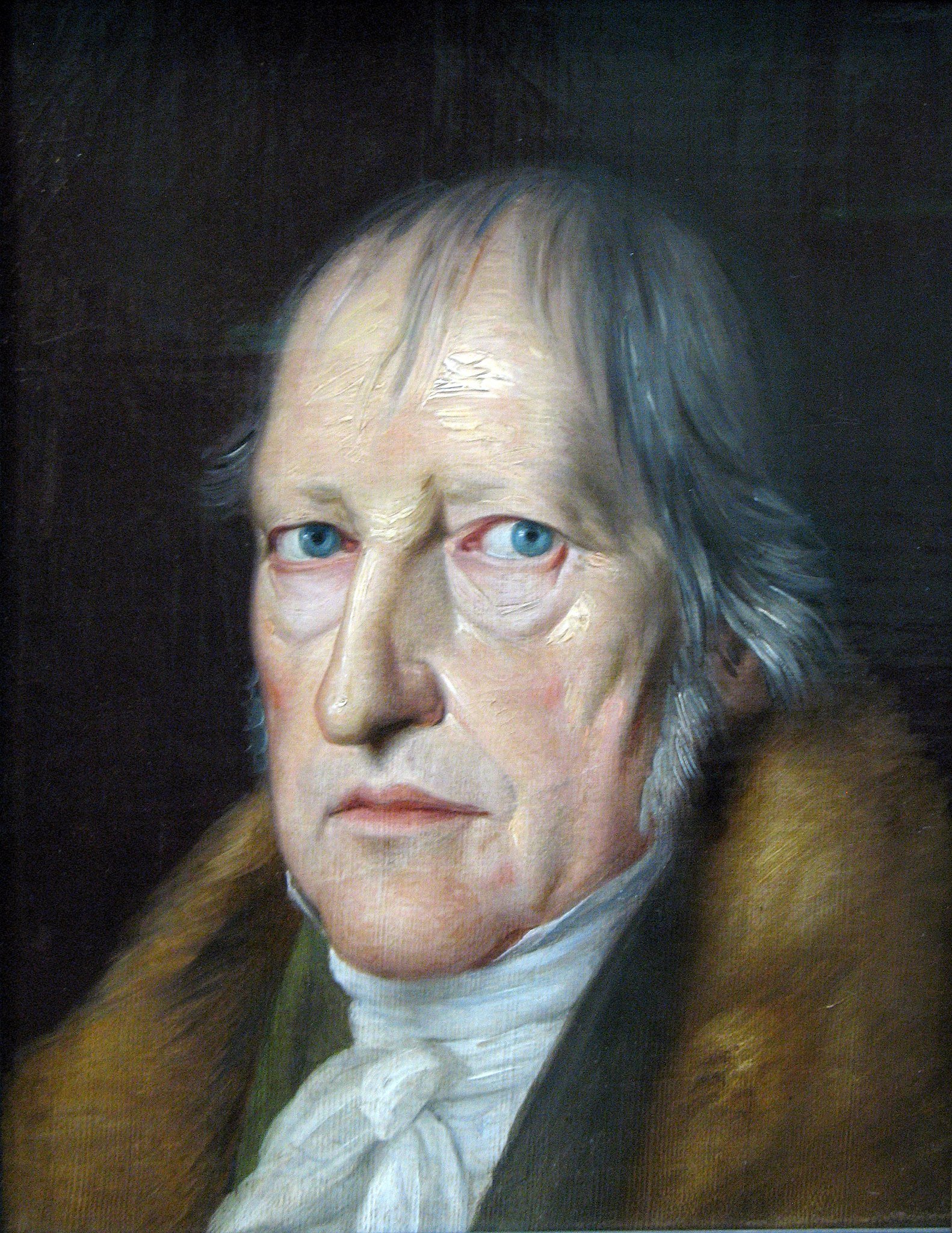
Before the German philosopher G. W. F. Hegel, Christian talk about God “becoming” was shockingly heretical. It still is in some conservative Christian circles.
Hegel started the ball rolling by talking about all consciousness becoming; for him there is no consciousness that does not become. For him, finite and infinite consciousness are intertwined together and by the very nature of consciousness itself both become through a dialectical process that involves negation and sublation (German: Aufhebung, suspension and transformation).
After Hegel, for whom God is Absolute Spirit, the “true infinite,” some Christian theologians began to be more comfortable talking about God becoming. The great but too often forgotten German theologian I. A. Dorner wrote about God’s “ethical immutability” in which God’s character cannot change but his actual life experience can and does. The influence of Hegel is clear in Dorner although Dorner did not buy into all of Hegel’s philosophy.
Then, in the 20th century came Alfred North Whitehead and Charles Hartshorne and “process theology.” Again, Hegel was in the background, not the foreground. But the influence is clear. For process theology God’s character cannot change but God’s actual experience changes in history.
I suspect Hegel would agree that God’s essential character cannot change. But he certainly believed God’s consciousness changes with history, especially the history of culture. God “realizes” or “actualizes” himself in the history of human cultures.
Then came German theologians Juergen Moltmann and Wolfhart Pannenberg who unleashed a volume of changes in Protestant theology by talking about God being historical. Pannenberg even went so far as to argue that “God does not yet exist.” (I had face-to-face conversation with him about what that means and does not mean.)
Then, in the midst of that, came German theologian Eberhard Juengel of Tuebingen, a university where Hegel once taught. Juengel wrote “God’s Being Is In Becoming.” It was a midrash on Barth’s theology but many wondered whether Barth would have agreed. For Juengel, God has a history of his own, within the immanent Trinity, but it is affected by the incarnation, so world history cannot be excluded from God’s historicity. Juengel’s classic “God as the Mystery of the World” expands on that idea and Hegel lurking in the background is obvious there.
Catholic theologian Hans Kueng chimed in with his own favorite book “The Incarnation of God” in which he explicitly used Hegel’s dialectical philosophy to argue that God is in himself historical and becomes both in himself and in world history.
There are two main lines of thought about God’s becoming: Hegelian and Whiteheadian. They overlap and share much in common, but their differences will have to await another time here.
Some evangelical theologians began to pick up on the theme of God’s becoming while eschewing both Hegel and Whitehead. Turning to the biblical drama of God with us, Clark Pinnock wrote about God as “The Most Moved Mover” and criticized classical theism for portraying God as untouched by history. For him and other evangelical theologians of God’s becoming the God of the Bible is personal and historical. While his character cannot change, his experience changes. What happens in the world, in history, affects God.
Finally, mention must be made of Dutch theologian A. Van de Beek whose book “Why? On Suffering, Guilt, and God” I reviewed and we discussed here some time ago. According to Van de Beek the God of the Bible actually learned how to be God through his relationships with his people, up until Jesus Christ when God’s character became solidified. “Increasingly God turned toward grace and salvation.” (P. 282) For Van de Beek and some other Dutch theologians (all Reformed by heritage and tradition) God becomes.
In my opinion, what really matters is that God’s essential, eternal character does not change. It does seem to me, however, that God has new and difference experiences in history. While I base that on the biblical story of God and us, I recognize Hegel as a philosopher who, like Plato, opened a door for new thinking in theology. Plato was a pagan and the church fathers borrowed heavily from him. Aristotle was a pagan and medieval Catholic theology (and some later Protestant theology) borrowed much from him. Hegel was a liberal German philosopher (but not liberal as in Schleiermacher who he secretly despised) who opened a door to rediscovery of God’s becoming in history.
*Note: If you choose to comment, make sure your comment is relatively brief (no more than 100 words), on topic, addressed to me, civil and respectful (not hostile or argumentative), and devoid of pictures or links.*








 Ad-Free & Subscriber Log-In