

It’s been a tough year so far for roses in my area. Gardeners are struggling to keep their plants healthy and they’re desperate enough to try anything that might help. My wife thinks it may have something to do with the Japanese beetles, since those little pests are also gobbling her hibiscus plants. That makes sense, because the Japanese beetle population around here has been above normal for the past month or so.
I haven’t surveyed roses in the area, nor have I seen any statistics about those beetle populations, but I’m confident in describing both of those things because of my job stocking shelves at an area big box store. We’ve got a lot of big holes on the shelves in aisle 2. That’s where we stock all the rose powders, sprays and fertilizers. They’re all gone. So are all the bag traps and sprays for fighting Japanese beetles.
Sales at stores like the one where I work may not be conclusive or definitive evidence, but it seems to me that tracking such data could be a valuable source of environmental information.
Consider this: the Home Depot has more than 2,200 stores throughout the U.S., and Lowes has another 1,800. Both chains are ubiquitous and geographically widespread. During the winter, both chains sell snow shovels, snow blowers and ice melt. The National Weather Service already tracks weather data with great care and precision. Picture a map showing that winter weather data — snowfall totals, days below freezing, etc. Now imagine a second map, this one showing the sales data for snow shovels and salt at all those big-box home improvement stores. I’m guessing the second map will closely correspond with the first one.
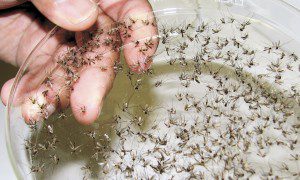
The same thing could be done with, say, mosquito populations. Monitoring mosquito populations is a difficult, messy and expensive task for state environmental and health agencies. It might be helpful to supplement those efforts with information gleaned from the sales records of the big box chains. Our store sells personal sprays, whole-yard sprays, zappers, clip-ons, citronella candles, and a host of dubious electronic gadgets that claim to repel mosquitoes. (We also sell the best defense: big fans. If you don’t want to get bitten on your porch, forget the citronella — get a big fan.) Some years we sell more of these things than other years. That variation is due, mainly, to the size of the mosquito population.
This is useful, meaningful data. It’s already being collected. If environmental scientists had access to that data, they’d have a new tool for tracking variations in the population of mosquitoes or Japanese beetles or any other similar pest — yellowjackets, nutsedge, poison ivy, chickweed, mice, rats, bedbugs, carpenter ants, etc.
The Home Depot is headquartered in Atlanta. I’d love to see some grad students from Emory University be allowed access to the company’s sales data to see what value it really might have as a source of environmental information. Could be helpful.
Anyway, just a thought. And an excuse to revisit Elvis Costello covering a beautifully sad song from George Jones:
https://www.youtube.com/watch?v=ySQlU3hussQ













 Ad-Free & Subscriber Log-In