

I love a good redemption story because I love a good redemption.
It doesn’t have to be on the grand scale of a Zacchaeus or an Ebenezer Scrooge — utter villains transformed into saints overnight or in a single day. Those are archetypal redemption stories, but not every such story requires or involves such a rapid and extreme transformation.
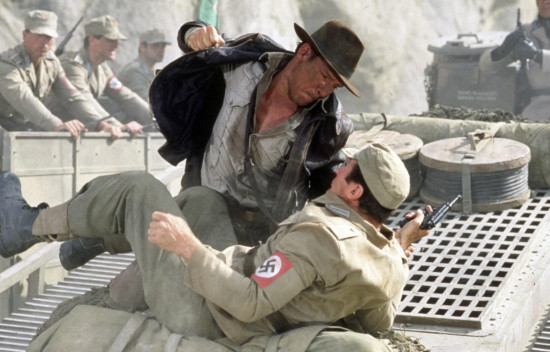
So instead of asking everyone to turn with me in their Bibles to the 19th chapter of Luke’s Gospel to re-read the beautiful story of Zacchaeus, the exploitative tax-collector who turns into George Bailey, I will instead invite you to read this Stereogum interview from five years ago with Violent J of the Insane Clown Posse. Here he is talking about early lyrics he regrets, and how he seeks to do better now:
VIOLENT J: … It’s just so fucking dumb, man. Therefore, I cringe when I hear it now.
At the same time, we were also crazy homophobic back in the day. And now, my daughter says, “Dad, why did you say this?” And I say, “Because your dad was a fucking fool.” …
We wanted to be hardcore, and that’s why we did it, you know? And when I look back now, what can I say? We don’t have an excuse. I can tell you this: There was never a time when we had a problem with gay people. It was just the word being thrown around, like “asshole.” It was just something we called each other all the time — just a bunch of dumbasses.
STEREOGUM: People my age, we talk about how we were lucky that we didn’t have social media growing up, and there’s no record of all the dumb shit we said and did. You didn’t have social media, but everything you said and did in those years is on record, and you’ve got to live with it now. That’s tough.
VIOLENT J: And the amount of gay Juggalos out there is really surprising. I think about them doing their research and getting the old records, getting excited about it, and getting their hearts broke or something, you know? I tell my daughter, “For the rest of your life, when your friends ask why your dad said that, say it’s because your dad was a fool. Don’t defend me. Say I was a fool then, but I’m not now.” There’s no excuse. I was going with the flow, and that’s the very thing we preach against — being a sheep. And that’s what I was doing.
I think my second favorite part of that is learning that Violent J is someone who uses the word “therefore” conversationally.
But my favorite part is the way he refuses to dismiss or diminish or defend what he got wrong. He gets a little bit defensive in grasping for explanations for his past behavior, but still recognizes none of that excuses what he said and — more importantly to him — that none of that diminishes the hurt and harm his words caused and may still be causing.
It’s not just remorse, but anger at himself for having caused that harm to those “gay Juggalos* out there.”
The interviewer offers him the option of diminishing that by just sweeping it into the category of dumb youthful high jinks that now can be shrugged off as merely “problematic” or regrettable. But Violent J doesn’t seem to see it that way. He’s still pissed off at himself for having used words in a way that hurt people — that hurt his people — people he genuinely loves and cares about.
That anger is what real repentance looks like — the kind of repentance that allows for the possibility of redemption.
We tend to think of remorse as a kind of sorrow, but that’s not quite it. Sorrow is too close to “Woe is me,” and genuine remorse isn’t about “me.” It’s about others and the recognition of the harm that has been done to them. “Self-reproach” gets closer to the idea — “reproach” meaning rebuke or condemnation. There’s anger in that. There has to be, because truly understanding the circumstance and truly understanding what it means for others requires that anger.
That anger is the thing missing from all of the recent stories of more than merely “problematic youthful indiscretions.” These stories involve plenty of defensiveness and dismissal and diminishment, but no self-reproach. No anger.
A disturbing number of these stories involve Nazi ideology, Nazi symbols, and Nazi sentiments. Not counting the famous person who spent years promoting undiluted Camp of the Saints-style Great Replacement Theory before he was assassinated six weeks ago, there are still three different stories in the news right now involving remorseless public figures defending and dismissing their “Nazi streak” as little more than dumb youthful indiscretions.
That phrase “Nazi streak” comes directly from Paul Ingrassia, “the right-wing podcaster Trump has nominated to lead the Office of Special Counsel.” Ingrassia, it turns out, has been even more candid and explicit in his racist views in group chats than he has been speaking publicly on his podcasts. “I do have a Nazi streak in me from time to time,” Ingrassia wrote in one chat, following his comment that others “didn’t show enough deference to the Founding Fathers being white.”
In that same chat, Ingrassia used an especially despicable and bizarrely outdated Italian-American slur for Black people.
“No moulignon holidays … From kwanza [sic] to mlk jr day to black history month to Juneteenth,” he wrote, adding. “Every single one needs to be eviscerated.” …
Speaking of bizarrely outdated racial slurs, Ingrassia’s take on former Republican presidential candidate Vivek Ramaswamy was that one should “Never trust a chinaman or Indian. NEVER.”
During a discussion about how Democrats had supposedly made Black people into victims (though some might argue that it was racist white people, like Paul Ingrassia, who did that), Ingrassia wrote “Blacks behave that way because that’s their natural state … You can’t change them.”
Ingrassia’s racist and Nazi-admiring comments in those chats were leaked to Politico “by two fellow Republicans who felt his Nazi shit was a step too far, even for them.”
Ingrassia has not withdrawn his nomination or apologized. He’s angry, but not at himself and not at the harm caused by his racist words and the policies that make such racism what we have instead of legal equality. He’s angry at what he dismisses as a “gotcha game” and he’s angry at the idea that his sneering racism is or ought to be any obstacle to his promotion and enrichment.
This is a week after Politico’s bombshell article revealing the explicit Nazi ideology and sloganeering and Hitler-admiration shared by dozens of members of the Young Republicans organization — people in their 30s and late 20s who work as legislative aides, Republican party officials, and elected representatives.
Vice President J.D. Vance set the tone and provided the template for Republican response to that story — dismissive, defensive, and not the least bit angry, except to the extent that he, like Ingrassia, is angry at anyone who would suggest that such youthful peccadilloes should carry any consequences for anyone involved.
That brings us to Nazi Story No. 3, which reminds us that in 2025 America the celebration of Nazi symbols and ideology can be bipartisan. This is the story of Graham Platner, the Marine veteran and oyster farmer seeking the Democratic nomination to run for a U.S. Senate seat from Maine. Like many people, I was impressed with Platner’s candor and passion, even after learning that his pose as a working class oyster farmer was a bit misleading. He spoke frankly and plainly about why ICE’s oppression of our neighbors is wrong and what needs to be done to right that wrong.
But then it turns out that Platner, too, had a history of saying reductive, pejorative things about women and Black people on social media back in the day. Oh, and he also has a big ol’ Nazi tattoo on his chest.
The main problem with all of these revelations about Platner’s past is his reaction to them — or his lack of reaction to them. He’s defensive rather than remorseful. Very little of the sorrowful kind of remorse that stops short of self-reproach, and none of the necessary-for-redemption angry remorse that his hurtful comments and his totenkopf deserve.
I would love to see a redemption story for Graham Platner, and even for Paul Ingrassia and for all of those not-so-young Young Republicans. I would love to see them all redeemed — repenting and changing and atoning like Zacchaeus or Scrooge on Christmas Day.
But that can’t happen and won’t happen until we see them get as angry at themselves as Violent J still is.
* I am not the right person to try to explain Juggalos to anyone who isn’t already familiar with the term. I couldn’t name three songs or albums from the Insane Clown Posse (even after just having read that Stereogum article) and I’ve never been a fan of the band’s music.
But I am a fan of their fandom — of the weird, lovely mutual affection this weird band has with their devoted fanbase of “Juggalos,” people who put on the same clown makeup the band wears and drink lots of Faygo soda for some reason and make pilgrimages to the band’s annual music festivals, or “gatherings,” where they experience something church folks would recognize as a kind of fellowship. It’s an odd bunch, but they seem to love one another and I think that makes the world a better and more interesting place.











 Ad-Free & Subscriber Log-In