

One of the most common ways for bars and nightclubs to attract more men as customers is to start having “Ladies Nights.”
We all know why. The basic logic of this is not complicated. Most men* want to go to places where there are women. They’ll stop showing up if they start to think of a place as “a sausage party” — a place where it’s wall-to-wall dudes and there’s no chance of seeing or meeting any women. So Step One in attracting more men to your establishment is attracting more women, and one way to do that is by having regular nights where more women are encouraged to visit with special rates and discounts just for them.
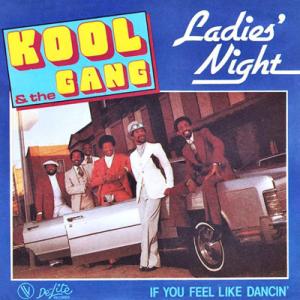 The simplest form of this involves a dance club or a disco like the one in Kool & the Gang’s song — partly because dancing is also the most innocent form of this.
Most men won’t go to a dance club unless there are women there to dance with. So if the women don’t show up, the men won’t show up and the place will go out of business. Get rid of the cover charge** for women on Fridays and Saturdays and you might fix this. More women will start showing up because they’re getting a better deal, and then more men will start showing up because there’s more women.
That’s the basic, simple idea.
In practice it’s a lot more complicated because the cover charge and the price of drinks is never the only variable being considered by the “ladies” that Ladies Night is trying to attract.
And, again, not everything is as innocent as dancing. A “Free Tequila Shots for the Ladies” promotion will wind up attracting a few more women lured by the prospect of cheap drinks, but it will also attract a lot more men — the kind of men who are lured by the prospect of cheap drunks. The presence of lots of such men — men looking to prey on drunk women — will make your establishment a place that women avoid because it’s not a safe place for them to be.
And once you start to acknowledge that as an actual and very important factor that affects your business’s bottom line, you’ll start to appreciate that the simple idea of “Ladies Night” can be a lot more complicated in practice than it seems at first, in the abstract.
A little bit more thought and consideration and listening and you’ll perhaps start to realize that your “Ladies Night” promotions might be better handled by someone who was a gender-studies major than by someone who was a marketing major.
So am I arguing that we need to drag a bunch of feminist theory into this? No. You don’t have to do that — unless you want to avoid going broke, because it turns out all of that stuff isn’t merely theoretical.
Club-owners and bar-owners trying to create and maintain a profitable gender balance of patrons might have an interesting conversation with their counterparts running colleges and local churches. In those spaces, “Every Night Is Ladies Night” doesn’t seem so much like a potential solution as it is a description of their “problem.”
Those institutions also struggle with finding a sustainable gender balance, but their challenge tends to run in the opposite direction. Local churches have, for decades, been facing a situation in which their membership — and especially their active membership — is mostly female. This has also been increasingly true for colleges and universities, especially when it comes to undergraduate student enrollment.
In the abstract, this seems like a simple, self-correcting matter due to the simple market-forces logic of “Ladies Night.” Your small liberal arts college has an undergraduate population that is now 65% women students. How do you attract more 18-to-22-year-old male students? Well, it seems like you could easily do that by just telling those young men about how your undergrad population is 65% female.
That’s a Jan and Dean song. That’s “Surf City” — “two girls for every boy.”***
But it turns out that doesn’t work. This problem is not self-correcting for something like the same reason that “Free Tequila Shots for the Ladies” promotion would be a disaster. Once Surf City University comes to be perceived as a space dominated by women, some men start to feel uncomfortable in that space. They start to think of it as an unsafe space for them.
That terminology — “safe” and “unsafe” — means something very different for the men here than it does for the women wisely avoiding that Free Tequila night. As Margaret Atwood famously put it, “Men are afraid that women will laugh at them; women are afraid that men will kill them.”
Yes, those are very different things with very different implications. A bar or dance club has an absolute moral obligation and legal responsibility to ensure the physical safety of the women who patronize the place. A college or university has no such corresponding obligation to protect the egos of potential male undergrads.
But again the point here is not the morality or the politics of feminist perspectives — it’s the practical necessity of them. A college trying to increase the size and quality of its pool of male applicants may not need to endorse the “politics” of Atwood’s observation, but it does need to recognize the descriptive accuracy of her point.**** Young men will tend to avoid colleges (and majors) they perceive as women’s spaces unless they’re assured and reassured that their egos won’t be threatened and nobody’s going to laugh at them. And yet such assurance and comfort and emotional safety needs to be provided in a way that doesn’t reinforce the fearful fragility that makes it necessary.
Like the simple expedient of “Ladies Night,” this turns out not to be so simple after all.
And the situation for colleges and universities is about to get even more complicated thanks to the “anti-DEI” movement seeking to roll back civil rights laws and regulations, as Robyn Pennacchia discusses here:
You see, right now, 40% more women than men are enrolled in college — and it seems that number would actually be a lot higher if colleges hadn’t been admitting men at higher rates than women for many years now, for the purpose of keeping a relatively gender-balanced campus. This is especially true for the most elite institutions. Brown, for instance, accepts 7% of male applicants versus only 4.4% of female applicants, in an effort to keep things 50-50.
Private institutions have long been able to consider gender in admissions, a loophole that was carved out in Title IX back when men vastly outnumbered women on campus. As a result, they have two percent more men on campus than do public colleges and universities that are not allowed to make gender a consideration.
However, the Trump administration has been pushing for these schools to stop considering gender in their admissions process, along with other characteristics like race, religion or sexual orientation.
The situation for local churches has long been similar to that of these colleges, with attendance and membership including far more women than men.
One recent study claims that this gender disparity in churches has not just been corrected, but reversed: “New study shows men now surpass women in church attendance in major reversal.”
Maybe.
Given that this is a single study, and an outlier, and given that church attendance is notoriously difficult to measure by any means short of an army of people with clipboards physically present to count butts in pews, and given that the study is sponsored by “Gloo,” a motivated interest that’s always selling something, I think I’ll wait for some additional confirmation before embracing this finding as the new reality.
But it’s still interesting:
This reverses a long-standing trend from the early 2000s when women were more regular attenders than men by a wide margin. Over the years, women’s attendance steadily declined, while men’s remained more stable. As of 2025, 43% of men and 36% of women report attending church regularly on a weekly basis, the largest gender gap Barna has recorded in the past 25 years of tracking this key measure of religious engagement.
My suspicion is that to whatever extent this is accurate it’s primarily due to that bit there about how “women’s attendance steadily declined.”
Or perhaps even to how women’s attendance has steadily — and then precipitously — declined. I suspect that to understand the Religion News Service press release above it would help to read RNS stories like this one: “‘Exvangelical’ women are leaving their churches. But is it decline or renewal?” And like this one: “Jen Hatmaker on ditching evangelical scripts: ‘That system robbed us all.'”
What I suspect, in other words, is that this is the result of churches — especially white evangelical churches — increasingly embracing a politics that is increasingly anti-women. They have become simultaneously more attractive to the kinds of men who prey on women and less attractive to women concerned with their own safety.
Those churches would, of course, reject that description, angrily arguing that we can’t say they’re anti-women when, after all, women in their churches don’t even have to pay for their Free Tequila Shots.
That’s another way of describing this shift in church-attendance. These churches have embraced Free Tequila Shots For The Ladies and now they’re wondering why they’ve all turned into such sausage parties.
* A broad generalization that is broadly and generally true. “All” would be all wrong, but “most” is mostly accurate.
** This blog has no cover charge for anyone. But December is a fundraising month here, so here again is my PayPal link. And here is my Venmo: @George-Clark-61.
*** When I was a college student back in the 1980s I met a couple of guys who went to Harcum, which started accepting male students in the ’70s but didn’t become officially co-ed until 2003. They were the only guys in most of their classes. They did not complain about this.
They did complain about the way their field of study — nursing — was devalued because it was perceived as a women’s space, and they were indignantly angry about that. I think it was that anger, even more than the school’s 9-t0-1 gender ratio, that made those guys popular with their classmates. (Well, that and the fact that their anger seemed genuine and not the sleazy ploy of the “male feminist” who sees this pose as a way to get into women’s pants.)
This “nursing school” phenomenon — the devaluation of work and study that is perceived as the realm of women — is of course another huge factor for colleges and universities dealing with gender disparities in enrollment.
**** Atwood’s line is a zinger and, as such, doesn’t need to be defended or diluted or nuanced. So I want to let it stand as it is while also acknowledging that when we say “men are afraid women will laugh at them,” we should include in that that men are also afraid that other men will laugh at them and that those men laughing at them will thus perceive them as week and also harm them. And, yes, this can be more complicated, but if we’re going to complicate it, we should seek to do so in ways that can illuminate the potential for solidarity between the legitimate fears of those women and the legitimate aspects of the fears of those men.














 Ad-Free & Subscriber Log-In