


What does all of this have to do with our system today?
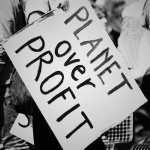
Our dominant global economic system has generated an enormous amount of wealth for a few. Its defining features, the private ownership of production and the profits produced for those with the capital to invest, have produced billionaires and plunged many around the globe into poverty. This system has profound contradictions: what creates immense wealth for some also deepens inequality for many others. On top of the growing disparity, this system is also driving ecological crisis. In its current form, our present system tends to exploit natural resources in ways that threaten our planet’s long-term stability.
Welcome Readers! Please subscribe to Social Jesus Here.
This is Part 2 of the series A World that is Just, Safe, and Compassionate for All
(Read this series from its beginning here.)
At its core, our system is based on the pursuit of profit. Corporations seek to maximize returns for shareholders by increasing efficiency, cutting costs, and expanding markets but too often at the expense of the livelihoods of those who make up their workforce. Growth at any cost is defined as the measure of success for both companies and nations alike. We have people going hungry in the richest country in the world, while the stock market continues to rise. This growth metric is not neutral; it shapes how societies share power, treat its labor, drive consumption, and use natural resources. To maintain profitability and an ever-progressing pattern of growth, companies must continually produce more goods, stimulate more demand, and secure cheaper means of producing all of that growth whether those means are human labor or raw materials extracted from the Earth.
Our system is built on profits, once earned, being reinvested to generate even further profits. This self-reinforcing cycle of accumulation and growth drives technological change and innovation for sure, but it also encourages relentless extraction, consumption, and a win-lose world where a few win and many lose. Profit motives too often prioritize short-term gains over long-term losses when it comes to sustainability for the environment and for working people. Costs to produce these profits for investors are often ignored or passed on to our society at large.
Our system creates chronic inequality. The economist Thomas Piketty has shown that when the rate of return on capital exceeds the rate of economic growth (as it often does), wealth tends to concentrate in the hands of those who are already wealthy. Over time, this process creates vast disparities between capital owners and wage earners. While some individuals and corporations amass unprecedented fortunes, the majority experience exactly the challenges we are witnessing right now in the U.S.: stagnant wages you can’t live on combined with a continuing rise in the costs of living.
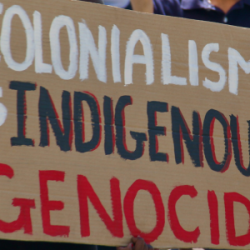
Since COVID, these trends have only intensified. Someone may boast that our system has increased efficiency but it has also displaced workers and destroyed unions, once the only means for labor to bargain in a system of imbalanced power. Our one-sided system has enabled wealth to grow exponentially for those with capital while divorcing profits from the real economic welfare of the wider population. The result is a widening gap in the U.S., and also, if we take a few steps back, we see a widening global gap between the Global North and South, where long established patterns of colonialism and extraction persist in new and ever-evolving forms.
This ever-increasing wealth disparity is not merely an economic issue. We’ll pick up here in Part 3.
Begin each day being inspired toward love, compassion, justice and action. Free.
Sign up at HERE.
















 Ad-Free & Subscriber Log-In