

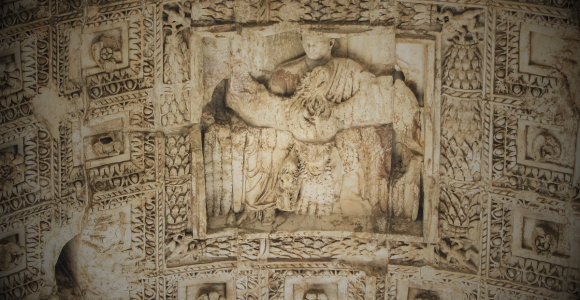
After Constantine’s conversion and the Edict of Milan in 313 CE, Christianity moved from persecution to imperial favor. The church gained legal status, imperial patronage, and material support, including land, buildings, and financial resources. Bishops increasingly assumed roles resembling imperial administrators, and ecclesial structures began to mirror Roman political hierarchies. This was a kind of collusion that the elites of the Temple State also chose in John the Baptist’s time.
Welcome Readers! Please subscribe to Social Jesus Here.
This is Part 2 of the series Jesus’ Baptism as Alignment with a Movement for Justice
(Read this series from its beginning here.)
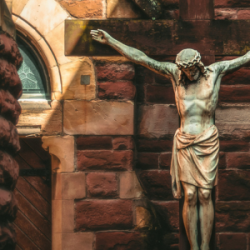
As Christianity aligned with empire, its theology and practices adapted accordingly. The cross, once a symbol of Rome’s crushing violent response to any social uprising, became a sign of Christian victory. Jesus was increasingly portrayed by Imperial Christianity in regal and triumphant imagery that resonated with Roman ideals of power. The church’s earlier resistance to violence softened as justifications for imperial warfare and coercion emerged. Unity of belief was no longer merely a theological concern but a matter of imperial stability. Constantine’s involvement in the Council of Nicaea (325 CE) illustrates this shift: doctrinal disputes were addressed with the emperor acting as convener and enforcer. Constantine bound orthodoxy to imperial authority.
This union brought undeniable benefits such as security, growth, and cultural influence for Christianity, but it also marked a profound transformation. Christianity moved from a countercultural movement shaped by the margins to a religion intertwined with state power. The Constantinian shift continues to shape Christian theology, ethics, and politics, raising enduring questions about what it means to be a follower of Jesus today.
Along with all of these changes, the way the Jesus story was interpreted changed, too. And interpretations of Jesus’ baptism were not exempt. Jesus’ baptism became problematic for the church. Christianity no longer interpreted the baptism of Jesus by John as political alignment with rejection of empire and a return to the Torah’s social justice teachings. Jesus’ baptism by John rather began to be interpreted as more about personal piety than a movement for social change. For example, Jerome, an ecclesiastical author who lived in the fourth and fifth centuries, quotes the Gospel of the Nazoreans:
Note that the Lord’s mother and his brothers said to him, “John the Baptist practiced baptism for the remission of sins. We should go and be baptized by him.” To this Jesus replied, “What sin have I committed that I should go and be baptized by him? Unless, of course, what I just said is itself a sin of ignorance.”
The facts that Jesus had been baptized by John at all and that John was Jesus’ mentor for a time became a source of tension for the Christian community because of their high claims for Jesus. The Church developed various apologetic ploys to explain Jesus’ connection to John as well as to Jewish religion itself.
Yet, the Gospels consistently present Jesus as emerging from the movement begun by John the Baptist, and this connection is best understood not merely as a ritual or personal association but as their participation in something else equally significant. We’ll discuss this alternate participation in Part 3.
Begin each day being inspired toward love, compassion, justice and action. Free.
Sign up at HERE.

















 Ad-Free & Subscriber Log-In