


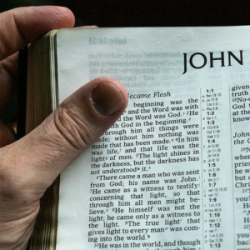
What jumps out to me most this week was that the healing of the man was an act of compassion that immediately became a controversy because it took place on the Sabbath. The Pharisees in this story are less concerned with the man’s restored sight than with the violation of a sacred rule. John’s narrative exposes a deep tension between rigid fidelity to ritual and life-giving justice, a tension that is all too familiar to Christians who engage social justice work today.
Welcome Readers! Please subscribe to Social Jesus Here.
This is Part 2 of the series Justice Lessons From Being Expelled
(Read this series from its beginning here.)
For Jesus, the Sabbath is not an end in itself but a means to human flourishing. When challenged, he insists that the work of God cannot be postponed by systems that prioritize order over mercy. This healing story confronts a worldview that explains away suffering as divine punishment or personal failure. By rejecting the assumption that the man’s blindness resulted from his or others’ sin, Jesus dismantles a theology that blames the oppressed for their own condition. Instead, he centers the humanity and agency of the marginalized by restoring this man’s social standing.
The Pharisees’ reaction is telling. They interrogate, shame, and ultimately expel the healed man from the community. His exclusion mirrors how institutions today often respond to those who challenge unjust norms: whistleblowers, activists, allies, and marginalized voices themselves are frequently discredited or silenced for disrupting the status quo. Yet the man’s testimony in its simplicity, honesty, and connection to his lived experience, becomes a powerful witness. He knows only what he has experienced: “I was blind, now I see.” This declaration is not an abstract theological argument in favor of his healing. It is a simply declaration of his own story that cannot be denied.
John 9 calls communities of faith who work for justice today to ask whether their traditions serve liberation or preserve control. Sabbath-breaking becomes a metaphor in our reading this week for necessary disruption. This story calls us to contemplate moments when justice requires bending or reinterpreting rules that protect privilege, power, or belonging. Jesus’ act reminds us that faithfulness is measured not by strict compliance to community norms but by solidarity with the disenfranchised, those denied inclusion, and the marginalized, those pushed to the edges. True Jesus-following, our reading suggests, is found where liberation, humanity, and justice take precedence over the comfort of being approved by institutions. And this kind of focus takes courage. There will always be pushback.
Lastly this week, I want to address the Johannine community’s transition away from an adversarial relationship with certain sects of the Pharisees to the Gospel of John’s universal use of the phrase “the Jews.” We’ll unpack that, in Part 3.
Begin each day being inspired toward love, compassion, justice and action. Free.
Sign up at HERE.












 Ad-Free & Subscriber Log-In