

Also, in Numbers, the serpent was lifted up for everyone to see. Healing was communal, not private, and no one was saved through private contemplation alone. Everyone was saved, together, collectively. In the same way, this calls communities to collective awareness and responsibility. Our justice work today follows this pattern when we name injustices such as racism, economic exploitation, patriarchy, xenophobia, transphobia, and state violence. Naming them forces society to look at what it has normalized.
Welcome Readers! Please subscribe to Social Jesus Here.
This is Part 3 of the series Nicodemus Visits Jesus
(Read this series from its beginning here.)
John’s Jesus insists that life comes not through avoiding discomfort, but through truth-telling that leads to transformation. The serpent in the wilderness reminds us that healing begins when we dare to look honestly at the systems that wound us and when those truths are lifted up where they can no longer be ignored.
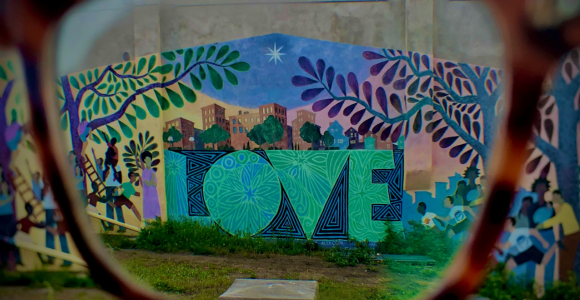
The last portion of our reading this week (John 3:16) is most likely the most famous Bible passage. Too often, though, this passage is reduced to a private promise of personal salvation. Yet it can also carry profound social and political implications. “For God so loved the world” begins not with an individual soul but with the world, the kosmos: the whole created order and the human systems that shape it. God’s love is expansive, public, and concerned with collective life, not merely private piety.
The gift of the Son in this Johnannine passage is an act of divine solidarity. In the Gospel of John, Jesus is not given to endorse the world as it is, but to confront it, expose its injustice, and heal it. This gift is costly, involving vulnerability to state violence, political, economic and religious exclusion, and imperial power. Read in the context of our justice work today, John 3:16 reminds us that God’s love does not bypass suffering peoples or oppressive structures but enters them to heal them. Salvation, therefore, cannot be separated from liberation, restoration, and the reordering of relationships here in our world presently. Rome wasn’t threatened by early Christians’ personal, private, or individual religious beliefs. Rome did become threatened when early Jesus followers collectively tried to make the world a more just, compassionate and safe home for everyone.
Let’s address also this passages emphasis on “believing.” This language is also frequently misunderstood. In John’s Gospel, belief is not mere intellectual assent but embodied allegiance. It’s referred to as “following Jesus.” To follow Jesus or “believe” in the Son is to align oneself with his way of life, his table fellowship with the marginalized, his challenge to exploitative power and systemic harm, and his insistence that love of God is inseparable from love of neighbor. Belief becomes visible in action. As Rev. Dr. Emilie Townes says, “When you begin with the belief that God loves everyone, justice isn’t far behind.”
Finally, the promise in John 3:16 that people “may not perish but have eternal life” speaks to more than life after death. Eternal life in John begins now, as a quality of life rooted in justice, mutual care, and truth. Social systems that crush the poor, that gender or racialize worth, or that sanctify violence are forms of “perishing” already at work. John 3:16 proclaims that God’s response to such perishing is not abandonment but love made flesh in our concrete, material world. In this light, the last portion of our reading this week is a statement of hope and responsibility: because God loves the world, those who follow Jesus are called to participate in that love too, by resisting injustice and nurturing life, here and now.
“For God so loved the world” is more than a passive declaration. It invites us to learn how to love our world, with all our beautifully rich diversity, too.
Begin each day being inspired toward love, compassion, justice and action. Free.
Sign up at HERE.














 Ad-Free & Subscriber Log-In