


Somehow, my posts on the death of spanking enthusiast James Dobson was extremely widely shared yesterday.
I’m still getting notifications about them every few minutes. Most of the comments are positive, but there’ve been a few clinkers.
It seems there were two types of people who reacted to Dobson’s death yesterday. Most of the responses I saw were from people like me, Christian and not, who despised the man because all he ever did was advocate evil and claim he was doing it in Christ’s name. The rest were earnest Christians who couldn’t understand what we were offended about. We must be silly liberals. Beating a child to break their spirit isn’t child abuse to them, it’s just discipline. They acted as though gentle parenting, talking and reasoning and making a child feel loved instead of broken, ISN’T discipline.
I think this demonstrates a misunderstanding about what discipline actually is. Discipline is teaching.
The word “discipline” comes from the same root word as “disciple.” It’s “discere,” a verb meaning “to learn.” A student, in Latin, is a “discipulus,” one who learns. A disciple is the same word as a student– your students are your disciples. When you discipline someone, you’re teaching them. Any teaching is discipline.
Of course, hurting somebody can discipline, teach, them. I think we’ve all learned lessons by being hurt before. When my father spanked me for jumping on the bed, I learned two lessons: first, I learned not to jump on the bed at my house, but only at my grandparents’ house where my father didn’t have jurisdiction. I also learned to cringe from my father’s hand. When I was running around the side yard when I was seven, I stepped in a ditch and broke my ankle. It hurt worse than I can describe, and I couldn’t stop screaming. My parents told me I was exaggerating what was just a twisted ankle and forced me to walk on it for five days, until the bruising got so bad they took me to the ER. From that, I learned that grownups don’t listen to children and if you have a medical emergency you’re on your own– and, I learned to be terrified of running. When I went to a Catholic school, Mrs. Smith the first grade teacher made a little boy who’d blown a Bronx cheer sit on a stool at the front of the room and blow Bronx Cheers for 20 minutes straight, to humiliate him and irritate the rest of the class. This taught me that teachers are unsafe. Those were lessons I learned from painful discipline.
Of course, I also recall positive lessons I’ve learned from teachers.
Those lessons weren’t painful lessons. My English professors at Otterbein University were wonderful professors, who knew their field perfectly and engaged me in conversation that was interesting and respectful, but were thorough and exacting when they critiqued my work. That taught me how to be a better writer. My favorite confessor was kind and reassuring with me when I was very sick and nervous in the confessional. That taught me not to be afraid of Jesus. And I’ve often written about how I loved to watch Mr. Rogers’ Neighborhood every day when I was little. I watched the soothing, comical, whimsical vignettes in the Neighborhood of Make-Believe and took them to heart. They taught me so much about how a person ought to be kind to their neighbor and eager to help others. I showed some factory tours from Mr. Rogers to the children at the church outreach this summer, because I love how he always commented on the human beings working in the factories, and how important their work was. I consider myself a disciple of Mr. Rogers.
I also try to be a disciple of Jesus, of course.
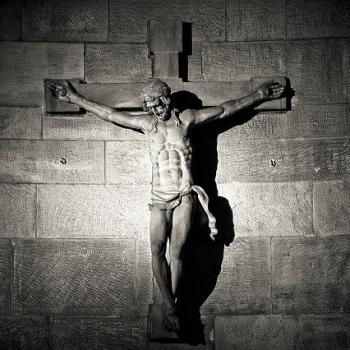
How did Jesus treat His disciples? Did he spank them? I don’t recall a single spanking in the Gospels. There was one incident involving a whip, but Jesus didn’t use it to belt his disciples into submission. He used it to chase the caged animals out of the temple after he’d turned over the tables.
What did Jesus do with His disciples, then, if he didn’t spank them?
All kinds of things. He healed their sicknesses and made sure they had something to eat. He accepted their invitations to dinner and spent time with them, even if doing it made the powerful people in the community angry. He taught them using fun stories and metaphors they could understand. He protected them from being stoned to death. He set an example. All of that was his discipline.
There’s a strange notion going around that interpreting the Gospels in the peaceable way I’ve just done is somehow a modernist take, and in the good honest olden days everybody realized that discipline ought to be harsh and cruel. But that’s not true at all. Long before James Dobson, about a hundred and fifty years ago, Saint John Bosco was telling everyone that he had never found corporeal punishment to be an effective form of discipline. Instead, he made up his own method, which involved befriending wayward boys, giving them lots of fun games to play, and making prayer and sacraments readily available but not forcing them on anyone. Cruelty isn’t “traditional” and kindness isn’t modern. And Bosco’s Salesian Preventative System is still used with great success today.
This, to me, is why Dobson was so sinful. He took cruel and abusive tactics that have been proven ineffective again and again out of thin air, and announced they were “Biblical” and the only good Christian choice. And in doing so, he drove people away from Jesus. That’s a sin if ever there was one.
Let’s all try to make it a better world.
Mary Pezzulo is the author of Meditations on the Way of the Cross, The Sorrows and Joys of Mary, and Stumbling into Grace: How We Meet God in Tiny Works of Mercy.













 Ad-Free & Subscriber Log-In