

I used to volunteer at the Unity Kitchen.
I still don’t know if the Unity Kitchen was the official name of the soup kitchen in the basement of a church downtown, or if that was just Pastor Tony’s nickname. Everyone else called it “the soup kitchen” and she called it “the Unity Kitchen.” We would help put food together and then serve it, then do the dishes if there was time, and then a car would take us back to the dormitories. We were warned not to go walking in downtown Steubenville, which was very dangerous.
I think about that sometimes, when I walk around downtown now.
The food was not terribly fancy there, much of the time– not for lack of love and effort, of which there was plenty, but because there was nothing promising to work with. They used whatever was donated to them and people didn’t donate nice things. Once in awhile there was oil and we had really excellent fish and chips, but usually there were cans, which we opened and stirred together to try and make recipes. A flat of generic canned corn, warmed up in a big pot, seasoned with some butter and brown sugar. Pimento-studded lunch meat, rolled up in tortillas. Different kinds of bean soup stirred together until it became a pretty nice chili. We scooped chili into bowls and asked the hungry people if they wanted saltine crackers or sliced white bread to go with it.
“Crackers?” a volunteer offered once, to a white man in torn jeans and a baseball cap.
“What’d you call me?” he asked; then he burst out laughing, and so did we.
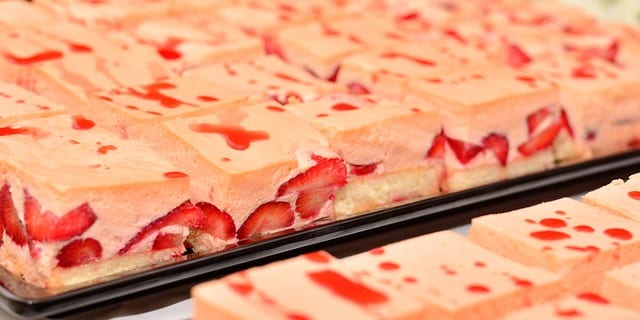
There were many silly people like him who cracked jokes and made the lunch hour seem pleasant. There were also weary people who stumbled in, glaring at nothing, and stumbled back out. There were also children– a small number on weekdays and a great big gaggle on Saturday nights. We used to lead a prayer service and a Bible club for the children on Saturdays before supper. I don’t know that any of them cared about the Bible very much, but they enjoyed hearing stories and having someone to play with. They liked the meal, especially since on Saturday it came with sheet cake or brownies.
They all had the most beautiful names– incongruous, oddly-spelled names, the kind of names I thought of as a surname or a common noun and not somebody’s given name. Their parents would growl the names at them to keep them in line, especially at the prayer service which was held upstairs in the big church. “Jackson? Jackson! This is a SANCTUARY! There will be no fightin’ in a SANCTURARY.”
There was a girl I’ll call Diamond, who was nearly always there. She had long, heavy, tangled hair of that shade of ash-brown which is known as “mouse,” and she usually wore a tiara on top of it. The tiara was the kind that comes from Dollar Tree: glittery gray tin, with plastic gems and a tuft of pink fur on it. It got more and more tangled with her mouse-colored hair until I wondered how she ever got it off. She usually accessorized this with plastic pink and purple sparkle necklaces, draped generously over her musty thrift store clothes.
When Diamond went to Bible lessons with the other little children, she would sit next to me and listen attentively. Then she’d tell me fanciful stories. She told about her long lost grandmother who’d finally come to visit this week, and was so glad to see her that she gave her a giant stack of hundred dollar bills. She held out her arms to illustrate a stack of money taller than she was, gazing up at me through smudged glasses. Her eyes were also gray, a different shade than her hair.
If Diamond had ever been clean and had her hair combed, she would have looked like a child movie star. She was lovely.
Diamond’s mother never looked at Diamond. She looked straight ahead, or down at her plate of food. When Diamond wandered off, her mother would yank her back into place by the arm with the cruelest wrench she could. If she wandered out of wrenching distance, her mother would growl her in a murderous tone. “Diamond? Diamond, get your ass over here.”
On the rare occasion that Diamond didn’t come to the Unity Kitchen with her mother, we’d ask “How’s your daughter?”
Her mother would refuse to look at us, just as she refused to look at Diamond. She’d snarl at her plate of food, “She’s drivin’ me crazy.”
One day when I wasn’t there, Diamond and her mother were leaving the Unity Kitchen when Diamond did something wrong. I don’t know what. But another volunteer saw Diamond’s mother slam her across the back of the head with one beefy hand– so hard that Diamond collapsed onto the pavement and stayed there. The volunteer called the mother back, pretending she’d forgotten to take an extra plate of food that the Unity Kitchen wanted to give her, and bantered with her to stall for time while the police were called. I think she left for the day just as the police were arresting Diamond’s mother. We all thought we’d never see either of them again.
The next week, Diamond and her mother were back, no different than ever– Diamond pleasant, affectionate and very dirty; her mother cross, threatening, and never looking at anyone.
That’s what it is to be a poor child in Steubenville.
I don’t know why I thought of that just today. I was watching a livestream vigil Mass with Rosie, listening to the Prophet Jeremiah complain that he’d been duped, and staring at the icons behind the reader’s head, and the memory came to me unbidden, vivid as if it happened yesterday instead of more than twelve years ago. There I was, single, anxious and miserable, scooping canned corn and passable chili onto plates. There was the smell of sheet cake with whipped cream. There were the musty dirty children, listening to a Bible story. There was Diamond in her tiara. There was the volunteer telling me she’d had to call the police on Diamond’s terrible mother, and it doing no good at all. Nobody helps children.
I suppose I’m just still shell-shocked by the child abuse case that’s all over the news, the one I told you about last week. After the arraignment this week, we’ve officially learned that that little toddler starved to death, caked with dried-out filth in a room that was nearly 100 degrees, downtown, just a few blocks from the Unity Kitchen on a street I’ve walked on many times. And we’ve learned that the neighbors are furious, because they all knew that child was being abused; they called the police and Social Services time after time for a solid year but nothing was done. And I read the comments full of self-righteous Northern Appalachian folks, blunt and honest to the hilt, declaring that the way to prevent this kind of abuse is to sterilize poor mothers before they’re allowed to receive Welfare. The cruelty of this region staggers me. I have been here fourteen years, and I’m still not used to it.
And then I remember the gaggle of children, and Diamond in her crown, so beautiful, with a mother who wouldn’t look at her and no one to come to her rescue.
Wherever she is now, I hope she’s happy.
I hope they’re all happy.
Life is hellish, short, brutal, painful, and deeply unjust. Often it ends in a way that is at the same time far too soon and far too agonizingly slow. But sometimes, while you live, you might be able to mix canned foods together to make a passable meal, and share it. You might have the chance to give a man a handful of crackers and laugh at his corny joke. You may be blessed with the opportunity read a messy child a story. She might make believe about a rich grandmother for you, and then you can feed her a piece of sheet cake.
And then that person will go on to suffer and die anyway, but they’ll suffer and die as somebody who once had a meal with somebody who laughed at his joke. That person will die a person who was read to, and listened to, and enjoyed cake at least once.
Is that enough? No.
But it’s something.
Image via Wikimedia Commons
Mary Pezzulo is the author of Meditations on the Way of the Cross.
Steel Magnificat operates almost entirely on tips. To tip the author, visit our donate page.













 Ad-Free & Subscriber Log-In