
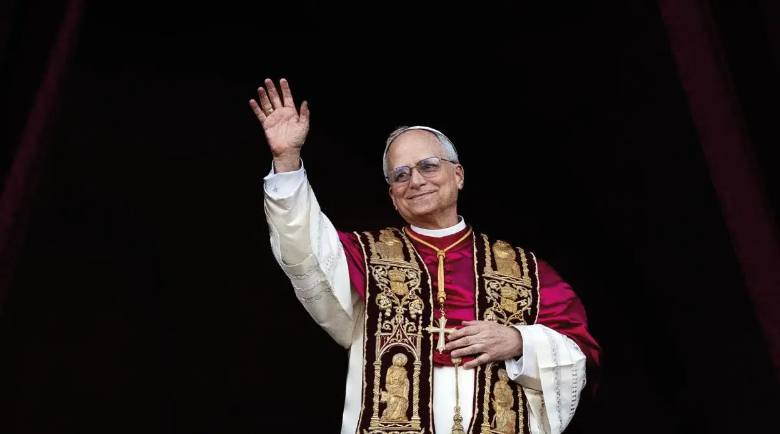
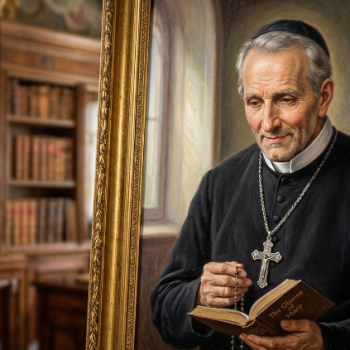
Pope Leo XIV is a pope of firsts. He is the first American to be elected pope, as well as the first pope to come from the Order of Saint Augustine.
In this paper, I want to examine the theological beliefs of Pope Leo through an examination of the people and institutions that have influenced him. First, however, it behooves us to review the personal history of Pope Leo XIV.
The Formation Of A Pope
The child of Italian and French immigrants, Robert Prevost was born in Chicago on September 14, 1955. Prevost’s parents were practicing Catholics, and the future pope was exposed to the intricacies of the Catholic Church at a young age.
Interestingly, Prevost became a friar in the Order of Saint Augustine before being ordained a priest. Despite obtaining a degree in canon law, Father Prevost’s early service was almost exclusively as a missionary in Peru. The pastoral nature of his early religious and priestly experience is likely something that has remained a part of his philosophy.
This missionary time of his priesthood would end when he was elected prior general of the Order of Saint Augustine. The promotion required that he be based in Rome from 2001 to 2013. However, Father Prevost would return to Peru as Bishop of Chiclayo from 2015 to 2023.
Upon being appointed as a Cardinal, Prevost’s focus turned to synodality, missionary dialogue, and engagement with social and technological challenges. Significantly, Cardinal Prevost expressed solidarity with the reforms of the Second Vatican Council.
On May 8, 2025, Cardinal Prevost became Pope Leo XIV.
Influences And Inspirations
We are, as the adage goes, the sum of our experiences. When we are young, those experiences shape and mold who we will be in old age. No one, not even popes, is entirely devoid of the influence of others. To examine the theological positions of Pope Leo XIV, I want to briefly examine those who influenced him. First, the significance of the name Leo XIV, in his own words.
“… I chose to take the name Leo XIV. There are different reasons for this, but mainly because Pope Leo XIII, in his historic Encyclical Rerum Novarum, addressed the social question in the context of the first great industrial revolution. In our own day, the Church offers to everyone the treasury of her social teaching in response to another industrial revolution and to developments in the field of artificial intelligence that pose new challenges for the defence of human dignity, justice, and labor.” (Pope Leo’s inaugural address to the College of Cardinals).
In providing the reasoning for choosing Pope Leo XIV as his pontifical name, the pope stresses the significance of creating a dialogue between science and conscience; to balance the tremendous scientific advances of our time with the timeless instruction of the Catholic Church, specifically in matters of social teaching.
The second source that can help illuminate the theological positions of Pope Leo involves examining those individuals who may have influenced his theology. Pope Leo credits his parents’ Catholic faith, along with a Marian devotion, for forming his early faith and religious practices.
As indicated above, Pope Leo XIV was a member of the Order of Augustines. It can be of no surprise, therefore, that the Order has significantly influenced his theological views.
A Theological Brief
The Augustinian influence on Pope Leo is immediately apparent in his choice of a personal motto, In illo Uno unum (In the One, we are one). The motto appears to be taken from Saint Augustine’s exposition on Psalm 127, and is suggestive of the significance that ecumenism has in the pope’s theological philosophy. Of course, the breadth of Saint Augustine’s theology is beyond the scope of this essay. Nevertheless, it may be helpful to touch on the main points since they illuminate the pope’s own theology.
Augustine’s theology emphasized the damage incurred on human nature due to original sin and the importance of divine grace in affecting salvation apart from any human efforts. Saint Augustine’s position on evil has been very influential in Catholic philosophy, emphasizing that evil is not a creation of God but a consequence of human free will.
Of course, Saint Augustine is not the sole theological influence. Pope Leo’s stress on religious unity and care of the poor continues the trend of his predecessor, Pope Francis, and may provide additional data as to the views of the new pope.
Lastly, it appears that Vatican II has been a significant event in shaping Pope Leo’s own theological and ecclesial positions.
Vatican II placed an emphasis on applying Catholic moral principles within the context of scripture and conscience. In turn, scripture was to be understood critically, emphasizing the author’s context and intent. This meant de-emphasizing a literal interpretation of the text. Another aspect of Vatican II that may significantly affect Pope Leo’s papacy is the Council’s vision of the Church as the People of God. At its core, this position means eschewing a strictly hierarchical Church. Rather, the Council envisioned the laity becoming a greater force for evangelization.
These various forces are likely to influence Pope Leo’s doctrinal approach, as well. As evidence of this, the pope has described doctrine as “a synonym of science, discipline, and knowledge.” This approach would mean that doctrine is not simply the judgment of the pope and magisterium, but rather a product of research, hypotheses, discussions, and progress aimed at conveying a reliable, organized, and systematic body of knowledge about a given issue.
Conclusion
Although the fundamental teachings of the Catholic Church are perennial, each pope brings with him a distinct agenda and vision for the Church. That is to say nothing of leadership styles.
Pope Leo’s strong Augustinian influence and his pastoral disposition would seem to bode well for his papacy. As with all things, however, God and time will be the final judge.







 Ad-Free & Subscriber Log-In