

My Stage IV Prostate Cancer Journey
My stage IV prostate cancer journey began 1 year ago when I felt a sharp pain in my left knee. You’re probably wondering why the pain in my left knee is relevant to prostate cancer so I’ll explain. I had no idea what was really happening because my left knee had bothered me before. I assumed it was just a stiff joint since I hadn’t been walking outdoors very much that winter. Like most guys, I decided that the thing to do was to walk it off. By the time I made it around the block, I was noticeably limping.
“I Could Tell I Was in Trouble”
My initial reaction was to apply some ice and a knee support. I didn’t mind the ice but my knee supports were in rough shape, so ordered 2 more. When they arrived, I put them on both knees, but halfway around the block, I could tell I was in trouble because they didn’t help at all. I became concerned that I would need surgery, and I didn’t want to be out of commission in the summer. After all, I was 71 and most of my friends had torn a ligament or two, and several had knee replacements. Seeing them hobble around didn’t exactly inspire me, so I determined that it was time to see the doctor.
My X-Ray and MRI
After an X-ray, my doctor ordered some physical therapy sessions. When they didn’t help, she ordered an MRI and referred me to an orthopedic surgeon. I had come to terms with the thought that I’d need surgery on my knee. However, he took one look at my imaging report and told me that he couldn’t help me. I was confused because the part of the report that I remembered indicated several tears around the knee. Then, with a serious look on his face, he told me that the MRI revealed the strong likelihood of metastatic disease. In short, I had some form of cancer and would need to see an oncologist. I was stunned and could hardly believe it. All the way home, my thoughts ran the gamut, from cancer surgery to healing and back again.
A Strong Support System Matters When Fighting Cancer
Once I was home, I shared the news with my wife and informed my adult daughters via text message. From that first moment until today, my family’s support has been a safe harbor. I didn’t really know how vital their support would be. I generally prefer to hear the bad news first, not last. I’d rather know how bad a thing might be so I can prepare my mind and get a plan; however, I wasn’t ready for the news I’d just received. In fact, any false bravado I may have had was gone. I knew I couldn’t carry this alone. 40 years of pastoral experience taught me that not only would I need spiritual support, but I’d also need mental health and emotional support.
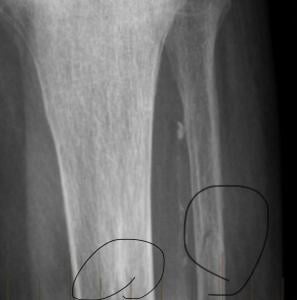
My Fractured Tibia and Fibula
I live near Ann Arbor, Michigan, so I researched orthopedic oncologists at the University of Michigan Hospital. It didn’t take long for me to find the head of that department, so I reached out and requested an appointment with her. At my first oncology appointment, she told me that I had a fractured tibia and a fractured fibula, and that I would need a bone biopsy. Within days, she scheduled a hospital stay to determine exactly what my situation was. It was the week of my birthday, May 17. I felt restless, and the uncertainty felt like a knot in my gut.

Prostate Cancer in My Left Leg
I remember that after the biopsy, she walked into my room and said, “Mr. Shelton, the bone biopsy showed that you have prostate cancer in your left leg.” My family and friends know that I’m a big joker, so I chuckled, waiting for the punchline. However, there was no punchline. When I asked for clarification, she told me that a “prostate cell looks like 1 thing, a prostate cell. That’s what we found in your tibia.” A subsequent PET scan and a bone scan further revealed that nearly all of the cancer had moved from my prostate gland into my left leg, with tumors from mid-thigh to my ankle (see image above).
“The Difference Between Minor Surgery and Major Surgery”
I’ll admit that I was overwhelmed. As a pastor, I’d done my best to comfort and intercede for congregants and friends who’d been diagnosed with cancer and other serious illnesses. But this was different; this was me. That might sound selfish, but the old joke is true: “The difference between minor and major surgery is that minor surgery happens to you, and major surgery happens to me.”
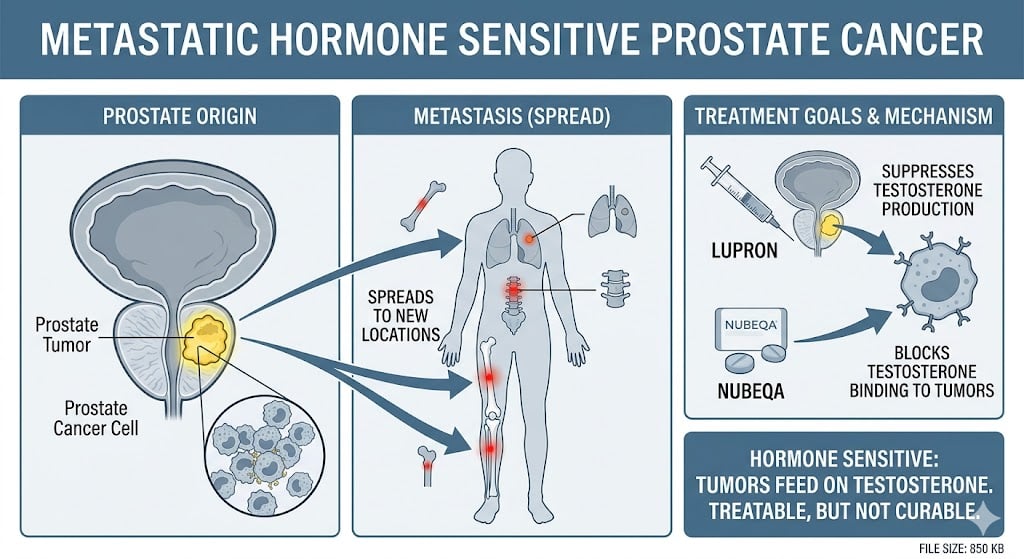
I was transferred to another oncology and radiology department and informed that my diagnosis was metastatic hormone-sensitive prostate carcinoma. With each new day and every appointment, new feelings and a greater understanding emerged. The oncologist explained that:
- Metastatic or Stage IV means the cancer has moved to a new location from its origin. In my case, from the prostate to my leg. She had no doubt answered my next question countless times: Is it curable? I flinched when she said “No”. So she hurried to tell me “But it is treatable.”
- Hormone-sensitive means the tumors feed on the testosterone that passes the prostate gland.
- Carcinoma, of course, means cancer.
“The thought of amputation took root in my mind.”
But what about my leg? Suddenly, the thought of amputation took root in my mind, and I couldn’t shake it. I tried to brush it aside, but it became too big to ignore. After all, the scans revealed a lot of tumor growth in my leg. Finally, I summoned the courage to ask my physician, and with a gentle smile she reassuringly said I could keep my leg. My next big question was almost as important: Will I lose my hair?” I’m grateful for a full head of silver hair, and I am vain. Again, she answered in the negative.
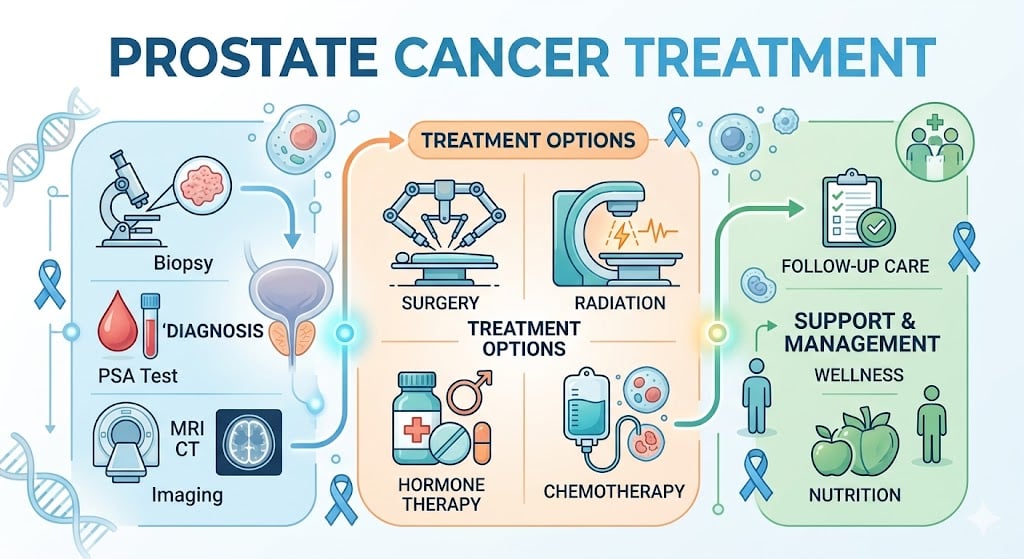
My Prostate Cancer Treatment
Then she took the opportunity to put my mind at ease and told me in detail what was going to happen during my prostate cancer treatment:
- 10 radiation treatments to kill cancer cell growth; also,
- A daily medication called Nubeqa would be necessary to block testosterone from binding to and fueling cancer growth;
- Quarterly injections of Lupron, which suppress testosterone production.

I am blessed with many friends and acquaintances, so I decided to post my situation on social media to ask for prayer. Not all cancer patients react the same way, and not all people are on social media. For me, though, this was the right decision. The response was greater than I had imagined. Friends and family from the States, and even outside the Country replied with words of encouragement through phone calls, texts, and visits. My wife’s colleagues from the public middle school where she’d taught for 28 years made a point of looking me in the eye and telling me they were praying for me. It’s hard to describe what that meant to me. I felt loved and cared for, but most of all, I felt that my life mattered. We are all here for a purpose, and I don’t believe mine’s finished just yet.
“I love you, and everything will be okay.”
The most memorable of the phone calls occurred the day of the biopsy. My 21-year-old grandson called and told me almost verbatim what I had prayed privately. He said, “Hi, Papa. I called to tell you that you’re gonna be alright, Nana will be alright too, and the family will be fine. Don’t worry, Papa. I love you, and everything will be okay.” I had the speaker on, so my wife and others in the room could hear. To me, there was no doubt; prayers were offered and heard. I wept with thanksgiving to God and gratitude for my grandson and my family.
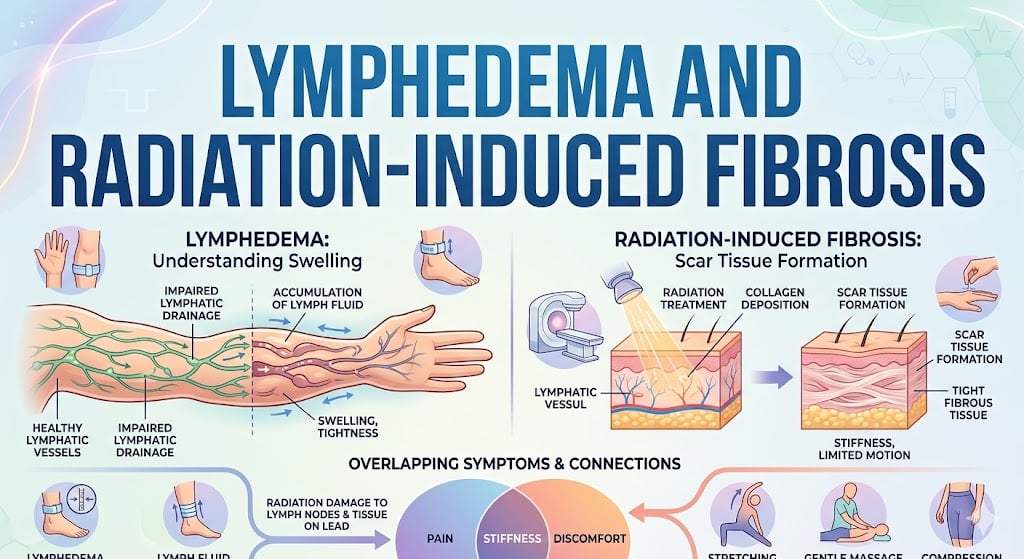
Still, my journey was hardly over. As a result of radiation therapy, my left leg became swollen: a common side effect known as lymphedema. Lymphedema occurs when lymphatic fluid is trapped in the affected extremity. It is a condition that comes and goes, and for some, becomes lifelong. My recovery included 19 physical and occupational therapy sessions. While the majority of the swelling is gone, I can still feel that there is work remaining. As a result of the radiation treatments, I have developed radiation-induced fibrosis, which is the thickening and scarring of healthy connective tissue. The primary treatment is compression wraps and compression socks, along with daily exercises and a special massage for lymphatic drainage.
I’m careful to acknowledge God and to be thankful for answered prayers. Most days, I think I’ll be okay from here on out because my dad was 2 weeks shy of 95 when he died, and a great uncle lived until 103 years old. The rest of the time, I remember how my diagnosis indicated that I’d had prostate cancer that was undetected for quite some time. But that’s what the Christian life is all about: Living by faith while walking toward the unknown.

I have friends who are Word of Faith, Baptist, Catholic, Presbyterian, Lutheran, Pentecostal like me, and nondenominational, who have consoled and prayed for me. I know them well, and while I may not live my life or practice my faith in Jesus exactly the same ways, I admire them and I have great appreciation for their prayers and faith. However, there is 1 thing I cannot abide: the idea that God gave me cancer. I do not and will not believe that my good God, my sweet savior, my shepherd, my King, my healer, my Jesus makes us sick and causes tragedy. It is inconsistent with His New Covenant nature.
There is Purpose in Your Pain
The past 5 years of my life have not been dull. First, I was diagnosed as an adult type 1 diabetic (known as L.A.D.A.). Then, I underwent a 10.5 hour cardiac ablation and defibrillator implant, followed by this prostate cancer diagnosis. There have been discouraging moments, for sure, but I’m not complaining. In fact, I am grateful because the Bible says that we are more than conquerors (Romans 8:37). I am grateful to God, my family, my friends, my physicians and nurses, my health insurance company, and you. Even if we’ve never met, I am grateful that you are reading this article and I pray that it helps you or someone you know. I have a purpose; work to do. Who knows how long I have to do it? When my father was in his 90s, I remember him saying he felt useless and of no real purpose. My response was that I believed he did have a purpose, even if it was to show me how to age and to die gracefully. He has done that, and when my mind wanders into rough terrain, I flash back to God’s goodness and Dad’s example.
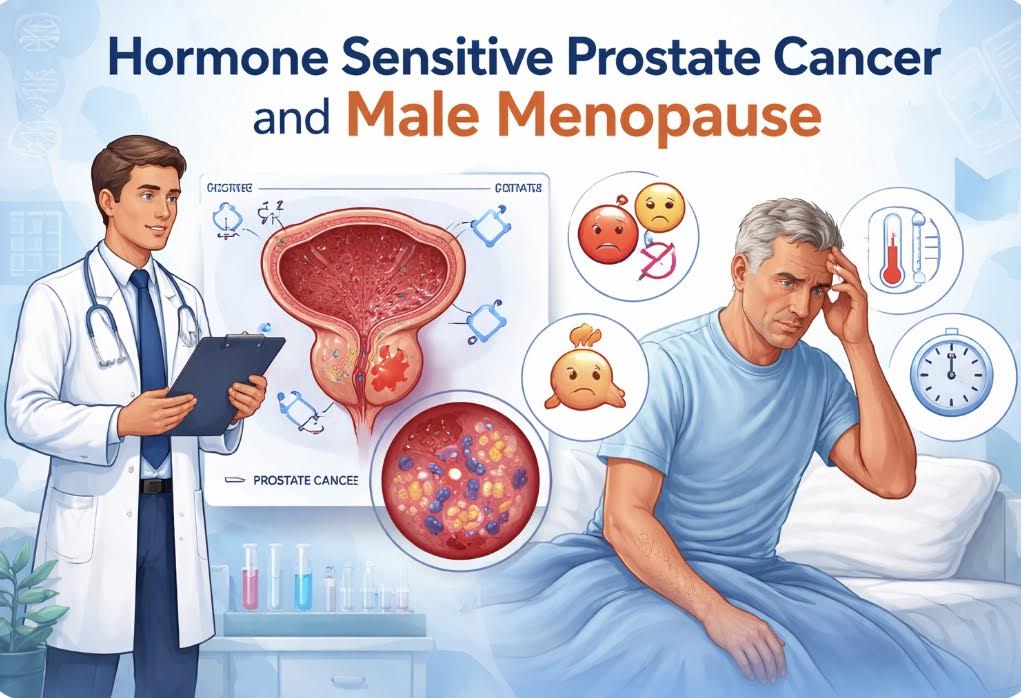
One of the worst things I’ve experienced in stage 4 hormone-sensitive prostate cancer is the effect of having shut down my testosterone. It’s not about not being able to have sex, that is the big deal. No, the hard part is having menopause-like symptoms. The mood swings, intense feelings, and hot flashes have not been pleasant for me or for my wife and daughters. Thank God they’re over now, and I have a new respect and compassion for the ladies.
“God wastes nothing in His lordship over my life.”
Earlier in this article, I said that I cannot abide the notion that God is the cause of my suffering. While I believe that is true, I also believe that God wastes nothing in His lordship over my life. His goal for me is spiritual maturity – to be Christ-like – and he is using my journey with stage 4 prostate cancer to that end. Yielding every situation to the hands of God is the safest and smartest way to handle life’s challenges, whatever they are. Learning to do that develops a pattern of holiness, a way of life that ensures our problems will not fatally overwhelm us. King David said it like this: “From the end of the earth I will cry to You, When my heart is overwhelmed; Lead me to the rock that is higher than I” (Psalm 61:2 NKJV).
If you liked this article or if you have your own cancer story to share, please leave me a comment below. I look forward to reading and replying to your comments. Also, please don’t forget to subscribe to The Gathering Place at Patheos to stay current with my column. You can sign up by entering your email below. Thank you for reading.












 Ad-Free & Subscriber Log-In