2023-03-16T09:50:18-05:00

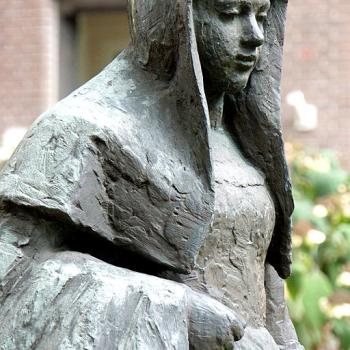
The Buddhist nuns of Sri Lanka have needed determination for there to be nuns at all. The last post, The Buddhist Nun Controversy, explained that Buddhist nuns’ orders died out in southeast Asia, including Sri Lanka, centuries ago. And because of ancient rules that govern the ordinations and training of monks and nuns, for centuries women in most southeast Asian countries were not allowed full ordination because there were no fully ordained nuns to ordain them. To recap: The Buddhism... Read more

2023-03-13T11:23:44-05:00

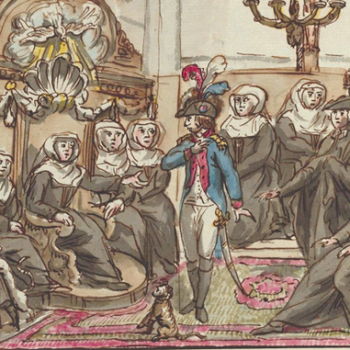
The Buddhist nun controversy stems from the many barriers Buddhist women have faced in Asia.  For example, the nuns’ orders of southeast Asia have been extinct for centuries. At the same time, the Buddhist establishment has resisted allowing the orders of nuns to be renewed. This means that many women who wish to live as nuns are denied full ordination. On the other hand, in Taiwan there are more nuns than monks, and the nuns enjoy respect, authority, and full... Read more

2023-03-06T09:40:42-06:00

The United States in the 19th century was a surprising place. Although it was marked by the Victorian era, famous for fuddy-duddiness, it was also a time for exploring mysteries  (see, for example, the previous post, “Talking With the Dead in 19th Century America“) and trying on new ideas about culture, society, and religion. And if you’ve not heard much about the Oneida Community of 19th century New York before, prepare to be surprised. The Second Great Awakening, with its... Read more

2023-03-06T09:31:58-06:00

Talking with the dead was all the rage in the United States in much of the 19th century. Famous mediums attracted huge, and paying, audiences who wanted to communicate with their dearly departed.  And the late 19th to early 20th centuries may have been the Golden Age of Séances, in both North America and Europe. The reasons for the heightened interest in talking with the dead are complex, but one was the rise of scientific discovery. For example, fossils were... Read more

2023-02-26T16:11:36-06:00

Christian mysticism flourished in 13th century Europe. Many of the 13th century mystics were Beguines, whom I wrote about in the last post. Beguines were laywomen who wore habits and lived lives dedicated to charity, chastity, austerity, and piety. But they did so without joining the formal nuns’ orders. This gave them a bit more independence from the patriarchal Church than they would have had as nuns. Many of these mystics are identified today as part of a particular school... Read more

2023-02-27T11:06:55-06:00

Beguines were women of medieval Europe — and later — who dedicated themselves to charity, chastity, poverty, and piety. They wore habits and usually lived together in communities called béguinages. But they were not nuns. They did not join any official religious order of the Catholic Church, and they were free to walk away from the religious life whenever they wished. The origin of the name Beguine has been lost. Beguines were part of  a larger religious movement of the... Read more

2023-02-19T16:56:54-06:00

The Mirror of Simple Souls is a classic work of medieval Christian mysticism that was lost for centuries. The book was originally written in Old French in about 1290 or so, possibly a few years later. It became popular and was translated into several languages. But Church authorities disapproved of it. The Inquisition burned every copy it could find and burned the author at the stake as well. The book was forgotten. But a few translations, copied without the author’s... Read more

2023-02-19T11:03:36-06:00

Heracles was a hero of ancient Greek mythology. He’s better known to most of us by his Roman name, Hercules. Hercules was a favorite subject of Greek and Roman art. His muscular likeness was so widespread in the ancient world that it influenced Buddhist temple art in far-away China and Japan. This is the story of how Hercules reached Japan. This story begins with Alexander the Great (356–323 BCE), king of Macedonia. Before Alexander was born, Macedonia had conquered Greece... Read more

2023-02-13T10:48:56-06:00

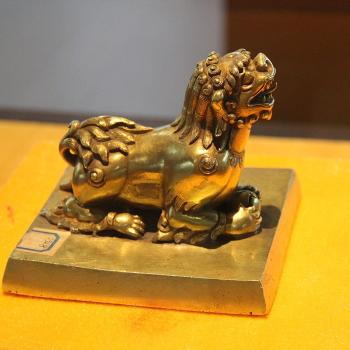
Tibet’s declaration of independence is a statement released by His Holiness the Thirteenth Dalai Lama, Thubten Gyatso (1876–1933), on February 13, 1913. In this statement the Dalai Lama said that Tibet’s long-standing relationship with China had been one of priest and patron, between Tibetan Buddhism and the succession of Qing emperors, not with the nation of China. With the fall of China’s last imperial dynasty and the establishment of the Republic of China, “the patron-priest relationship has faded like a... Read more

2023-02-13T21:10:58-06:00

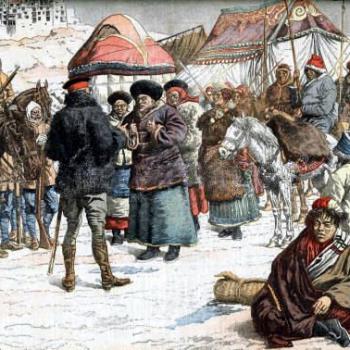
Britain invaded Tibet in 1903. The British did not intend to conquer Tibet but to warn Russia to stay out of it. British troops left Tibet in September 1904, believing they had made their point. But though this may be just a footnote of history, I say it’s a story worth telling. It reveals much about human nature, hubris, greed, confirmation bias, and the state of the world during a turbulent time. The invasion was not Tibet’s first encounter with... Read more

Follow Us!


TAKE THE
Religious Wisdom Quiz

What is the first commandment in the Ten Commandments?

Select your answer to see how you score.


Browse Our Archives