

I wonder if many of us who enjoy US citizenship have any idea how complex it is to “wait in line” and wade through the immigration maze to gain legal status.

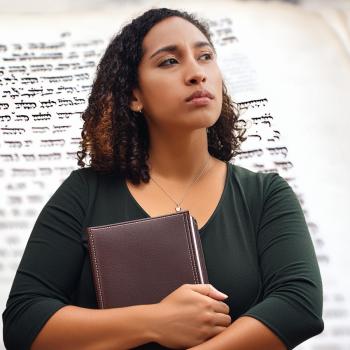
Image generated by ChatGPT.
The history behind this piece on immigration.
This piece was first written in 2008, eighteen years ago. I was shocked when I recently re-read it and saw how little had changed. I present it below with some edits, but it is mostly just as I wrote it then. As the 19th-century French critic Jean-Baptiste Alphonse Karr put it, plus ça change, plus c’est la même chose.
One’s convictions must enter the political arena and guide decisions. The idea that we should leave religion for the private sphere only and ignore religious convictions in public discussions is simply ridiculous. That is like saying that our personal circumstances should be ignored when making political decisions. If we were to do so, most of our debates would disappear, for most involve personal circumstances in some way or another.
In the particular issue I seek to address here, I am informed by both my religious faith and my personal circumstances. The issue? The status of those, especially from Mexico, seeking to immigrate to the United States to create better lives for themselves.
How does the Christian faith inform this? By a simple reading of the Bible. Over and over again, God’s people are urged to show hospitality to the sojourner, to the foreigner, to the one who is not part of the accepted in-group or those in power.
This message is central to the Christian Gospel: God in Christ offers welcome and salvation to everyone, not just a chosen few. And how will all hear about the hospitality of God if they don’t see the hospitality of God’s people? Can’t happen.
The issue became personal to me.
For me, the issue is also personal because of the huge issues my daughter-in-law faced as she sought legal status in the United States. Their complex situation came to mind strongly again when I read this note on the editorial page of the January 19 edition of The Dallas Morning News on January 19: “Let’s play immigration trivia. Ready? How many low-skilled Mexican workers were granted US work visas last year? The answer: 418. (No, that’s not a typo.) That may help explain why more people don’t wait in line.”
I wonder if many of us who enjoy US citizenship have any idea how complex it is to “wait in line” and wade through the immigration maze to gain legal status. My son and his wife, who is from Bogotá, Colombia, had been working their way through the system since 2003.
They hired an attorney. Twice, they appealed to members of the US Congress for help. As each deadline approached, the two of them would make sure that all their required documents were sent way, way in advance of due dates. In response, their paperwork has been lost, misfiled, and misnumbered. She was assigned multiple case numbers, greatly complicating the matter. Forms that were supposed to be attached to letters sent by the US government were not actually sent. Letters and phone calls have gone unanswered, or responses to questions not actually asked have been given, making them unhelpful.
I was with them in the summer of 2007 when they were finally granted their interview with the Department of Homeland Security after a very scary period when it looked like my daughter-in-law, pregnant again, would have to leave the US and not be able to return legally.
Since they didn’t know how long the interviews would take, I flew to New York to take care of their child so they didn’t have to deal with a tired and hungry toddler during the day. Just an FYI: for these all-important interviews, no set times are given to interviewees. Those scheduled for appointments each day are all told to show up first thing in the morning and wait until their names are called.
They spent several days preparing for this interview. They compiled multiple photo albums, showing each of them with the families of their in-laws, along with wedding, honeymoon, and baby photos. They printed off hundreds of pages of documentation, including all their travel records, all phone calls, and all correspondence concerning the situation.
I grilled them with the kinds of questions interviewers used to trap those who had entered into a marriage of convenience but had no intention of honoring the marriage covenant. Each could recite the extensive family histories of the families they married into, name the brand of toothpaste the other used, and speak of multiple intimate details that married couples know about each other.
On the morning of the interview, they groomed themselves into what I call their “magazine cover” look. They are both spectacularly beautiful—my son, the traditional tall, dark, and handsome, and my daughter-in-law, with her golden olive skin, slim, elegantly pregnant with son number two, and lovely with her exotic Castilian Spanish heritage.
I sent them off with my prayers, not expecting to see them for at least six hours, and got ready for a good day with my grandson.
Two hours later, they returned faces joyful and relieved. When they were ushered into their interview, the official took one look at them and stamped their application “approved” before asking a single question. The only documentation actually requested was their apartment lease. And so, Adriana, with a Green Card approval in hand, could finally begin working toward US citizenship.
I tell this story knowing that these are two people of privilege. They are educated, sophisticated, fully bilingual, and motivated. Neither is willing to do anything illegal. They had funds to hire an attorney. They had access to cameras, computers, printers, and good records. They had strong family support and extended family members who knew some members of Congress personally. And they barely made it.
What do our immigration policies say about us?
So I ask: what do our immigration policies say about us as a nation? Let’s face it, almost all of us come from immigrant stock unless we are full-blood native Americans. Many of our ancestors came here, desperately seeking a better life. Others were forced to this land by the practice of slavery.
Most came in poverty, worked hard and lived frugally in pretty awful conditions, sent money back home, and in time brought other family members here. They came, holding onto their native languages as long as possible, while their children quickly discarded them, becoming fully Americanized.
This is our history. This is part of our greatness as a nation. A knee-jerk reaction to current immigration problems will only hurt us in the long run. Let us be both Christian in our hospitality and faithful to our national heritage by offering open borders and reasonable ways for legal status. That is how we stay a great nation. I implore you to keep these things in mind as we face this politically-charged and crucial election year.












 Ad-Free & Subscriber Log-In