

Ultimately, it comes down to this: for the olive tree to offer robust production, the kind that ensures survival, the gardener must engage in radical trimming.
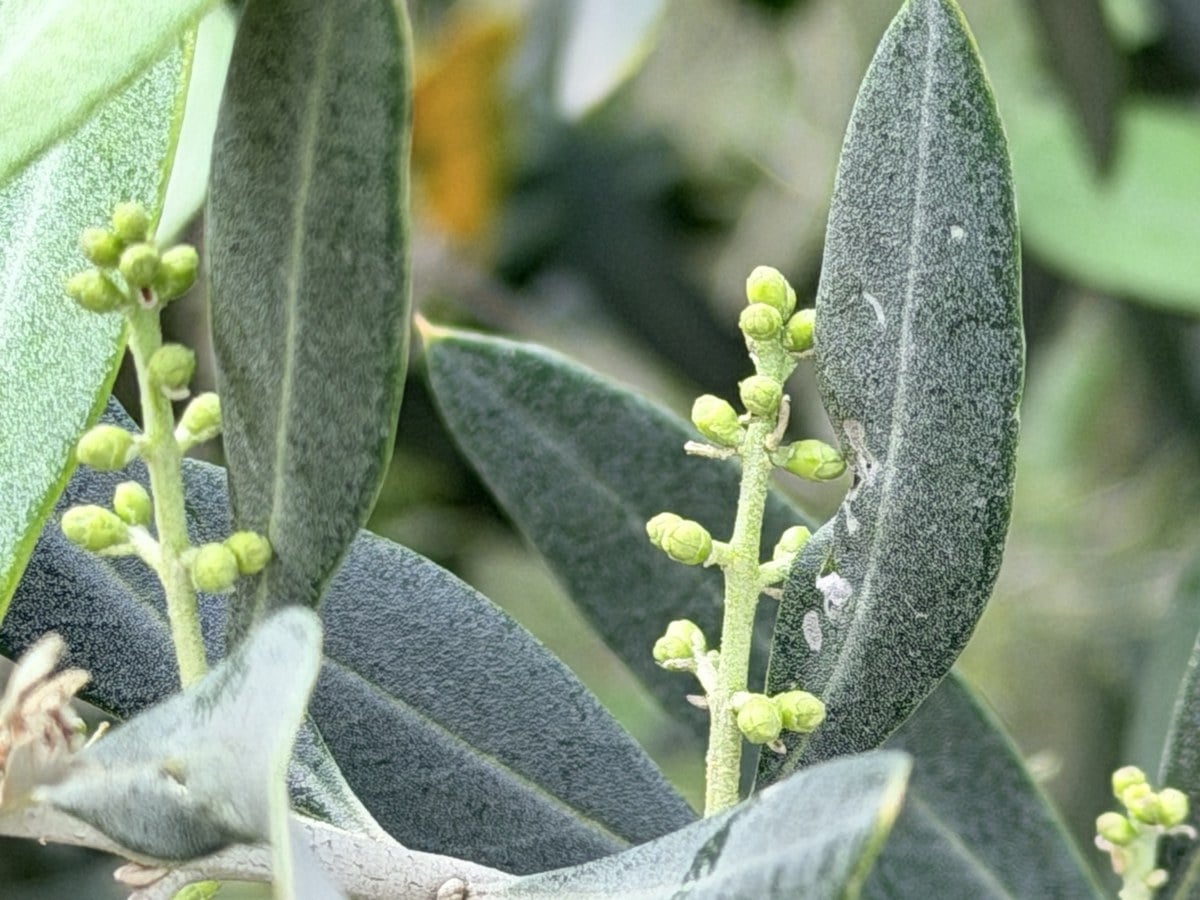
We drove through the Tuscan countryside, accompanied by an intriguing and informative running commentary by our excellent driver/guide, Alessio. Farming dominates the area and two crops dominate the farming: grapes and olives.
It’s mid-spring here, life-reinvention time, winter slumber tossed aside like too-heavy comforters, vibrant wildflowers lining the narrow roads, cheering on the traffic, endless acres of perfectly aligned grapevines, vibrant green topping the stalks. And, to my untutored eyes, countless olive trees looking like they’d been butchered by a madman with a chainsaw.
Alessio mentioned that nearly every family owned enough grapevines and olive trees to provide adequate wine and olive oil for the yearly household consumption needs, even as commercial production provides more for world-wide palates.
And then he explained the olive trees in this region. This type of tree produces olives for oil production only, not for the yummy savory snacks and pizza toppings many of us treasure—they come from different types of trees. Left to grow on their own, the abundant branches and leaves quickly provide too much shade for robust olive production.
The wise olive tree steward
So, wise olive tree stewards radically prune each tree in late winter, effectively chopping out the center branches, flattening the top, and exposing the interior branches to the kind of sunshine necessary for the 20,000-30,000 olives each healthy tree can produce yearly.
The result: about as aesthetically pleasing as unkept pile of weeds, yet offering life in the form of abundant olive oil production, an essential to healthy and flavorful eating across much of the world.
As one who gardens as a soul-healing hobby, aiming for pleasure to the eye, but little for the palate except one small area devoted to flavorful herbs, I fought an internal battle with the, to my untutored eye, butchered trees.
I was, naturally, reminded of the words from the Gospel of John where Jesus declares himself the vinekeeper, the one who must prune the vines, i.e., his followers, for robust production. And, of course, all the vines in the endless fields of growing grapes had been expertly pruned as well.
What is the pruning process?
So many times I had been taught this lesson as a way to understand the hard hits of my life—the uncomfortable “pruning” process by a God angry at my endless sin as a way to direct me in a more holy path. I suppose this could be true, but now I wonder how those first century folks, those who lived close to the land and understood the necessity of good pruning, would have heard it.
Might they have understood it differently? Instead of an angry God/gardener, might they have heard it as a caring act necessary for health and continued life? People in that time lived far more precariously than we do now—one bad harvest could lead to family starvation, dooming them to slavery and loss of all long-held family lands. Wise and caring farmers worked endlessly to avoid such dire outcomes. Their lives depended upon the health of their vines and their olive trees—cruelty and anger-based mistreatment of such living things was never in the cards.
Even so, the pruning process is, to my untutored eye, brutal. The natural shape is destroyed; production is the goal. Unproductive vines, trees past their prime—all are uprooted, left to compost, to decay, to feed the next generation of plants.
Ultimately, it comes down to this: for plants to offer robust production, the kind that ensures its survival and the survival of those tending them, their gardener must engage in radical trimming.
So what might Jesus have been intending by those words attributed to him? I don’t know—but I kept thinking about the life-giving properties emanating from those topped-off trees, new branches coming from the older trunks, thousands of olives preparing to grow from what looks like a royal mess to me.
Could this be the message? Out of the bumps, bruises and bulges, the truncated hopes and battered souls that make up most of us emerges life for others?
Spending some time here in the “old world” as opposed to the relative newness of the US has reminded me how minuscule is the time that I have available to me as an individual in the larger march of humanity.
It has also reminded me of the finiteness of human and political lives, growing my awareness that no nation, no people group, no matter how powerful in appearance, has actual staying power. All will eventually fail, all will be replaced by different systems, perhaps better, perhaps worse, but stability is an illusion.
A European perspective on Donald Trump
I read the US news these days from a European perspective. I hear people speak of Donald Trump with true, appalled derision and with a greater awareness of the world-wide damage he has caused. I come more and more to the conclusion that the US as a democratic nation no longer exists: it is now completely taken over by irredeemable kleptocracy and utter ineptness, run by those who now obediently bow to the Golden Trump instead of the biblical Golden Calf, both degraded substitutes for the Holy God.
Yeah, yeah, I know, but “what about Biden?” Yep, he was a foolish, foolish man to try to stay in power and Kamala Harris a poor pick as VP and unexpected heir apparent. But I do think there is a greater respect for the democratic process, as messy as it is, on the part of the disastrously disorganized Democrats.
The US, while still looking relatively prosperous, has possibly passed the point of no return. Mass ignorance reigns and rules; compassion is out; brute power is in. Social and cultural knowledge is denigrated; utter crassness and the basest impulses of human nature now celebrated. It’s both heartbreaking and inevitable under utterly immoral, rudderless leadership of those who only wish to plunder for the present, not nurture for the future.
And so I wonder: could this be an olive tree moment in the sense that the extreme ugliness emanating from this previously great nation might, with the best of pruning techniques, produce fresh fruit? Could we take a lesson here, slice off the top branches that now cover us with degrading darkness and let healing sunshine in again?
If we don’t, there is no hope. But if we do . . .














 Ad-Free & Subscriber Log-In