Patheos Watermark

Reform Judaism

Reform Judaism Quick Facts

Formed1810 CE
OriginEurope
Followers4,000,000
DeityGod (monotheistic)
Sacred TextsTorah, Tanakh (Hebrew scriptures), Talmud
HeadquartersNew York City, NY USA (Union for Reform Judaism, Central Conference of American Rabbis)

Reform Judaism

Reform Judaism Overview

Reform Judaism is the most liberal branch of modern Judaism. In an attempt to adapt to the social, cultural, and political situation of the modern world, Reform Judaism has either abandoned or changed many of the traditional Jewish religious observances. At its core, the Reform movement challenged the belief that the laws and rituals taken from the Bible required strict observance in the modern world. The Reform movement began in Germany in the early 19th century when many European Jews struggled to achieve full political emancipation and social integration. They began to question their adherence to some of the traditional religious practices that made them distinct. Abraham Geiger (1810-74), considered by many to be the spiritual father of the Reform movement, based this new movement on the concept that the essence of Judaism was the universal idea of ethical monotheism and it therefore has an important role in human history. Religious innovation and creativity facilitated an evolutionary concept of Judaism. Reform services and practices soon spread throughout Germany and into other European states and eventually the United States in the mid-19th century C.E. Reform Judaism continues to break with traditional Jewish religious observance and theology by allowing the ordination of women, interfaith marriages, and full participation of gay and lesbian members.


The Reform movement originated in Germany in the early 19th century with the goal of adapting Jewish religious practice and theology to contemporary western European culture, largely by eliminating almost all of the ritualistic and nationalist elements of classical Judaism.

The early reformers, inspired by the ideals of the western European Enlightenment and the emancipation of the Jews of France, aspired to adapt Judaism in such a way as to facilitate the integration of the Jews into the surrounding gentile society, without their conversion to Christianity.

The founders of Reform Judaism were liberal rabbis and Jewish historians, most importantly Abraham Geiger, whose goal was to preserve the core moral teachings of the biblical prophets while eliminating all rituals that betray the tribal and ethnic aspects of rabbinical Judaism.

While respecting the Torah as an inspired, but not divinely authored, foundational text of Judaism, Reform rejected the binding nature of its laws, along with the authority of the Talmud and later rabbinical codes. Reform regards the Torah in humanistic historical terms, as the record of the Jewish people's quest for God and holiness.

The initial excision of many central Jewish rituals and prayers, especially those that set the Jews apart as a nation, was over time reversed, as the Reform movement embraced Zionism and assumed a positive attitude to the optional practice of many ancient Jewish customs and traditions.

After the establishment in 1817 of the first Reform Synagogue, the "New Temple Association" of Hamburg, and the publication of its own liturgy in 1819, the movement spread very rapidly across central Europe and was the dominant Jewish denomination in Prussia, Austria-Hungary, and France by the middle of the 19th century.

The provoking nature of the graduation banquet of the first class of the Hebrew Union College, in 1881, as well as the radicalism of Reform's first ideological statement, the Pittsburgh Platform of 1885, led to a major schism among American Reform leaders, ultimately resulting in the creation of the Conservative movement by the more traditional Reform rabbis.

With the mass migration of German and Bohemian Jews to the United States beginning in the 1840s, Reform quickly established itself as the major Jewish religious movement in America. It remains the single largest Jewish denomination in the United States today.

While it never actively proselytized gentiles, Reform's ready embrace of converts, acceptance of mixed marriages, and recognition of children of patrilineal Jewish descent as Jews has greatly increased its numbers.

The much smaller Reform communities outside of the United States, especially in Canada, Europe, and Israel, tend to be far more traditional in their approach to Jewish law and the classical Hebrew liturgy.

Consistent with the "positive-historical" and humanistic ideology of its founders, Reform Judaism views the history of Israel in naturalist terms. It interprets the biblical notions of Israel's status as a "nation of priests" and her mission as a "light unto the nations" as having emerged from the Jewish people's historical quest for holiness, not divinely ordained.

While upholding, in the most general sense, the fundamental Judaic belief in unity of the one "God of Israel," Reform Judaism rejects the doctrine of the divine revelation of the Torah, the election of Israel as a chosen people, and all other supernatural elements of classical Jewish faith.

Inspired by the ethical teachings of the ancient Hebrew prophets, Reform Judaism is most strongly committed to what it calls "Ethical Monotheism," stressing moral behaviors over ritual observances as the true fulfillment of human purpose on earth.

On account of its de-emphasis on supernatural elements of religion and focus on social action, Reform Judaism has not developed any official theodicy.

Most Reform theologians place little, if any, emphasis on supernatural doctrines such as the eternity and salvation of the soul in the "future world," stressing instead salvation through the spread of universal moral ideals in this life.

Most Reform congregations celebrate the Sabbath with a major service on Friday evening rather than Saturday morning. Reform does not demand adherence to the rigorous rabbinic prohibitions against labor on the Sabbath and biblical festivals.

Since the foundation of the New Temple Association, Reform synagogues have featured radical changes to Jewish worship, such as organ music and the use of clerical gowns by rabbi and cantor. The architecture of the early Reform Temples deliberately emulated that of Catholic cathedrals, while their interiors were often modeled after those of Lutheran churches.

Except for circumcision, which was hotly debated among the founders of the Reform Movement but finally maintained, Reform Judaism initially dispensed with almost all traditional Jewish rituals. Today, however, many have been re-claimed though they have not been established as mandatory and binding on all Reform Jews.

The traditional Hebrew liturgy of the Sabbath services was drastically shortened and rendered almost entirely into non-Jewish vernaculars, and all references to the Jewish hope for a return to Zion were eliminated. Reform congregations do not hold daily services, and most Reform Jews limit their practice of Judaism to the Sabbath and major festivals.

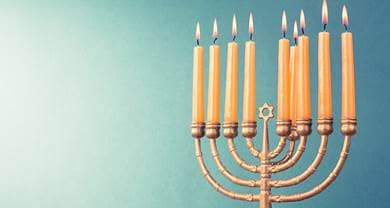
The Reform movement has never had any distinctive symbols unique to its synagogues. It shares with the more traditional branches of Judaism the display of popular Jewish symbols such as the Star of David and the Tablets of the Ten Commandments

Reform rabbis are all trained by the Hebrew Union College where the emphasis is on education in theology and pastoral skills, rather than textual expertise in rabbinic texts. Most Reform cantors are operatically trained singers who perform musically ornate, often baroque, liturgical compositions. Today however, the trend is toward more participatory communal singing during services.

While allowing individual congregations great laxity in determining their standards and styles of worship, the Reform movement has maintained institutional cohesion through a network of national institutions, such as the Central Conference of American Rabbis, the Hebrew Union College, and the Union of American Hebrew Congregations.

Reform Judaism has remained centrally rooted in the universal moral teachings of the Hebrew prophets, rather than in the ancient rituals of Israelite religion and medieval rabbinical law. As a result, Reform congregations are noted for their deep involvement in many forms of social activism.

Reform Judaism replaces the classical Jewish belief in a personal messiah who would miraculously restore the ancient Kingdom of Israel, with the hope for universal peace and brotherhood. Salvation, in Reform theology, is defined in liberal, humanistic, rather than supernatural, terms.

Reform Judaism was the first Jewish denomination to ordain women rabbis and cantors. Services have been completely gender-egalitarian since the mid-20th century. Reform remains the only Jewish denomination to accept fully and unambiguously openly gay and lesbian rabbis and cantors.

Recommended Reform Judaism Products

Shop More


Most Popular on Facebook