The United Church of Christ is a mainline Protestant Christian denomination that formed in the United States in 1957 with the joining of the Congregational Christian Churches and the Evangelical and Reformed Church. Like their Congregational predecessors, United Churches of Christ typically hold that the local congregation is autonomous from ecclesial hierarchy and has a freedom to self-governance. This concept of self-governance is traced back to the origins of Congregationalism in 16th - and 17th -century England and the Protestant Reformation. Congregationalism developed as one of branches of English Puritanism. It experienced its most significant growth in the United States as the separatist "Pilgrims" of the Plymouth Colony and the non-separatist Puritans of the Massachusetts Bay Colony. Like many of the other Christian religious traditions, Congregationalism also experienced significant growth during the 1730s and 1740s during the Great Awakening. Later, a general liberalizing began to occur within Congregationalism and some members even left to join Unitarianism. Eventually, Congregational churches began to unify with other denominations, including what has now become the United Church of Christ. Today, only a few associations of churches maintain the Congregational name, even though the tradition continues. The United Church of Christ is active in ecumenical movements and tends to favor more liberal or progressive stances on social issues including women's rights and gay rights.
United Church of Christ/Congregationalism
- United Church of Christ/Congregationalism Overview
- United Church of Christ/Congregationalism Origins
- United Church of Christ/Congregationalism History
- United Church of Christ/Congregationalism Beliefs
- United Church of Christ/Congregationalism Ritual, Worship, Devotion, Symbolism
- United Church of Christ/Congregationalism Ethics, Morality, Community
United Church of Christ/Congregationalism Quick Facts
| Formed | 1957 CE |
| Origin | United States / England |
| Followers | 1,200,000 |
| Deity | God (Trinity) |
| Sacred Texts | Bible |
| Headquarters | Cleveland, OH USA |

United Church of Christ/Congregationalism
United Church of Christ/Congregationalism Overview
United Church of Christ Origins
United Church of Christ Origins -- United Church of Christ Beginnings
The United Church of Christ was founded in 1957 through a federation of four related denominations sharing roots in colonial Congregationalism: the Congregational churches, the Christian Church, the Evangelical Synod, and the Reformed Church in the U.S.
United Church of Christ Origins -- United Church of Christ Influences
The Calvinist Reformed movement, the English Reformation, American Congregationalism of the colonial period in New England, and 20th-century ecumenism all influenced the beliefs and practices of the United Church of Christ.
United Church of Christ Origins -- United Church of Christ Founders
Some of the most creative theologians in American history were Congregationalists whose ideas laid the foundations of the United Church of Christ. These include Cotton Mather (1663-1728), Jonathan Edwards (1703-1758), Charles Chauncey (1705-1787), Horace Bushnell (1802-1876), and Washington Gladden (1836-1919).
United Church of Christ Origins -- United Church of Christ Scriptures
The word of God found in the Christian Bible, rather than tradition or clerical hierarchy, has ultimate authority in the United Church. UCC Christians generally do not advocate reading the Bible literally.
United Church of Christ Origins -- United Church of Christ Historical Perspectives
The historically liberal orientation of the United Church of Christ has produced great scholarly interest in its theological and social ethics, especially its stance against racial discrimination and its active promotion of social justice rooted in the 19th-century Social Gospel movement.
United Church of Christ History
United Church of Christ History -- United Church of Christ Early Developments
Congregationalism was widespread in New England in the colonial period, and, following the American Revolution, its leaders helped to shape American institutional and religious life. Nineteenth-century English Congregationalists prospered and enacted programs promoting social and economic justice.
United Church of Christ History -- United Church of Christ Schisms, Sects
The Congregational Christian Churches and the Evangelical and Reformed Church, created by mergers of other denominations in the 1930s, continued their quest to end schism and separation in Christianity by merging in 1957 to create the United Church of Christ.
United Church of Christ History -- United Church of Christ Exploration, Conquest, Empire (incl. violence, persecution)
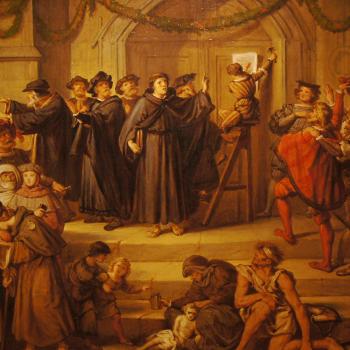
In the tumultuous English Reformation of the late 16th century, early Congregationalists were at times persecuted for their beliefs. Some of them settled in Holland, and from that community the Mayflower pilgrims sailed for New England in 1620.
United Church of Christ History -- United Church of Christ Missions, Spread, Changes, Regional Adaptations
The missionary roots of the UCC lie in the mainly Congregational American Board of Commissioners for Foreign Missions, founded in 1810. The UCC is exceptionally active in the modern ecumenical movement.
United Church of Christ History -- United Church of Christ Modern Age
Since 1985, the UCC has been in ecumenical partnership with the Christian Church (Disciples of Christ), operating a teaching and service organization called Global Ministries. It continues to advocate for peace and justice and Christian unity across denominations and differences.
United Church of Christ Beliefs
United Church of Christ Beliefs -- United Church of Christ Sacred Narratives
The life, death, and resurrection of Jesus comprise the central sacred narrative of the United Church of Christ. Following Colossians 1:15-20, Jesus is affirmed as being both fully human and fully divine, the center of creation, and the head of the church.
United Church of Christ Beliefs -- United Church of Christ Ultimate Reality and Divine Beings
Biblical in outlook, the United Church of Christ affirms the Christian teachings about God and the incarnation, and places special emphasis on the freedom of the Holy Spirit, whose active presence creates the church and its congregations.
United Church of Christ Beliefs -- United Church of Christ Human Nature and the Purpose of Existence
Humans are created in the image of God but are also prone to sin, breaking the covenant with God and doing evil. The United Church of Christ teaches that reconciliation with God is possible because of the crucifixion of Christ.
United Church of Christ Beliefs -- United Church of Christ Suffering and the Problem of Evil
Everyone suffers, and suffering is seen as evidence of a common humanity. In it Christians see the face of Christ. The UCC teaches that the church partners with Christ in confronting suffering and restoring hope in divine salvation.
United Church of Christ Beliefs -- United Church of Christ Afterlife and Salvation
Congregationalists gradually turned away from Calvinist teachings on predestination. UCC congregants hold a range of views on the afterlife, with some believing in universalism, or the idea that ultimately all humans will be reconciled to God.
United Church of Christ Ritual, Worship, Devotion, Symbolism
United Church of Christ Ritual, Worship, Devotion, Symbolism -- United Church of Christ Sacred Time
United Church of Christ congregations worship weekly on Sundays, and on special occasions throughout the year connected to commemorations of significant events in the life of Jesus. These include Advent, Christmas, Lent, Easter week, and Easter Sunday.
United Church of Christ Ritual, Worship, Devotion, Symbolism -- United Church of Christ Sacred Space
United Church of Christ congregations worship and gather for social events in buildings called churches. The buildings exhibit a wide range of architectural styles. The interiors tend to be brightly lit with minimal decoration.
United Church of Christ Ritual, Worship, Devotion, Symbolism -- United Church of Christ Rites and Ceremonies
Following its Reformed Church heritage, United Church of Christ congregations recognize two sacraments, baptism and communion. These are considered to be symbolic acts, and not embodiments of the presence of God.
United Church of Christ Ritual, Worship, Devotion, Symbolism -- United Church of Christ Worship and Devotion in Daily Life
Many UCC congregants will study scripture and pray daily, and the church provides a schedule and guide to assist. In addition, families will often pray together at special times, such as before meals or before sleep.
United Church of Christ Ritual, Worship, Devotion, Symbolism -- United Church of Christ Symbolism
The United Church of Christ has a distinctive symbol. A cross, crown, and orb are enclosed within an oval inscribed with the name of the church and a quote from John 17:21, in which Jesus prayed "that they may all be one."
United Church of Christ Ethics, Morality, Community
United Church of Christ Ethics, Morality, Community -- United Church of Christ Leadership/Clergy
United Church of Christ congregations rely on both ordained and lay ministers. They work in a wide variety of ministries, from pastoral care for the local congregation to the UCC's Global Ministries.
United Church of Christ Ethics, Morality, Community -- United Church of Christ Community Organization and Structure
The United Church of Christ combines the organizational styles of Congregationalism and Presbyterianism. Congregationalism provides the basis for local congregations, who select their ministers and handle their own affairs. Presbyterianism organizes relationships between member churches, in which the General Synod is the highest body.
United Church of Christ Ethics, Morality, Community -- United Church of Christ Principles of Moral Thought and Action
The United Church of Christ places the highest value on the pursuit of Christian unity, on toleration and freedom, and on the belief that Christians are called to build a world of peace and justice according to the divine plan.
United Church of Christ Ethics, Morality, Community -- United Church of Christ Vision for Society
The United Church of Christ is firmly rooted in the 17th-century Reformed Protestant tradition, which held that the church exists in order to carry out the plan of God on earth. In the UCC vision, the plan of God is one of justice and peace.
United Church of Christ Ethics, Morality, Community -- United Church of Christ Gender and Sexuality
The first female Congregationalist ordained in New England was Amelia Frost, in 1894. In 1985, the General Synod adopted a resolution welcoming gay and lesbian Christians, however, each congregation has the right to affirm or deny the resolution.