BREAKING: Arrest in “VatiLeaks” case

From CNS:

The Vatican police have arrested an individual in possession of private Vatican documents in connection to the so-called “VatiLeaks” scandal that began in January.

“This person now is being questioned by the Vatican magistrates for further information,” said Jesuit Father Federico Lombardi, Vatican spokesman, who declined to name the person.

He told reporters May 25 that the Vatican gendarmes “identified a person illicitly in possession of private documents.” The committee of three cardinals Pope Benedict XVI appointed in April to look into the leaks had asked the gendarmes to investigate.

In response to questions, Passionist Father Ciro Benedettini, assistant director of the Vatican press office, said the suspect was “under arrest.” However, he declined to say if or where the person was being held.

Dozens of private letters to Pope Benedict and other confidential Vatican correspondence and reports, including encrypted cables from Vatican embassies around the world, were leaked to an Italian journalist, Gianluigi Nuzzi. He published the documents in a book, “Your Holiness,” released May 17.

Read more. And stay tuned.

Better late than never: Ireland to get first permanent deacons

Details, from the Independent:

The first married men to be permitted to baptise children and officiate at weddings will be ordained in the Irish Catholic Church next month.

The church is looking to deacons to do some of the jobs of the clergy because vocations to the priesthood are at an all-time low.

And eight married men are to be ordained deacons in Dublin next month.

Deacons are sometimes described as ‘priests-lite’. They can do almost everything a priest can do except say Mass or hear confession. The men who will be ordained in Dublin next month have been in training for a number of years.

They will assist hard-pressed priests who are struggling to keep up with parishioners’ needs, and will also preach at Masses and officiate at funerals.

While married deacons are common in the church in other parts of the world, Ireland was reluctant to restore the ancient ministry and Irish bishops only agreed to do so in 2001.

The eight will be ordained to the permanent diaconate by Dublin’s Archbishop Diarmuid Martin on Monday, June 4.

Under church law, deacons must be at least 25 years old, if unmarried, and at least 35 years old, if married.

A married man also needs the consent of his wife before he can be ordained.

However, if an unmarried man is ordained a deacon, he commits to a life of celibacy.

Married men also vow to become celibate if their wife should die before them.

Dublin will be the country’s first diocese to introduce permanent deacons, who are expected to work in their home parishes.

Read the rest.

As usual, the report gets some things wrong — the writer evidently doesn’t understand that deacons are clergy, for one thing — but here’s hoping they learn in the years to come!

Answering the call — at a baseball game

From Major League Baseball … a fan with faith. And a phone.

All about Eve

That would be Eve Tushnet, who has just arrived at Patheos with her self-titled blog.

As Elizabeth Scalia notes:

I think Eve Tushnet’s name became much more widely known in 2010, when the New York Times profiled her, identifying her in the opening graph as that (to them) most exotic of all creatures, a “the celibate, gay, conservative, Catholic writer”.

My goodness, these labels, categories and pigeonholes — our increasingly polarized world loves them, because they tell us who we should read or not read, hate or not hate in the blink of an eye — but that just makes them all the more abhorrent, doesn’t it? Most of us are a great deal more than what is made obvious within our “categories.” Eve, for example is — like Leah Libresco at Unequally Yoked – a most interesting Yalie.

She studied philosophy at Yale University, where she was received into the Catholic Church. She is a freelance writer in DC, and has been published in (among others) Commonweal, The National Catholic Register, National Review, and The Washington Blade. Eve blogs at EveTushnet.com. Her hobbies include sin, confession, and ecstasy.

That would be the mystical sort, not the drug. And as of today, she blogs here at Patheos,

Stop by her blog and say hello!

Embracing poverty: life at the Catholic Worker

What is it like to live and work among the poorest of the poor in New York City?

From the Wall Street Journal, here’s a rare glimpse at the volunteers who live at the Catholic Worker:

Felton Davis is one of a dozen folks who live and work at Maryhouse and St. Joseph House, East Village shelters run entirely on informal donations and volunteer labor. Rooted in the New York-bred philosophy of Catholic anarchism known as the Catholic Worker movement, their aim is to live in solidarity with the “friends” they feed and house. When Mr. Davis invited me to visit, I kept waiting for approval from some sort of Maryhouse official. I didn’t realize that no one is in charge—the highest office is volunteer.

When we finally met up, Mr. Davis, a 60-year-old former postal clerk, was dressed in his usual outback-ready plaid shirt, cargo vest and jeans, culled from the donated-clothes closet. He gave a quick tour of Maryhouse. With its creaky wood floors and peeling paint, the place has good vibes. It’s housed in a former music school on East Third Street with a handsome auditorium. Downstairs, the supply closets brim with donated food, clothing and toiletries—bags of stuff appear every day on the front stoop. Meals, served in the pink and red dining room, are prepared in the sunny back kitchen with a cement floor and an old iron stove. The school’s tiny practice rooms were long ago converted to bedrooms, each wide enough for a bookshelf and a single bed.

Mr. Davis spends most afternoons watching the door and supervising the showers, but today’s agenda includes a rare trip to the Astor Place Kmart to buy socks and ladies’ underwear. In the morning, a homeless friend had declined a bath, saying, “Why should I bother showering if I have to put on dirty underwear?” Mr. Davis had no argument.

Strolling past the neighborhood’s crowded cafes and sparkling glass condos, Mr. Davis answered nosy questions about volunteer life. His possessions consist of his donated wardrobe, a wall of books and a $500 laptop. He eats all his meals at Maryhouse. His phone is the pay phone in the hall. He does email at the library. He doesn’t do restaurants or shows. This spring, he went with a pal to see Martin Scorsese’s “Hugo.” “That was $37.50, it was in 3-D,” he says, shaking his head at the memory. “It wasn’t worth it!”

Some Maryhouse volunteers take a $20 weekly stipend (variously referred to as “ice-cream money” or “cigarette money”), but many decline. They share a monthly MetroCard pass. They once pulled newspapers from the trash, but now that everyone in the East Village reads the paper online, they share a single subscription to the New York Times.

At Kmart, it takes Mr. Davis considerable effort to select five packs of socks and underwear. When I follow behind at the register and casually blow $2.29 on a packet of nuts, it’s the end of the world: “You just spent a fortune! For what! Ten cashews?” No, he does not want to try them.

All this economizing pays off. The $400,000 operating budget, kept in a checking account at the local bank, produces nearly 1,000 meals a week for the homeless and buys food, clothing and shelter for the volunteers and nearly 70 guests, including a family of refugees from the Congo. That’s less than $4,000 per year per resident—about what I pay for my dog walker.

Read the rest.

The joy of sects

Is the Catholic Church becoming little more than a sect?

Jamie Manson, a columnist at NCR offers this observation:

With its attacks on same-sex marriage, battle against providing adequate health care for women, hostile takeover of LCWR and inquisition into the Girl Scouts, the hierarchy continues to make itself an embarrassing media spectacle in a society that long ago refused to accept the teaching on birth control, believes in women’s equality and increasingly supports same-sex marriage.

Even those who are not affected directly by these ideological battles find it odious that hierarchy is choosing to spend precious money and resources on lawsuits against the Obama administration and bizarre new campaigns like the Fortnight for Freedom.

Church leaders seem hell-bent on disenfranchising the greatest number of laity possible.

The question is, Why? Why is the hierarchy acting like the new boss who so wants to rid himself of the staff he inherited, he makes it as uncomfortable as possible for them to stay in the organization? Has the church leadership made a decision to downsize? Have they realized that the $2.2 billion in sex abuse settlements and the rapidly dwindling number of priests in the United States has rendered the church unable to provide for the needs of 72 million Catholics?

Perhaps all of these ideological battles — which, we are told, are grounded in Pope Benedict’s desire for a smaller, more faithful church — are really all about the money, or lack thereof. More than one commentator has suggested that the endgame in the crackdown on LCWR could be to recapture property, assets and pension reserves from religious communities.

Unfortunately, if the hierarchy continues on this path of mass disenfranchisement, what will result isn’t a smaller, more faithful church, but an insular, countercultural sect.

Read more.

Another giant falls: New Orleans paper may cease daily publication

Grim news in the media world:

The New Orleans Times-Picayune, which distinguished itself amid great adversity during Hurricane Katrina and its aftermath, is about to enact large staff cuts and may cut back its daily print publishing schedule, according to two employees with knowledge of the plans.

Newhouse Newspapers, which owns the Times-Picayune, will apparently be working off a blueprint the company used in Ann Arbor, Mich., where it reduced the frequency of the Ann Arbor News, emphasized the Web site as a primary distributor of news and in the process instituted wholesale layoffs to cut costs.

A request for comment late Wednesday night from the newspaper’s editor, Jim Amoss, was not returned.

The plans have been kept under wraps, but the newspaper will likely publish two or three times a week rather than daily, according to the employees. They insisted on anonymity because the plans were still being worked out before an official announcement.

Mr. Amoss, the longtime editor, will assist in the transition before leaving. Two managing editors, Peter Kovacs and Dan Shea, both of whom were reportedly excluded from all meetings in recent weeks about the developments, will be leaving as well.

Ashton Phelps Jr., the longtime publisher of the newspaper, announced his retirement in March and will be replaced by Ricky Mathews, the publisher of the Mobile Press-Register and president of Advance Alabama/Mississippi.

The Times-Picayune, which has published since 1837, was bought by the Newhouse family in 1962 and later merged with the afternoon daily. Up to now, the paper has avoided some of the deeper cuts in the industry, in part because the newspaper played such a critical role in the coverage of Katrina and its aftermath.

When the hurricane approached, dozens of the staff decided not to evacuate and rode out the storm at the newspaper. The presses lost power, but the newspaper used its Web site to post updates throughout the storm. It was also a big moment for citizen journalism, with besieged residents using the site to post updates, look for loved ones and direct rescue personnel.

After three days of online-only publication, the paper began publishing a print edition, and its follow-up coverage was praised as being deep and meaningful, especially in a city that was short on good information and rife with rumor and chaos. The paper shared the 2006 Pulitzer Prize for public service with The Sun Herald in Biloxi, Miss. The paper’s staff was also awarded a Pulitzer for its breaking news reporting.

Read more.

New York ordains just one priest — and his first Mass is in Latin

Details:

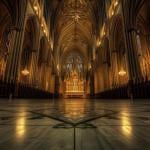
Today Fr. Patric D’Arcy, newly ordained priest of the Archdiocese of New York, celebrated his first Mass - a Solemn High Mass in the Extraordinary Form – amid the Gothic splendor of Blessed Sacrament Church. Many clergy and seminarians were in attendance. A schola performed both chant and polyphony, including Allegri’s Miserere.

The website for the Archdiocese of New York has biographical details about Fr. D’Arcy:

As a child, Father Patric D’Arcy looked up to his father as a role model. So when he saw that his father viewed priests as “honorable, noble and good,” he realized the priesthood was “something special.”

“My parents, especially my dad, always showed great respect for the Church and for priests,” Father D’Arcy said. His father, Frank, and his mother, Maureen, attended Sunday Mass faithfully with their four children. He credits the faith of his parents, and their support, as the greatest influences early in his vocation.

“Both of my parents spent their energy building their family and their children,” he said of his home life in Galt, Ontario, Canada.

Father D’Arcy credits his grandparents, notably his grandmothers as another early influence on his faith life. They shared with him their love of the Holy Father, the Church, Our Lady, the Blessed Sacrament and the Mass.

His grandmothers also taught him an important lesson he has carried with him throughout his life. “When faced with confusion, the pope is always someone to look to,” he said.

In recalling his childhood, Father D’Arcy told how serving as an altar boy affected his vocation journey. His father was an altar server as a boy, and when Father D’Arcy learned that, he likewise wanted to serve. The experience made an impact right away.

“When I started to serve Mass during the week, that’s when I started praying and fell in love with the Mass,” he said.

Congratulations!  Ad multos annos!

Vatican publishes rules on Virgin Mary sightings

It’s unclear if this is connected to the ongoing investigation into Medjugorje, but it’s an interesting development at the end of the month devoted to Mary.

Details:

The “Norms Regarding the Manner of Proceeding in the Discernment of Presumed Apparitions or Revelations” have been in use since 1978, but until now had been available only in Latin, never officially published and only circulated among bishops and specialists.

The Vatican document has now been translated into English and other languages to aid bishops in the “difficult task of discerning presumed apparitions, revelations, messages or … extraordinary phenomena of presumed supernatural origin,” Cardinal William Levada, the head of the Vatican doctrinal office, wrote in a companion letter last December that was published only recently on the Vatican website.

The norms mandate that the local bishop must conduct a “serious investigation” to ascertain, with “at least great probability,” whether the Marian apparition effectively took place.

The rules also require an evaluation of the “personal qualities” of the alleged seer, including his or her “psychological equilibrium,” ‘’rectitude of moral life” and “docility towards Ecclesiastical Authority.” The contents of the “revelation” must be “immune” from theological error, and the apparition must bear “abundant… spiritual fruit,” such as conversions.

The authenticity of the vision should be rejected if, among other factors, the alleged seer shows “psychological disorder” or “evidence of a search for profit.”

In 2010, Pope Benedict XVI appointed a high-level commission to evaluate the authenticity of the controversial Marian apparitions in Medjugorje, Bosnia, which have been attracting tens of thousands of pilgrims for years despite opposition from local bishops.

The full text of the rules can be found here.

Chaplain removed for bringing wine into prison

It happened in South Carolina:

For a quarter century, Monsignor Ed Lofton has served as one of 86 volunteer chaplains at the Charleston County jail. Bringing calm to inmates and jailers alike is considered essential to his mission.

But carrying wine into a facility where alcohol is labeled as contraband hasn’t come without controversy. He has fought and won that battle before.

For 15 years, he has consumed 1 ounce of sacramental wine during Mass without incident. Inmates partake only in the bread.

But this week he lost a fight.

Chief Deputy Mitch Lucas, the jail’s administrator, has told Lofton to replace the wine — brought to the jail in a TSA-approved container designed for holy water — with grape juice.

He booted the chaplain Tuesday after he refused to do so.

Lucas said the move was necessary because Lofton had threatened to sue on the basis of a civil-rights violation. He didn’t want the chaplain to continue visiting the jail and “gathering evidence” for a court claim, Lucas said.

The action has denied inmates a First Amendment right and a religious rite that’s “at the heart of what the Catholic Church is all about,” Lofton said. He added that he would ask for Lucas’ firing during a meeting today with Sheriff Al Cannon.

“They pull this on me after I’ve been doing this for years,” said Lofton, who leads St. Theresa the Little Flower Catholic Church in Summerville. “It’s pretty bad that I have to fight for something the Constitution allows. But this is religious freedom, and I’ll fight for it again.”

Read more.