Feed on
Posts
Comments

Have we started a trend?

Details:

Don’t assume every ash-marked forehead you see today belongs to a Catholic.

Ash Wednesday, long associated with Catholicism, is increasingly observed in Protestant churches.

The Rev. Joe DeRoulhac became senior minister of Redlands’ First Baptist Church in 1989 but didn’t preside over Ash Wednesday services there until 2003. The idea came from an interfaith Ash Wednesday event he participated in a year or two before.

DeRoulhac said there’s an increasing desire among Protestants to look anew at ancient Christian practices that previously were identified with Catholics.

“Part of this is retrieving from the past rituals that might help us today to fully experience the significance of our faith,” he said. “It’s our common heritage.”

As in the Roman Catholic Church, ashes are typically seen as signs of repentance and mortality, and Ash Wednesday marks the beginning of Lent, the 40 days — except Sundays — leading up to Easter.

Even a small number of evangelical churches have begun holding Ash Wednesday services, said the Rev. Kurt Fredrickson, an associate dean at Fuller Theological Seminary, an evangelical institution in Pasadena.

Evangelicals historically have avoided practices viewed as Catholic, he said. Today, there’s general acceptance among evangelicals that Catholics are fellow Christians and they see less of a need to distance themselves from Catholics, he said.

Read the rest.

Tags: ,

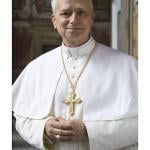
This year’s ashy portrait, courtesy Fr. Antonin:

Tags:

I’m sure I’ll hear this Ash Wednesday staple sung multiple times at our parish’s Masses today.

Here, a beautiful rendition of a beautiful hymn (written by Gregory Norbet), performed by John Michael Talbot.

YouTube Preview Image

You start to see commercials like this…

YouTube Preview Image

[Click here for readings]

Click the green tab below to hear this homily as it was delivered at 8 a.m. Mass.

Audio clip: Adobe Flash Player (version 9 or above) is required to play this audio clip. Download the latest version here. You also need to have JavaScript enabled in your browser.

When I was in high school, I had an English teacher by the name of Mrs. Comberiatti.   She was a quiet, tiny little woman, very young, but surprisingly strict.  I spent most of the 10th grade being terrified of her.  But all that changed one day, when she came into class wearing a big button on her lapel.  Thirty-five years later, I don’t remember much of what she taught us about “The Scarlett Letter” or “A Tale of Two Cities.” But I do remember that button.  It said:

“Please be patient.  God isn’t finished with me yet.”

Whether we realize it or not, today we proclaim that same message.

We won’t do it with a button on a lapel…but with ashes on our brow.

The ashes we wear announce to the world this plain fact: we are sinners. They tell all who see us that we are beginning 40 days of prayer, and repentance, and sacrifice — that we are Catholic Christians seeking somehow to reconcile ourselves with God.

These ashes say that we are works in progress.

They say: please be patient.  God isn’t finished with me yet.

He isn’t finished with any of us.

That is the great wonder and consolation of Lent.

As we enter this holy season we should approach it with sobriety and seriousness.  But we shouldn’t mistake that seriousness for solemnity.

The gospel today reminds us: “Do not look gloomy…anoint your head and wash your face.”   I’d take that one step further: add to this season of penance and prayer a sense of possibility.  Make it an occasion for hope.

And yes, even, joy.

Last week in Rome, Cardinal Timothy Dolan delivered a beautiful address to the pope and the college of cardinals.  He quoted the writer Leon Bloy, who said, “Joy is the most infallible sign of the presence of God.”  If we want to be – as St. Paul put it in the letter we just heard – “ambassadors for Christ,” if we want to bring others the presence of God, we need to be emissaries of joy.

Even during Lent.  Especially during Lent.

Cardinal Dolan told the story of a man dying of AIDS at a hospice in Washington that was run by the Missionaries of Charity.  The man wanted to be baptized.  When the priest asked for some expression of faith, the dying man whispered, “All I know is that I’m unhappy, and these sisters are very happy, even when I curse them and spit on them. Yesterday I finally asked them why they were so happy. They replied ‘Jesus.’”  And the man explained: “I want this Jesus so I can finally be happy. “

Those sisters gave that dying man something immeasurable.  Even amid suffering and hardship in that hospice, could anyone deny that they were ambassadors for Christ?   How many of us would hope and pray to affect the lives of others the way they touched the life of that one man?

We think of Lent as a time for giving up.  I say this every year, but it is true: “Giving up” begins with “giving.” Give something of yourself to someone else.

Begin by giving joy.

And if you truly want to give up something, don’t just settle for chocolate or hamburgers or cheesecake – though right about now, I think, we’d all like to lose that weight we gained over Christmas.

Go further.  Go deeper.  Try giving up something really hard.

Give up cynicism.  Or jealousy.  Or backstabbing.

Give up gossip.  Give up regrets for choices you never made or paths your never took.  Give up fighting God’s will for you.  Give up always forgetting that the most famous prayer in the world doesn’t include the phrase “My will be done,” but “thy will be done.”

Need help?  Try this: give up whatever fear or anxiety is keeping you from going to confession, and just go.

Give up being too busy to pray, or being too worried to hope.  As they say in AA: let go.  And let God.

There is no better time for doing that than now.  As the scripture tells us today: “Now is an acceptable time.”

The point of all this isn’t just to make others feel better – or make ourselves feel holy.  It’s to draw us closer to The One who makes everything, including our redemption, possible.  And we do it now for good reason.  Lent forces us to admit something we prefer to ignore: we don’t have forever.  So, throughout the day, look in the mirror.  You’ll see reflected back this inconvenient truth: we are dust.  We have been marked.  The clock is ticking.  And there is work to do.

It begins here, and now.  And it will take the rest of our lives to do.  But nothing is more important.  It is the great work of our salvation.  The journey of Lent is one more leg on our journey back to the Father — a  journey of struggle, and sacrifice.

But a journey, ultimately, of joy.

As you “remember that you are dust, and to dust you will return,” remember that, too.

And as we embark on that journey, and begin this 40 day adventure, remember one more thing.

Be patient.  With yourselves.  And with everyone else.

Because God isn’t finished with any of us yet.

Tags: ,

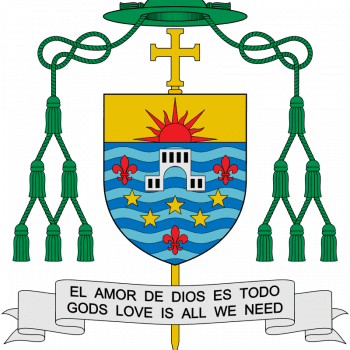
Whispers has the scoop on Bishop-elect George Sheltz:

His father a permanent deacon, according to an official release, the bishop-elect would become the second deacon’s son to be raised the episcopacy on these shores, following the Washington auxiliary Barry Knestout, who was ordained in late 2008.

And there’s this statement from the son-of-a-deacon:

I am sad that my parents, the late [Deacon] George and Margaret Sheltz, and my brother, the late Anton Sheltz, cannot be with us on this joyous day. But I take comfort in knowing that my sister, Mary Margaret, and I continue to feel their love and support.

I look forward to continuing to work with the priests, deacons, religious women and men and lay faithful in this great Archdiocese of Galveston-Houston. You are the face of the living Christ, and together we must work to make the person of Jesus known to youth, to our families, to the poor, to the sick and the suffering.

I ask for your prayers, patience and collaboration as I assume the responsibilities given to me. May God bless you all.

Read more and see a video here.

Tags: ,

Almost a year ago, we began the Easter season with a roaring fire at the door of the Church – we re-lived the creation of the universe, and it exploded into hundreds of points of light: small, bright candles that were held by every one in the church. We sang: “Christ Our Light, thanks be to God.” And we were made new.

Now, it is a year later.

And what we are left with…is ashes.

So for this one day we will bear that mark — the remnants of a great blaze, the residue of a fiery faith that maybe has cooled, that isn’t as strong as it could be.

And for this day, we will let others see this mark, as a sign of repentance, and humility, and humanity. Maybe, as the day goes on, we will forget about it, and suddenly catch sight of ourselves in the bathroom mirror, and realize, with a shock:

We are dust. And to dust we will return.

And we will see others like us on the street and think: we have plenty of company.

Ultimately, that is all we are in this earthly life: dust. But we dream to be more. We know we can be more. And so we make this 40-day journey – joining Jesus in the desert – to strive to be better than what we are, and become what we hope to be.To become more than dust – to become, in fact, light. Burning, brilliant light.

And so we join the psalmist and sing:

“Be merciful Lord, for we have sinned.”

We rend our hearts.

And we begin this long walk into the wilderness.

Because we are dust. And to dust we will return.

We wear this mark, if only for this day, as a reflection of where we came from, and where we are all destined to go.

But we are reminded of something else, too: it is the middle that matters.

It is that lifetime stretching in between that matters.

What will we do with that time? How will we live? What will we be?

These 40 days are a blessed opportunity to carry those questions in our hearts – and in answering them, reconcile ourselves with one another, and with God.

Hundreds of years ago, St. Catherine of Siena said, “If you are what you should be, you will set the world on fire.”

This day, look at the ashes.

But think of the fire.

And let us pray, this Lent, to set the world ablaze.

–From Ash Wednesday Homily, 2009

RELATED:

Tags: ,

From Gary, Indiana comes this profile of a deacon serving the people of God in so many ways, I have to wonder when the guy sleeps:

While Tom Gryzbek may have diverged from his original plan to become a priest, he has found his own ways to serve as a hospital administrator, lawyer and deacon.

“I was in the seminary system at the Chicago Archdiocese,” he says. “As people began leaving, the pendulum began to swing in the direction that you could date if you were so inclined.”

Gryzbek realized he wanted to keep the option of marriage open, so took his life in a different direction and went on to earn a bachelor of science in psychology from the University of Illinois in 1974. He eventually married Marilyn and has two children, Joe and Mary.

It was right out of college that Gryzbek began his long career with the Franciscan Alliance. He joined the former St. Margaret Hospital as suggestion plan manager after graduation. “When I applied, I had no knowledge of health care and it intimidated me,” he says. “But out of all of my interviews, the place that seemed most attractive to me was St.  Margaret”….

…Gryzbek also has served the community as a Gary Diocese deacon at St. Andrew Parish in Merrillville, an avenue he followed in the 1990s after deciding not to remain at the seminary as a young adult.

“I had a calling to participate in some way beyond what I was doing. I wanted something deeper. As I wasn’t to be a priest, maybe I was supposed to become a deacon,” he said.

He has the opportunity to help with Bible study, Baptism prep classes, Masses, spiritual programs and retreats. As diaconate director for post ordination, he assists newly ordained deacons during their first few years of service.

As a deacon, he also meets with inmates as part of the prison ministry at the Westville Correctional Facility and he hopes to expand the program at the Lake County Jail.

“I find it very rewarding to visit prisoners and hold liturgical services with them. They are extremely appreciative of these contacts as I help them continue to right themselves to re–enter society,” he says. “They come across wanting to turn their lives around and get closer to God. It’s a process that touches you probably more than it touches them.”…

…”God calls us to step away from ourselves selflessly. Those of us who have the privilege of helping those in need are unattended beneficiaries of His graces and it moves us more than those we are helping,” he says. “That I am able to work with very good and hard–working people … you stand in the shadows of their successes and their glory splashes on you.”

Read it all.

Tags:

Cardinal Dolan took his mother to meet the pope yesterday:

Capping a whirlwind nine-day trip with a final visit to the Vatican, Timothy Cardinal Dolan introduced his 84-year-old mom to Pope Benedict XVI yesterday — then jokingly asked the pontiff if he could make her “the first lady of the College of Cardinals.”

Amid cheers and applause, Dolan walked his mom, Shirley, up to the stage to greet his boss during a papal audience before an enthusiastic crowd inside the Paul VI Hall.

“Holy Father, here is my mom!” Dolan said he told the pope.

Unable to resist the temptation to make a joke, Dolan, 62, pointed out that he’s one of the few princes of the church young enough and lucky enough to still have his mother alive.

“I asked him if he would declare her the first lady of the College of Cardinals,” he said.

Dolan recounted that the pope, who turns 85 in April, then paid his mom the ultimate compliment, telling her, “You look too young to be the mother of a cardinal.”

The cardinal said his mom — showing that a quick wit is a family trait — shot back, “Holy Father, was that an infallible statement?”

Continue.

Tags: ,

He’s a former prosecutor who keeps a statue of Mary on his desk — and he’s trying to woo Catholics and Evangelicals to the Romney cause.

Details:

The response seemed to defy the rough-and-tumble rules of modern politics. One of the nation’s most prominent opponents of same-sex marriage, Maggie Gallagher, had just told aides to Mitt Romney that she was endorsing Rick Santorum, a favorite of social conservatives, and encouraging her supporters to do the same.

So what did the Romney camp do? A few hours later, it invited her to send over a copy of her forthcoming book, for which Mr. Romney, it suggested, might provide a flattering blurb. “It was,” Ms. Gallagher recalled, “extremely unusual and gracious.”

The gesture, which caught her off guard and earned her admiration, was the deft diplomatic handiwork of Mr. Romney’s unseen but crucial weapon this campaign season: his liaison to the Republican Party’s right wing, Peter G. Flaherty, a former homicide prosecutor who keeps a statue of the Virgin Mary on his desk.

As Mr. Romney confronts the rise of Mr. Santorum, whom polls now show running even with him nationally, Mr. Flaherty, a Catholic, has been handed an urgent and tricky task — winning over social and religious conservatives who remain suspicious of the candidate’s ideological commitment and wary of his Mormon faith. As his experience with Ms. Gallagher suggests, Mr. Flaherty is not always successful, but he is reliably resourceful.

It was Mr. Flaherty who organized a confidential meeting between Mr. Romney and dozens of conservative leaders in Washington last week. It was Mr. Flaherty who persuaded five former ambassadors to the Vatican to publicly back Mr. Romney over his Catholic rivals, Mr. Santorum and Newt Gingrich, before the New Hampshire primary. And it is Mr. Flaherty who has coached Mr. Romney on how to defend his position on fraught issues like abortion during debates, according to campaign colleagues and conservative leaders.

In a field that churns out hard-charging operatives, Mr. Flaherty, 46, is something of an anomaly, described by those he has courted as disarmingly mild-mannered, soft-spoken and philosophical. But they know him, too, as a man of deep feeling, propelled into the law by the murder of an aunt at a Boston church, where he returned to pray during jury deliberations as a prosecutor. He tends to begin conversations with an update on his three sons and two brothers, whom he speaks to several times a day.

He deliberately avoids the hard sell, to the point where some conservatives say the Romney campaign has not been aggressive enough. Mr. Flaherty is known to tell skeptical evangelical leaders and reluctant conservative luminaries backing rival candidates that he can live with being their second choice in the nomination contest. “Keep us in mind,” is a common Flaherty refrain, said those who have spoken with him, followed by this: “Our door is always open.”

That style has earned him a deep reservoir of good will, even among those who disapprove of Mr. Romney. Several conservatives said he is the only campaign official they will work with.

Read more.

Tags: ,

Author Stephen S. Schneck, from Catholic University, argues that there are actually several different kinds of Catholic voters:

While there is not an obvious Catholic vote on the macro scale, there are three discreet “Catholic votes” that really matter in American elections.

The first of these is Latino Catholics.  Over the last three decades, Latino immigration has washed over the church in America like a flood.  From insignificant numbers 40 years ago, Latinos now constitute one-third of all American Catholics.

In the not-too-distant future, the majority of American Catholics will probably be Latinos.

Unlike the Italians, Poles, Irish and similar white ethnics, Latino Catholics have retained their distinctive identity as Catholics. Their voting behavior reflects that.

This is particularly true when considered from the perspective of the famous social teachings of the church, which emphasize social and familial solidarity, the common good, preference for the poor, tradition, and welcoming of the immigrant.

Latino American Catholics (excluding Cubans) strongly associated with the Democratic Party in 2008, with 67% of Latino Catholic voters supporting Obama. But the bloc includes swing voters, and turnout can be volatile. This vote can be critical in swing states like Colorado, Florida and New Mexico, and perhaps soon in states like Arizona and Texas.

A little deeper in the weeds are two other important groups of white Catholic voters, who might be called “intentional Catholics” and “cultural Catholics.”

An important social phenomenon for understanding intentional Catholics is what’s sometimes referred to as distillation. A study by the Pew Forum on Religion and Public Life last year found that one-third of those raised Catholic have left the church. Fully 10% of the American electorate is formerly Catholic.

Because of assimilation, the glue of tradition and culture that previously inclined many to adhere to the church has lost its stickiness. Leaving is easy, whether by decision or atrophy, and little shame results.

Such disaffiliation happens for liberal reasons, conservative reasons, personal reasons and no reason at all. Some who leave still feel lingering allegiance to things Catholic, but many do not, and former Catholics do not have a distinctive political identity.

But as a result of disaffiliation, many Catholics who remain with the church are “distilled.”  More and more of those who remain are those who actively choose to embrace the church and its teachings. These “intentional Catholics” are the second of the three important groups of Catholic voters.

Largely white, with impressive education levels, mostly suburban and with moderate to high income levels, such Catholics are in evidence in weekly Mass attendance and parish activities. Politically active, intentional Catholic voters lean toward the Republican Party (with some youthful swing voters) and are motivated by economic issues and increasingly by opposition to abortion, same-sex marriage and illegal immigration.

“Cultural Catholics” make up the third important group of Catholic voters. They are a complicated mix of mostly white Americans with lower levels of Mass attendance and higher levels of ambivalence toward Church authority.

These assimilated voters have varying education and income levels, often hail from urban and suburban communities, are more female than male  often with blue-collar roots  and are not intentionally but culturally oriented toward the church.

Read it all.

A huge h/t to The Anchoress for bringing this to my attention.  It drives home, with blinding clarity, the fact that the issue of the HHS mandate is not about contraception.  I mentioned that when I preached on this topic some weeks back, and it cannot be said enough.  This goes far beyond pills and condoms and tubal ligation.  It goes to the heart of who we are as a people.

From Charles Kadlec, writing in Forbes:

Before our very eyes, President Obama is on the verge of establishing the principle that the right to religious freedom comes not from our Creator, but from those who rule us. A government endowed right granted to women now trumps our unalienable right to act in accordance with our religious beliefs and conscience. Not only does this overturn the First Amendment, it also tramples the nation’s founding principles as announced in the Declaration of Independence. Such an achievement would be the true audacity of power.

The fundamental question is whether the Catholic Church, and by extension, individual Americans have to engage in activities according to the rulings of this and future Presidents, or are we free to live our lives as we choose as long as we do not harm another. Are we free to engage in long standing religious practices that have never before been deemed unlawful, or has the federal government established a de facto state “religion” that it is prepared to enforce through the full coercive power of its financial resources and the imposition of financial penalties.

If the Catholic Church and the American people choose the face saving “Option A” instead of “Option C,” then President Obama will have transformed America. We may be allowed the illusion of exercising our freedom, but in truth, we will be subjects in ObamaLand, required to do the bidding of this and future Presidents in the name of some higher, collective good.

However, the Catholic Church can turn the tables on the President by taking Option A off the table with a humble statement of principal that in the matters of religious practices and conscience, there is a higher authority than government Who it chooses to obey. If President Obama prevails and unleashes the full force of the federal government against the Church, the cost will be the closing of Catholic schools, hospitals and the loss of social services that play a vital part in communities across the nation. Such a stand would make clear to the American people that the alternative to religious freedom would be a mortal wound to our civil liberties and a complete disruption of civil society.

I am not a Catholic, nor do I believe in the Church’s opposition to contraception. But I pray that the leadership of the Catholic Church will have the faith and courage to stand for its core beliefs and use all of its moral power and political influence to defeat the President’s edict. I pray they will reach out across the political spectrum to people of all faiths, agnostics and atheists in the name of religious freedom and individual liberty. By so doing, they, and the institution of the Catholic Church, will have my love and respect for the rest of my life.

Read it all. And pass it on.

New York’s new cardinal shared some thoughts on his new title in an exclusive column in this morning’s New York Post (which put the archbishop on its front page yesterday, below).

Take it away, Cardinal Dolan:

Most people have heard the famous story of Christ washing the feet of his apostles at the Last Supper. Jesus said to these 12, his closest friends and followers, “If I, therefore, the master and teacher, have washed your feet, you ought to wash one another’s feet. I have given you a model to follow, so that as I have done for you, you should also do.” (John 13:14-15)

With God’s help, it is this model of love and service that I have tried to carry out, however clumsily and imperfectly, during my nearly 36 years as priest, bishop and archbishop. Please God, I will continue to grow in my ability to love and serve the faithful of the Archdiocese of New York.

In the Gospel reading heard at Sunday Mass yesterday, Jesus heals a paralyzed man whose friends lower him through an opening in the roof of a crowded house. It was this faith of the paralyzed man and his friends that moved our Lord to heal him.

It is the same kind of faith I see being carried out each day back home in New York, whether it be in one of our Catholic Charities food pantries that are helping the poor and needy, or in one of our splendid Catholic schools providing new generations with the finest in academic and faith formation, or when I meet with young men and women who want to serve God and His people as priests, sisters or brothers, or visit our elders in an archdiocesan nursing home.

I remain very much aware that the honor of being named a cardinal belongs not only to me, but in a very real way to the Catholic faithful and the entire community of New York, who carry out these acts of faith every day.

While in Rome, I’m staying at the North American College, where I arrived as a 22-year-old seminarian 40 years ago. One of the older workers hugged me when I arrived back here Sunday, and said, “Sorry, but to me you’ll always be a simple young man who arrived here homesick, a friend and a ‘nice guy.’ ” To me, that’s better than being a cardinal!

I return to New York tomorrow, and the next day is Ash Wednesday, when the church marks the beginning of the season of more fervent prayer, self-sacrifice and charity known as Lent.

My first appointment Wednesday morning, my first full day back as your new cardinal, will be to give out breakfast to the daily food line at St. Francis Church on 31st Street; my second appointment is to be marked with ashes at St. Patrick’s, a sign that I’m a big sinner.

These will certainly be good reminders to me of the sacrifice and service of Jesus, who came to suffer and die for our sins.

I will return home as a cardinal, but I’m still a sinner, one only trying to love as God loves us.

Read the rest.  Ad multos annos, Your Eminence!

Tags: ,

From Abilene, KS comes this intriguing look at how preachers of various denominations — including Catholic — sometimes adjust their sermons, depending on the congregation:

For churches with more than one Sunday worship service, the sermon doesn’t change much from one service to the next.

While the basic message stays the same, there are subtle changes in the sermon and its delivery to fit the different audiences that each service attracts, several local pastors said.

“The sermon is the same at each service, but it isn’t,” said the Rev. Clyde Kieschnick, pastor of Zion Lutheran Church, who preaches three times on Sunday mornings.

“You have a different audience at 8:15 than you do at 9:30 or 11:15, and you develop a feel for the differences,” he said. “The message or the sermon is the same, but the delivery is different.”

At Zion’s 8:15 a.m. service, the audience is older, more traditional, conservative Lutherans, Kieschnick said, and he delivers the sermon from the pulpit.

At the 9:30 a.m. blended service and at the 11:15 a.m. praise service, Kieschnick said, “I’m all over the place, up and down the aisle. It’s more engaging, more intimate. I have a lot more freedom.”

The two later sermons have more illustrations and stories, he said.

“By the time I get to the third service, I’m much more confident, my delivery is much more confident,” Kieschnick said.

“I want everyone to take something away from Sunday morning and apply it to the coming week,” he said.

The Rev. Stan Allcorn, senior pastor at Pioneer Drive Baptist Church, said he adapts his sermon to the audience. When he came to Pioneer Drive Baptist 13 years ago, the church had three services, but recently switched to two main services.

At the early service, it was primarily senior adults, he said. So he would vary the illustrations a little such as saying grandchildren instead of children so the older listeners could relate better.

Monsignor Fred Nawarskas of Holy Family Catholic Church said the Saturday evening mass is generally a slightly older crowd than those who attend one of the three Sunday masses.

Nawarskas records his homily every Saturday and then listens and analyzes it to see how he can make it better Sunday. There might be a point that he tries to explain better or a portion where he is speaking too quickly and he makes adjustments for the Sunday masses.

At times, people give him feedback after mass, and he might make an adjustment for the next mass to make a point clearer, he said.

“I like to hear from them even if they disagree,” he said.

He gives the same homily at the 5:30 p.m. Saturday mass that he gives at 9 a.m., 10:30 and noon masses on Sunday.

Members of some families attend mass at different times, but they all hear the same homily so they can discuss it when they get together, he said.

Read it all.

Speaking for myself: if I’m preaching multiple times on a weekend, I rarely make any significant changes in a homily from one Mass to another.  I’m just not that creative or insightful.  I will periodically change a homily, if I have to preach at a children’s liturgy.  But that’s rare.   On the other hand, I know of one priest at my parish who doesn’t like to repeat himself.  If he has more than one Mass, he tries not to give the same homily twice.

Tags:

From the Philadelphia Inquirer:

U.S. Catholic bishops have vowed to fight the Obama administration’s compromise on insurance coverage for contraception and sterilization, denouncing it as “coercive,” “insulting,” “unconstitutional,” “belligerent,” and “dangerous.”

Yet there is evidence the sterilization services the bishops oppose have been provided by many Catholic hospitals across the country, including a few in the Philadelphia area.

Some evidence comes from news reports about bishops cracking down. In Texas in 2008, for example, two hospitals were ordered to stop doing the sterilization surgery, called tubal ligation. In Oregon in 2010, a hospital that refused to stop lost its Catholic status.

Last year, however, a more scientific look at sterilization practices was published as a doctoral dissertation at Baylor University by Sandra Hapenney, a Catholic in Waco, Texas.

Using standardized hospital discharge data, she found that between 2007 and 2009, more than 20,000 women who gave birth at Catholic hospitals in New Jersey and six other states then had their “tubes tied.” Eighty-five hospitals – almost half of those providing obstetric services – were doing sterilizations to end fertility.

Among these were Our Lady of Lourdes Medical Center in Camden and Lourdes Medical Center of Burlington County in Willingboro, where Hapenney found that 282 women – 6 percent of those who gave birth – were sterilized in 2008 and 2009.

Catholic ecclesial and hospital authorities dismiss Hapenney’s study as incorrect, although they won’t discuss specifics.

For example, Bishop David M. O’Connell of the Trenton Diocese said in an e-mail that he had talked to hospital administrators and had “been assured that procedures at Lourdes Medical Center of Burlington County were in compliance.”

A spokesman for Camden Bishop Joseph Galante first said the cleric would “look into the issue,” then later deferred to Catholic Health East, the health system that operates both hospitals.

The system’s spokeswoman e-mailed: “We previously reviewed the data in Hapenney’s study and concluded at that time our facilities were in compliance.

Read more.

Older Posts »