When the Personal is Political: Dr. Samar Habib

June 28th, 2010
sarahaji

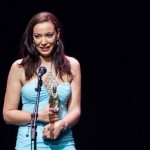
Those of you who have been following debates surrounding academic freedom might remember the story of Dr. Samar Habib (pictured below right), whose “Women in Arabic and Islamic Literature” course was cut from the University of Western Sydney schedule largely due to complaints by Muslim organizations like the Australian National Imams Council and Muslims for Peace. Amidst complaints that the course promoted “an emphasis on sexuality and a sexually explicit content that is not reflective of normative Islam,” the organizations also called for Dr. Habib to be fired from her lecturing position at the university.

Dr. Samar Habib. Image via the University of Sydney website.

Let’s leave aside that we all missed the memo about the classroom being a place to promote normative interpretations of any religion; it seems ANIC and Muslims for Peace have gotten their larger wish, as Dr. Habib was pushed to tender her resignation and, upon reconsidering that decision, was circumvented. Dr. Habib said that she felt undue pressure from the administration while selecting what texts to teach in her introductory course, “Texts and Traditions.” Her doctor recommended that she take some time off, and she left her position on February 28. She then reconsidered her decision and requested to return to the university. The university refused this request.

Interestingly, after Dr. Habib’s departure from the university, two critical texts were removed from the course reading list. The first was Palestinian poet Mahmoud Darwish’s Memory for Forgetfulness; the second, Joe Sacco’s acclaimed Palestine. Both of these texts engage their readers to consider the ramifications of Israeli hegemony in the Middle East—Memory, by considering the 1982 invasion of Lebanon, and Palestine, by looking at the day-to-day lives of Palestinians in Gaza.

When questioned about the removal of these texts, UWS cited a desire to reduce the reading load. (Palestine, incidentally, is actually a graphic novel—that is, a comic book of the heavier, narrative variety). So…yeah.

The pressure Dr. Habib faced at UWS is, unfortunately, common and representative of dangerous forays by conservatives into the world of academic freedom. In the U.S., Daniel Pipes- and David Horowitz-types attempt to exert control over the lenses through which university courses permit students to see the world. Ironically, ANIC and Muslims for Peace did the very same thing by limiting the teachings of a woman with expertise in a field they simply didn’t like: homosexuality in the Muslim world.

Besides having given fodder to right-wing media and political figures who claim that Islam is incompatible with secular public spaces, these organizations—and the university, now—also stifled an academic doing highly specialized and pertinent research, and prevented her from disseminating knowledge (that she acquired in that formerly respected tradition of dissertations, peer reviews and doctoral degrees) to her students.

For an acknowledged expert in the cross-sections of queer theory, feminist movements and Islam, to first have her popular class excised and then feel compelled to resign from her post is an affront to academic freedom. In order for academic institutions to maintain any integrity whatsoever, they must reserve their right to allow professors with doctoral degrees teach, in nearly any way academically relevant, the subjects on which they are specialists—especially when those subjects are underreported, marginalized, and politically unpopular. Today, we can’t afford any less.

Thanks to Houda Hallani for the tip!

Tags:

15 Responses to “When the Personal is Political: Dr. Samar Habib”

  1. PinkMuslimah says:

    THEY CAME FIRST for the Communists,
    and I didn’t speak up because I wasn’t a Communist.

    THEN THEY CAME for the trade unionists,
    and I didn’t speak up because I wasn’t a trade unionist.

    THEN THEY CAME for the Jews,
    and I didn’t speak up because I wasn’t a Jew.

    THEN THEY CAME for me
    and by that time no one was left to speak up.
    ————————

    When we repress others, we only hurt ourselves. It is better to reserve censorship of free speech to extreme cases, such as hate speech or incitement ot violence (vid Geert Wilders, Ann Coulter, Adolf Hitler, bin Laden).

  2. Is it possible to get a hold of her so we can write her letters of support and encouragement?

  3. bebe says:

    This makes me livid. It’s just outrageous.

  4. Hamza 21 says:

    I can’t say I disagree with the professor’s expulsion. From the letter of student you link to in your article anybody can cleary see why she was unqualified to teach a course related to Islamic Studies.

    If she were truly a professor of “Women in Arabic and Islamic Literature” she wouldn’t have linked her class to Islamic Studies. Since the bulk of her class is about women in Arabic Literature not Islamic Literature(books of fiqh,tafsir,etc).

    After doing a quick search of her academic background I don’t any foundation in Islamic studies (Nahw,Balagha,Seerah,Hadith,Tafsir,etc). All I could find is a reference to an “intensive arabic” course in Tunis.She doesn’t seem qualified to teach an Islamic studies class. What scholars has she sit with? and where?

    Moreover I don’t see this issue as “academic freedom” since none exists. Universities,public or private, all have standards and philosophies in which they promote. Any university can remove a professor or course they deem not fitting into their university’s worldview or academic philosophy.

    [This comment has been edited to fit within moderation guidelines.]

    • Fatemeh says:

      @ Hamza21: You’re assuming that religious qualifications (studying at Al Azhar, for example) are the same as academic ones, which is an interesting thing to bring up. It necessitates the question: should professors who teach Islamic literature necessarily be trained in Qur’anic studies?

      The answer to this isn’t the real issue here, however: no professors of Eastern/Middle Eastern/West Asian/Islamic studies in university settings are required to be proficient in Qur’anic studies. So it’s not fair to require Dr. Habib to meet this requirement. If ALL professors of Middle Eastern studies were required to, that would be different. I don’t think Dr. Habib is unqualified in the least to teach classes on Middle Eastern and Islamic literature in an academic setting.

  5. Rochelle says:

    @Hamza21:

    I think you might be a bit confused about the postsecondary education system in the United States.

    Islamic Studies is usually an interdisciplinary department, like area studies. It usually combines profs/expertise/classes on history, religion, sociology, literature, language, anthropology, and so forth.

    What is is NOT is a divinity school. It is not a religious training department. No university in the entire country — and I think probably Europe too? — requires training in fiqh to teach classes in Islamic Studies.

    Come to think of it, they should require the folks in howza to take classes in poststructural women’s studies! :)

  6. Rochelle says:

    Whoops I just realized this was about a university in Australia and not the US, but my comment still holds.

  7. N ida says:

    I wish I could have taken a course with this awesome Professor! It is absolutely horrible that she has been censored in this way. The narrow-mindedness that has pressured her to be removed from this position is exactly what she could help to alleviate, by opening peoples minds to approach a subject they otherwise refuse to humanize or see in any other light that the one that is painted for them.

  8. Humayra says:

    This sort of thing is truly scary, especially for those of us who want to carry out academic research which involves asking (and writing about) controversial questions. It looks as though Dr. Habib was carrying out “multiple critique”–being as critical of oppression wherever it is found, whether in the east or the west, whether under the guise of “sacred tradition” or modern politics. She was also very bravely out as a lesbian, and worked hard to make queer Arab women’s history visible.

    And as a result, she had no “natural” allies. Attacked by conservative Muslims who I suspect really had issues with her refusal to hide her lesbian identity and her efforts to undermine claims that gays and lesbians aren’t “authentically” Arab or Muslim, secular non-Muslims weren’t going to stick their necks out for her either. Due to government underfunding and now the worldwide financial downturn, universities nowadays are less concerned with preserving academic freedom then with brutal financial realism: they need those bums in seats. Untenured profs whose views bring forth complaints from community groups claiming to speak for large numbers make them think twice, to say the least.

  9. Humayra says:

    (cont.)

    If we don’t want conservative Muslim groups to shut down profs whose ideas they don’t want to see the light of day, progressive Muslims need to make their support for open debate and cutting-edge research (even into “controversial questions”) known to the universities. And loudly. Otherwise, self-appointed conservative pressure groups speak for the entire Muslim community, as far as university admin is concerned. This is especially the case if the conservative groups in question have a “working relationship” with the university, or have donated money in the past.

    Those concerned about this case should contact Habib’s (former) university:

    University of Western Sydney,
    School of Humanities and Languages,
    Locked Bag 1797,
    Penrith South DC
    New South Wales 1797
    Australia

    The person to address any correspondence to seems to be: Dr. Bruno DiBiase, who is the head of the School. His email apparently is:
    b.dibiase@uws.edu.au

    If you do write to them, for goodness’ sake be courteous and respectful, stress the importance of academic freedom and the learning experience which comes as a result of students being exposed to views with which they may well disagree.

  10. rawi says:

    This is very sad news, and I am truly disappointed and disturbed by this development in Samar Habib’s career.

    I say this despite my own academic disagreements with some of Habib’s theories, disagreements which I kind of inherit from my mentor–who, mind you, is herself a very influential figure in Queer Theory circles, and who seems to be a strong critic of Habib. But those are nuances that probably matter only to nerds like us.

    Regardless, it is precisely the principles of free inquiry that allows us to pursue research and debate/disagree on their conclusions, and therefore it is extremely unfortunate that Dr. Habib has had to face such a situation. It is all the more sad that a recent American trend (Ref. Juan Cole & Yale, Finkelstein & DePaul, etc) has now spread to Australia. While I do believe that no person or institution can be free of politics/ideology, I disagree with Hamza21 above that “academic freedom” must therefore be completely arbitrary and should be thrown out of the window. At the very least, we can think of this in terms of Power and Ethics.

    @Rochelle: Just by way of an FYI, many divinity schools in the US actually have fairly rigorous academic standards :) I agree though that scholars of Islamic Studies don’t necessarily need expertise in fiqh, because they might just not be interested in law but in another sub-specialty. Also, anyone familiar with University hiring practices (at least in the US) know how they make all kinds of professors teach all kinds of things! So it’s unfair to accuse Habib of being unqualified to teach her classes.

  11. amin says:

    sue! sue! sue!

  12. Houda says:

    Thank you for this! :-)

  13. OmarG says:

    I don’t think she should have been fired. On the other hand, her course is squarely in the realm of Arabic literature, especially contemporary. Please note that just because its from the Middle East or in Arabic, does *NOT* make it Islamic per se. So, I faintly echo some of Hamza’s concerns. But, for me, its more a question of how to appropriately classify this material, not whether it should be taught or not.

  14. amin says:

    Omar G, and you know this because you took the class? Perused its content? Do tell!