Feed on
Posts
Comments

When 5:00 rolls around, I want a glass of wine. Especially if it’s winter and I’m home alone with our children and it’s dark outside. I started to notice this desire a few months ago. I had this niggling warning in the back of my brain about it, but I pushed it away every night. It’s only one glass, I told myself. At least most of the time . . .

Then, in early December, I was staying with an old friend on a work-related trip. I got to her house around 6:00, and she asked, “Do you want a glass of wine?”

I paused before answering, because I was surprised to discover that I hadn’t thought about wine at all that afternoon. She, the mother of four children, said, “I’ve already had mine.”

And we confessed to each other that persistent desire–as the days grow short and we find ourselves preparing the kids’ dinner while also managing playdates and homework and fussy babies–that persistent desire to fill a glass with wine. “It makes me feel like an adult for a minute,” my friend said. “It’s something I can do just for me in the midst of doing everything for everyone else.”

I nodded my head. The reason I didn’t want a glass of wine that day at her house was because I had been on a train all day. Six hours of time to do whatever I wanted–read, write, pray, journal, eat, sleep. The night promised more of the same–dinner with an old friend, uninterrupted sleep, a bathroom all to myself.

When I returned to our family,  I made a few changes–signed the kids up for gymnastics and Music Together so we weren’t stuck at home every afternoon, talked to a few other friends who were aware of the same pattern in their lives, and I also started to pray about it.

Continue Reading »

Tags:

Another image from the photo shoot, courtesy of Reed Young

I read a lot about prenatal testing, especially now that a company called Sequenom has developed a test that purportedly can definitively (well, with 99% accuracy) detect Down syndrome via a maternal blood sample as early as 10 weeks. Usually in the “mainstream” media, I read articles that herald advances in prenatal testing as a way to “prevent” children with disabilities from being born.  ABC News reported the test as a way to avoid amniocentesis, and therefore as a way to “Cut Healthy Baby Deaths.” A New York Times article–”Sequenom’s Test for Down Syndrome Raises Hopes and Questions”  offered some nuance, but it still presented the information in a purely clinical manner, whereas one of the problems with prenatal testing is that Down syndrome occurs in the context of a human being and a family. A list of statistics can never contain the reality of an individual’s limitations and possibilities.

Then on the more conservative side, I read a lot about how babies with Down syndrome are aborted 90% of the time. It’s not true. (I’ve written at length about this misperception: 90% of Babies with Down Syndrome Aborted? Really?) The real number is closer to 50%, still unbearably high, in my opinion, but also a lot lower than 90%.

All this is a long way of getting to my point, which is that Bonnie Rochman’s article in this week’s TIME magazine, Early Decision, is the best article I’ve ever read about prenatal testing and Down syndrome. Yes, I’m totally biased. Rochman interviewed me for the article, she quotes from A Good and Perfect Gift in the article, and it includes a photo of our family. But I still think it’s the best. Continue Reading »

Tags: , , , ,

Reed and Aaron showed up at 11:00 last Sunday, just as we were getting home from church. They left around 5:00. Six hours of zooming in on our family life–eating Sunday brunch, reading on the couch, heading outside for a walk. We had no idea if a photo of our family would be included in the magazine, and we certainly didn’t expect to take up most of two pages (if you are not a subscriber to TIME, go to a newsstand near you and check out pages 36-37). The caption: “The new face of the Down-syndrome family.”

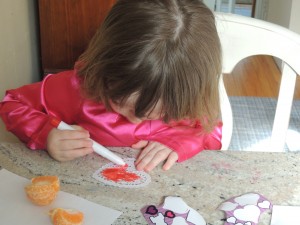
Before they arrived, I told our kids they were coming. Penny gave me a small smile and said, “Can Reed read?” And then she giggled. She was shy when they arrived, but he quickly won her over. In the middle of the afternoon (with Marilee napping and William lying on the couch–turns out he had a fever of 103 but still rallied to walk in the snow), she had an hour-long portrait session. And by the end of the day, I kid you not, he had given her his who-knows-how-expensive camera and she was taking pictures of him.

I’m planning to post this afternoon about why I think this article, Early Decision, by Bonnie Rochman, is the best article I’ve ever read about prenatal testing and Down syndrome. For now, I’ll just say I’m honored that we were included within it, and I’m honored to think that we might represent something real and true about families who have children with Down syndrome in their midst. Rochman’s conclusion sums up our hope:

So McLaughlin (another mother of a child with DS who talks to people with a prenatal diagnosis of DS) tells the people who come to see her the truth-the good and the bad, the joyous and the challenging.

Any parent raising any child will have the same range of experiences, albeit in different ways. It’s that very possibility of ordinariness, though, that may best capture the new world of the Down syndrome child.

We’ve been set apart by virtue of Penny’s third 21st chromosome, but we certainly feel pretty ordinary. A family that reads books and plays games and is never entirely cleaned up (see photo above, and note that this is about the cleanest our playroom ever gets) and never entirely up to date (note the nativity scene still on the mantel–William’s request). A family that includes temper tantrums and sick kids and playdates and sibling bickering. A family that includes love and laughter and frustration and anger and everything in between. We have a daughter with Down syndrome. And we’re a lot like everybody else.

P.S. I’m saving my very favorite photos–a few more portraits of Penny–for a future post, but I do need to encourage you all to take a trip to Reed Young’s website. From Italy to India to New Orleans to Brownsville, they do more than capture an image. I was going to write that they tell stories. But then I remembered an artist who once said that if she could put her paintings into words, she wouldn’t have needed to paint them. I think something similar is true of Reed’s photographs. They tell a story, I suppose, but they do so much more.

Tags: , ,

So the doctor told us to expect a 5-7 day recovery. But Penny woke up on Saturday morning (after 17 hours of sleep, including the time under anesthesia) with her eyes wide open. “Does anything hurt?” She shook her head.

Two hours later, I listened to her narrate what happened. “I went to Target and buyed a Dora video. Now I sitting in my chair watching a movie. It was my present from mom. I got a little poke. I need to buy a doll house. I need to buy a sweatshirt. I need to buy… what I need to buy? Oh, it’s all done. Maybe I will turn it off now. Yep I will turn it off. Bye bye. I buyed a new Dora.”

And then she asked if we could go to the playground. Which we did. So 5-7 days turned into less than 24 hours. The corners of her eyes are blood red where it should be white, and we need to put ointment in them and drops in her ears this week. Otherwise, we’re done. And, yes, I’ll say it one last time, we’re grateful.

(If you’re late coming to this story, you might be interested in Penny’s Upcoming Surgery, or Believe it or not, I’m Grateful and Penny at the Hospital, or What I Love About our Daughter.)

Tags: ,

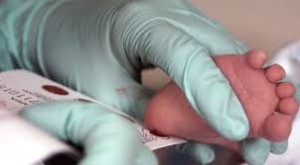
Penny having her pulse oxygen levels measured before surgery

I woke up this morning because Penny came barreling into our room. “I want to cuddle with you, Mom,” she said, glasses perched on her nose, wearing her footed pajamas, a barrette already in her hair to pull back the bangs she’s growing out.

I tried to convince her to let me go back to sleep, but I finally agreed that today was a good day to cuddle. “How are you feeling, Pen?” I asked.

“A little nervous,” she said, with my arms wrapped around her. “A little nervous about surgery.”

We had a long wait ahead of us. It was 7:00. We wouldn’t leave for the hospital until noon, and she couldn’t eat anything between now and then.

We went through a pretty normal morning. I heard her practicing her recital dance in the hallway, “out out in in, clap, 2-3-4…” Around 10:00, she asked, “May I have a snack, Mom?”

“No sweetie, not yet.”

She pinched her lips together and nodded. “I know. After my surgery.”

We got ready to go–packed her blanket and bear, some stickers, a bracelet a friend had sent in the mail, and a series of books, including Franklin Goes to the Hospital.  Continue Reading »

If you live in New York City, Princeton, Raleigh, Durham, or Basking Ridge, NJ, I’m coming soon to a venue near you. Visit my Events Page for more details. (Though note that right now there isn’t up to date info on NYC, and Raleigh’s has changed from March 28-30. The woes of maintaining a website…)

If you listen to the radio, listen live to a six-minute conversation between Susie Larson and me about A Good and Perfect Gift. It will be broadcast Friday morning on Moody radio at (or about) 5:43 EST and 8:43 EST.

If you read TIME magazine (!) (or even if you don’t), check out next week’s issue (February 27th) for an article about Down syndrome. There just might be a description of my favorite six-year old with Down syndrome, and there just might be a photo of our family.

If you are interested in faith and writing, join me (and a host of other much more well-known speakers like Marilynne Robinson, Jonathan Saffron Foer, Judith Shulevitz, John Wilson, etc.) as I speak and participate at Calvin College’s Festival of Faith and Writing in Grand Rapids, MI April 19-21.

If you are interested in theology and disability, join me as I speak and participate at the Chicago Theological Union’s Summer Institute on Theology and Disability July 16-20. (Again, other more notable speakers include Hans Reinders, Thomas Reynolds, and John Swinton…)

And finally, if you are the praying type, do hold Penny in prayer tomorrow as she goes to the hospital for what should be a simple surgery to correct one crossed eye and place tubes in her ears.

One way or another, I hope we’ll see each other soon.

Penny and William making Marilee's birthday cake

We don’t celebrate Valentine’s Day in our house. We feel rather curmudgeonly about the amount of money spent on the holiday (billions and billions of dollars) and the amount of paper wasted on all those little cards sent to school for Penny’s and William’s classes. And we try to sprinkle some romance throughout the year. I much prefer flowers from my husband at random, and, yes, that does happen (though very infrequently, I must admit).

But tonight held this moment that made me think I might have something to say about Valentine’s Day after all. It had been a long week already. William has been home sick with a fever, though he’s on the mend. Marilee’s molars are coming in. Penny has allergies. Peter and I are sniffling. We’re still catching up from a few weeks of babysitter transition. And, well, sometimes it’s just tough to have three kids.

So I came home with all three of them from our weekly Music Together class. Penny and William had bickered a few times. I had warned Penny to “control her hands” at the dinner table, after she dumped a box of unused Valentines onto the table. I had told William he must turn his placemat so that the flower side (rather than the cork side) faced up. I returned to the kitchen and came back with their dinners. Penny was prone across the table, reaching for an orange Tinker Toy. William was slapping the placemat, cork side up. I pulled her into her seat, roughly, and threw the placemat across the room. Within seconds, William was sobbing. Penny’s remorseful little face peered up at me, her eyes pooling with tears even as she bit her lip. Marilee, not quite clear on the source of the problem, nevertheless has taken to mimicking her brother and sister, so she started yelling.

It took a few minutes to calm every one down. Some deep breaths and big hugs. And then we prayed. We prayed for God’s presence to come into our household. We prayed for peace amidst the chaos and love amidst the anger.

We sat down together, and we each shared how we had made a bad choice. “I made a bad choice when I didn’t listen, Mom,” said William. “And you made a bad choice when you threw my placemat across the room.” And then we all said sorry. And we all said, “I forgive you.”

And I thought, well, yes. This is what love is. For all the feelings of love I have for my children day in and day out, it’s the moments of frustration and weariness and anger that actually push those feelings into action. Love is patient. Love is kind. Love humbles me.

There are weeks when I can’t help but write blogposts, and then there are weeks when my brain is too frazzled to put two sentences together. This week is one of the latter. William has had a fever. We have a new babysitter. Peter stayed home sick yesterday too. We’re gearing up for Penny’s surgery. So I haven’t been able to come up with anything interesting to say about Valentine’s Day or Whitney Houston (not that you would expect me to say anything about Whitney Houston…)

Thankfully, I forgot to tell you all about a book review I had in Christianity Today this month (Strength in Weakness: The Bible, Disability, and the Church) in which I review Amos Yong’s new book, The Bible, Disability, and the Church. It begins:

From an able-bodied reading of the Bible, it is easy to assume God wants to heal every person with a disability. In the New Testament, every person who encounters Jesus blind, deaf, or lame is restored to health. But theologian Amos Yong wants the church to read the Bible differently, seeing good news for people with disabilities as they are, and not as God might change them.

In The Bible, Disability, and the Church: A New Vision of the People of God(Eerdmans) Yong draws upon his theological training, his Pentecostal faith, and his experience as the older brother of Mark, who has Down syndrome, to form an insightful critique of the assumption that disability is inherently negative. He challenges the church not only to reimagine the body of Christ as including people with disabilities, but also to understand these people as central to the church’s mission.

To keep reading, click here.


Some of you remember that Penny took ballet when she was 4. You might have read about her recital (Ballet Recitals, Carelessness, and Grace Part One and Part Two). It’s a long story, but she’s just really started dancing again, and I wrote about this renewed joy for the “My Great Story” feature of the National Down Syndrome Society. I’m writing about her dance class, yes, but also about how I continue to learn to let go of fear and hold onto hope for our daughter. I begin:

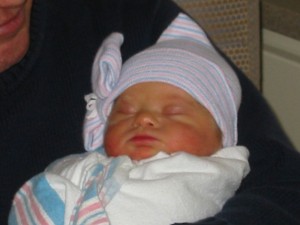
When Penny was a baby, her dad danced with her all the time. She was tiny—five pounds when we brought her home from the hospital—so he could hold her in one arm. Peter twirled her around the room with dips and bounces and frequent kisses on the forehead. Penny’s namesake, her late grandmother, had grown up in New Orleans, and Peter compiled a CD of New Orleans music as a tribute. Whenever it happened to be playing and he walked in the room, he swooped Penny into his arms and they danced. Louis Armstrong. Galactic. Dr. John. Jazz, zydeco, gospel, funk.


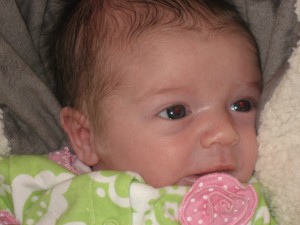
In the beginning, Penny’s big blue eyes widened with every twirl, as if she might burst into tears. Within a few months, though, those same eyes lit up when he placed her in the crook of his arm and began to sway. She giggled, and then, months later, clapped. Eventually she learned the sign for music. And we learned that she loved to dance with her dad . . .

Click here to keep reading Our Daughter the Dancer. I’d love for you to visit the My Great Story site and vote for this story (the two stories with the highest number of votes will go into the NDSS newsletter).

Tags: ,

Worth Reading

Number one on my list this week, because it combines individuals with disabilities, families, adoption, hope, and some amazing dogs: “Wonder Dog” from the New York Times.

Number two, because it is a beautiful meditation on aging and being young, and because my beloved 91-year old grandfather broke his pelvis last week and is suffering through the beginning of recovery: “The Man Love Raised” by Mama Monk

So I wanted to quote pretty much this whole essay, but instead I will encourage you to follow the link and read To Cade and the 8 Percent (also published on Huff Po as “In Defense of Down Syndrome Children . . . Like My Son“). Here’s perhaps the most important part:

So, why should you care about a Down syndrome diagnoses? This isn’t just about Down syndrome. It’s about our understanding of the common good.

The historic definition of the “common good” is the most good for all people. But today this definition has a competitor called the “public interest.” In this presupposed progressive view, the most good for the most people is all that matters. Only one word changed but the implications are enormous. A commitment to the common good demands we value the elderly, the disabled, the unborn and those unlike us. It’s an old, rooted conception being lost on a generation consumed with progress.

We must allow life in our world that doesn’t follow our scripted narrative.
We must have the courage to choose that which is good over what is convenient.

Our fellow citizens have fought hard to encourage and protect diversity and acceptance in our society. We wear political correctness as a badge of honor; but the rising statistics of pregnancies terminated after a Down syndrome diagnosis reveal the hypocrisy of our celebration. We see equality as sameness and diversity in shades of color. We embrace differences when they fall within our market-driven, politically correct framework but rarely when they disrupt our status quo. When a fetus is diagnosed with Down syndrome and the mother chooses not to carry the child to term, more is lost than her future inconvenience and fear. The world loses another soul in its greater body.

Finally, an article written in December, but one I just had the privilege to read, “Letting Ruth Go” from the Boston Globe magazine, also about adoption, a child with a disability, grief, joy, and love.


Older Posts »