2015-03-13T23:04:43-04:00

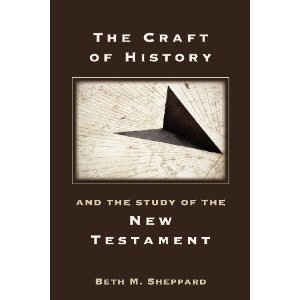
Let me say right out of the gate that this book by Dr. Beth Sheppard (published last Fall by the SBL), a NT professor and research librarian at Duke, is essential reading for anyone who cares about the historical matters that the NT presents to us. It is an eye-opening and rather comprehensive guide to: 1) the task of historians (including modern ones); 2) the methods of historians; 3) the philosophical presuppositions and under-pinnings of modern historiography; 4) how to... Read more

2015-03-13T23:04:44-04:00

Many years ago, when I was in high school I read Victor Hugo’s famous novel Les Miserables. Then about ten or so years ago I saw the musical in the West End in London. And now comes the movie. First it should be said that unlike Django and various other non-Christmas movies, Les Miserables is a very appropriate movie to release on Christmas. Both the novel and the musical are deeply rooted in Christian themes and ideas as even those... Read more

2015-03-13T23:04:44-04:00

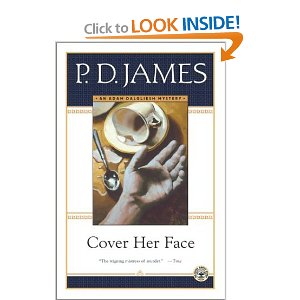
The official introduction to P.D. James on Amazon is daunting…. it reads as follows: “P.D. James was born in Oxford in 1920 and educated at Cambridge High School. Widely acknowledged as “the greatest contemporary writer of classic crime” (The London Sunday Times), she has written twenty books and been awarded major prizes for her crime writing in Great Britain, America, Italy, and Scandinavia. After 30 years in the civil service, including a senior position in the Police and Criminal Justice... Read more

2015-03-13T23:04:44-04:00

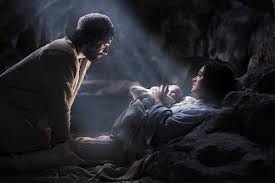
Here are two resources for you in which I was interviewed about the birth narrative or had a debate about them. Ask the Experts: Christmas Questions Edition You can now listen online via www.premier.org.uk/unbelievable where it is currently the “featured” show and will remain in the archive, at the bottom of the page, as the show of 22 Dec 2012 You can can click through directly to the show via the following link: http://goo.gl/9BnXd Or directly to the mp3 http://ow.ly/2tTxLe... Read more

2015-03-13T23:04:44-04:00

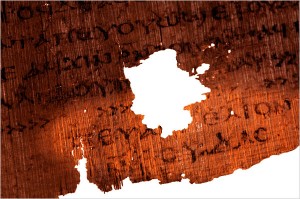
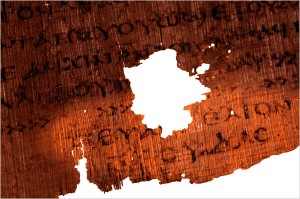
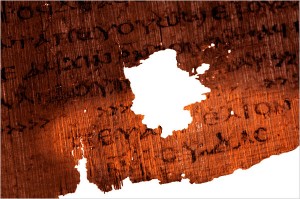
How did scribes copy manuscripts? Did they take dictation, or copy line by line? Was there a particular professional way to form the Greek letters? In our last post here, we will allow William Johnson to offer us his findings on these sorts of matters. p. 4— Johnson says “Systematic analysis of hundreds of bookrolls shows…that the rakish lean often seen in the columns of an ancient bookroll is a deliberate design feature…” Note the use of scribal dots to... Read more

2015-03-13T23:04:45-04:00

Emily Dickinson put it well… My life closed twice before its close— It yet remains to see If Immortality unveil A third event to me So huge, so hopeless to conceive As these that twice befell. Parting is all we know of heaven, And all we need of hell. For me that first huge closing that I was helpless to prevent was the death of our Christy girl a year ago today. But closings are not all bad things. Don’t... Read more

2015-03-13T23:04:45-04:00

 Read more

2015-03-13T23:04:45-04:00

 Read more

2015-03-13T23:04:45-04:00

When we think about the roles of professional scribes, it is important to bear in mind that slaves could be scribes. This is because as the Roman Empire spread, lots of well educated people were conquered and sold into slavery. Thus the the distinction we might make between professional scribes and private copying when it comes to NT manuscripts may well not apply. A person who was of low status such as a slave, in regard to his personal freedom,... Read more

2015-03-13T23:04:46-04:00

According to William Johnson (pp. 87-91), the standard bookroll tended to have 20 sheets, though production of rolls with up to 50-70 sheets are known, but they are surely special orders. If a scribe ran out of space, he would simply glue a new blank roll on to the end of the used up one. This process continued until the copying was complete, and then the excess or blank remnant would simply be cut away. “A reinforced sheet, with fibres... Read more

Follow Us!


TAKE THE
Religious Wisdom Quiz

In Revelation, what does John eat that is sweet in his mouth but sour in his stomach?

Select your answer to see how you score.


Browse Our Archives