

I like to keep up with newer books that have been published but have not done so in quite awhile.
It’s nice to know who is writing what today.
I listed Some Interesting Non-Fiction Books From 2023 – 2025 that can be found in your local library using the Dewey Decimal System.
They were from 000 Knowledge to 500 Science.
Here we cover new non-fiction books from 600 Technology – 800 Literature, rhetoric & criticism.
Book lists give you a chance to familiarize yourself with things out there you would read if you could.
It gives you a knowledge of books and who has written what when.
You can then talk about those books you haven’t read as if you have read them,
In Defence Of Book Lists tells you why book lists are worth it.
Now on to this list.
600 Technology
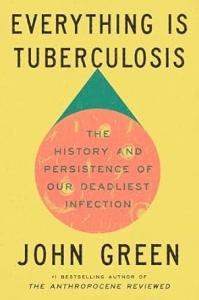
Everything Is Tuberculosis:
The History and Persistence of Our Deadliest Infection (2025)
by John Green
MDS– 610 Medicine and health
Over a million people died of tuberculosis in 2023. That year, in fact, more people died of TB than died of malaria, typhoid, and war combined. Just in the last two centuries, tuberculosis caused over a billion human deaths. One estimate, from Frank Ryan’s Tuberculosis: The Greatest Story Never Told, maintains that TB has killed around one in seven people who’ve ever lived. Covid-19 displaced tuberculosis as the world’s deadliest infectious disease from 2020 through 2022, but in 2023, TB regained the status it has held for most of what we know of human history. Killing 1,250,000 people, TB once again became our deadliest infection. What’s different now from 1804 or 1904 is that tuberculosis is curable, and has been since the mid-1950s. We know how to live in a world without tuberculosis. But we choose not to live in that world.
When I was a kid, there was a TV show called The Six Million Dollar Man. Every week, in the opening credits, test pilot Steve Austin would crash his top-secret supersonic aircraft into the tarmac. “We can rebuild him,” says an unidentified, optimistic narrator. “Better than he was before. Better. Stronger. Faster.” Cut to heavily sped-up footage of the actor in a red track suit, running, and then stopping to scan the horizon with his bionic eye, which, annoyingly, beeps when he cues it up. At the time, this was understood to be science fiction.
Today it can feel like Steve Austin has arrived, like he’s right outside your door, holding out his neuroelectric hand with articulated fingers, saying, Come with me to this brave new world! Grow a kidney! Print a leg! Headlines regularly serve up grabby pronouncements of inconceivable feats.
“Lab-Grown Brain Cells Play Video Game Pong.”
“Dr. Canavero Performing World’s First Head Transplant in December.”
“Lab-Grown Penises Are on the Horizon.” (Run!)
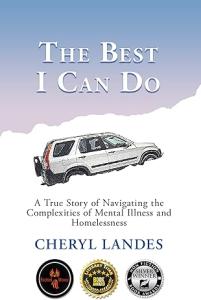
A True Story of Navigating the Complexities of Mental Illness and Homelessness
by Cheryl Landes
MDS–Diseases
How did I wind up living in my car? I wish there were an easy answer. There’s so much going on, and it’s overwhelming. I’ve lost almost everything except for my car and I’m living in it. I’m struggling financially, and Tom, my husband, disappeared. He isn’t the same loving man I knew. He’s now in his own world, trying to escape people he believes are constantly following him. I wonder whether he will ever return to his old self and we can resume the happy life we lost.
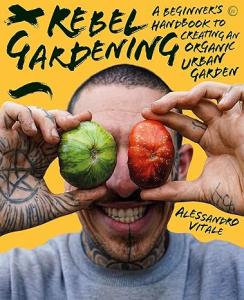
A Beginner’s Handbook to Creating an Organic Urban Garden (2023)
by Alessandro Vitale MDS
MDS 635 Garden crops (Horticulture)
Did you know that it’s possible to grow food, no matter where you live or what space is available to you? I’m not saying this just because it’s much healthier for your body and mind, but also because it will reduce your wastage and carbon footprint. In a world that is entirely detached from the origin of food and its production, I can teach you how to grow your own natural food and be in control of what you eat and how to produce it!
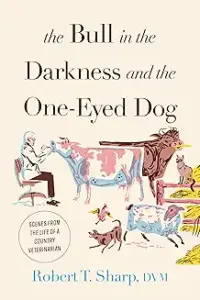
Scenes from the Life of a Country Veterinarian (2023)
by Robert T. Sharp
MDS 636 Animal husbandry
After I’d been in practice for eight years, our son Reid was born, and in 2012—one hundred years after Bill’s dad started our practice—Reid
joined me as “the other Dr. Sharp” and we became a two-man practice with Amy as our office chief, and the heart of the practice. Our clients have known Melissa, our Registered Animal Technician, for over forty years, and many have known the latest Dr. Sharp since the day he was born. For 109 years now routine, unusual, and sometimes wondrous things have occurred at this practice, and I’m about to tell you some stories of how four generations of veterinarians—two fathers and two sons—dealt with them. A few involve actual medicine or surgery, but many are just those things that make every day unique. So from 1912 to 2021, here they come . . . starting with some stories about a newly hatched veterinarian’s early “education.”
I’m going into the office now. I think I hear a fire truck pulling into the parking lot!
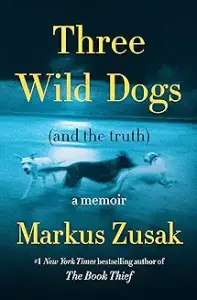
Three Wild Dogs
by Markus Zusak MDS
636 Animal husbandry
People have been telling me I should write about my dogs for the better part of a decade. As someone who normally blends into the background when out in public, or isn’t noticed at all, I’ve been recognized, many times, because of those hounds. Those lumps of fur and panting. They’ve been such a big part of my life.
The problem, however, has been this – when it came to writing about them, there was always something missing. There are so many books inside us, it seems, but they mostly remain unready. They’re dormant, untold mountains. Volcanoes without a top. There are plenty of fires within the place, just not the one to set it all off. In the case of my life with these animals, it’s only now I’ve found the way. What I needed was the third dog in. A conduit back to the past.
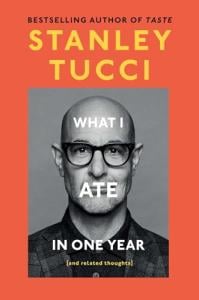
What I Ate in One Year (2024)
by Stanley Tucci
MDS 641 Food and drink
Even though food plays a huge part in my waking life, it never plays any part in my dreams. Maybe because I don’t fear it. It just makes me happy. It doesn’t provoke anxiety, and in fact it may be the only significant aspect of my life that brings me peace. All others—work, children, marriage, friendships, family—bring me real joy, but I can’t pretend they are not anxiety inducing. However, food is just there. A beautiful, varied thing waiting to bring satiety and solace and offer hope while death and arithmetic haunt me.
Speaking of numbers, food, and death, I’ve always imagined that there are three possible experiences waiting for us when we die.
The first is that we die, and then we simply are no more. There is nothing. And that is that.
The second is that we die and find that death is a long meal alone with terrible food.
The third is that we die and find that death is a table resplendently set with an extraordinary meal for us and all those we’ve ever loved to share for the rest of eternity.
If possible, when my time comes, I’ll let you know which one awaits.
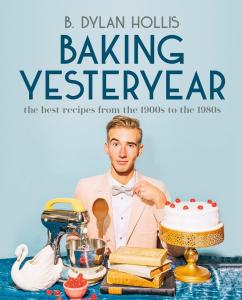
Baking Yesteryear:
The Best Recipes from the 1900s to the 1980s (2023)
by B. Dylan Hollis
MDS 641 Food and drink
A decade-by-decade cookbook that highlights the best (and a few of the worst) baking recipes from the 20th century
It’s a collection of the most peculiar recipes that shown their way to the pages of hundreds of old well-worn cookbooks. They embody my own philosophy of what makes life worth living: the wild, the wacky, and the wonderful.
Baking Yesteryear is for those who want to walk on the sweet side of the street Less Traveled. To combine ingredients, you never even thought to consider with the goal of making something once buried by time, but well worth resurrecting. I wanted this book to offer a variety in a very different sense by providing a time machine that is not only edible but entirely delectable and I think you’ll find just that.
● 1900s Cornflake Macaroons
● 1910s ANZAC Biscuits
● 1930s Peanut Butter Bread
● 1940s Chocolate Sauerkraut Cake
● 1950s Tomato Soup Cake
● 1970s Potato Chip Cookies
The Condiment Book:
A Brilliantly Flavourful Guide to Food’s Unsung Heroes (20245)
by Claire Dinhut
Condiments are so much more than just something to dip a French fry into or dab onto a cracker—they are an express lane to complex layers of flavor, texture, and originality, something that can be at the ready to transform a simple dish into a memorable experience. They can change the character of a dish by introducing a wide range of international influences, or dress up a plain-Jane base into something elegant and “special.” Take it from me, condiments can change your life. They are conversation starters, debate provokers, flavor enhancers … They come in all shapes and sizes—sauces, seasonings, spreads, jams, dressings—so there is bound to be one out there specifically tailored to your taste. Plus they make great gifts!

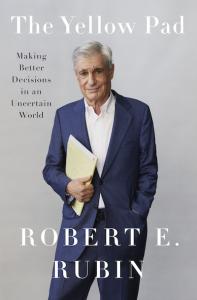
The Yellow Pad:
Making Better Decisions in an Uncertain World
by Robert E. Rubin (2023)
MDS– 650 Management and auxiliary services
For the first several decades of my career, I found that there was one indispensable tool for analyzing the world around me probabilistically: a yellow legal pad.
The yellow pad is my way of expressing my own personal philosophy of decision-making—one that in many ways began in Professor Demos’ class—and applying it to the real-world challenges I’ve faced. In recent years, my yellow pad has frequently become an iPad. Even more frequently, the yellow pad is more figurative than literal, because the more experience I’ve gained evaluating outcomes and probabilities, the more I can do in my head. But the method of thinking remains unchanged. And I still find that when I have the time, and if the issue is sufficiently consequential, writing out my thoughts and doing my best to express them in numbers leads to more rigorous and more exact thinking.
Beyond the Hammer:
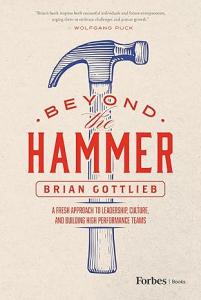
A Fresh Approach to Leadership, Culture, and Building High Performance Teams (2024)
by Brian Gottlieb
MDS – 658 General management
Employees who don’t take ownership of their work. Friction between departments. Inconsistent results. High employee turnover. These are the top challenges confronting many businesses today, and managers bear the brunt. Rather than leading their teams, they find themselves perpetually in crisis mode, putting out daily fires. These problems won’t disappear on their own and cannot be ignored.
Here’s why: To tolerate inconsistency and chaos is to normalize it. If left unattended, the business’s ability to execute will suffer, and so will its culture. This is because the culture of a business is shaped by the lowest level of acceptable behavior.
700 Arts and Entertainment
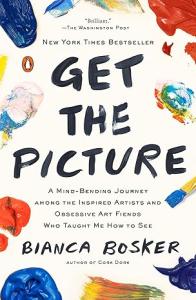
Get the Picture:
A Mind-Bending Journey Among the Inspired Artists
and Obsessive Art Fiends Who Taught Me How to See (2024)
by Bianca Bosker
MDS–701.03 Philosophy and theory of fine and decorative arts
To be fair, everyone warned me it was a bad idea. What I wanted to do was not only impossible but vaguely dangerous, they intimated. They didn’t come right out and threaten my safety or anything. My reputation, well-being, and livelihood as a journalist—that, however, was another story.
It’s not like I was trying to expose CIA spies or anything. I was dead set on infiltrating what turns out to be a nearly as paranoid group: the art world.
I’d gotten obsessed with understanding why art matters, if it does, and whether quality time with a few smears of colored rock on stretched cloth—a “painting” as it’s more commonly known—can really transform our existence.
And how better to find out, I figured, than by handing myself over to the culture fiends who live for art: Artists who hyperventilate around their favorite colors. Up-and-coming gallery owners who max out their credit cards to show hunks of metal they think can change the world. I wanted to study the fanatics who fly their art with them on vacation and see if I could feel fireworks when I looked at art—instead of, as was often my experience, the urge to holler at the artist to just tell us what you mean.
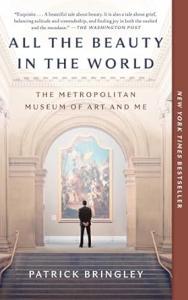
All the Beauty in the World:
The Metropolitan Museum of Art and Me (2023)
by Patrick Bringley
MDS–708 Galleries, museums, private collections of fine and decorative arts
In the basement of the Metropolitan Museum of Art, below the Arms and Armor wing and outside the guards’ Dispatch Office, there are stacks of empty art crates. The crates come in all shapes and sizes; some are big and boxy, others wide and depthless like paintings, but they are uniformly imposing, heavily constructed of pale raw lumber, fit to ship rare treasures or exotic beasts. On the morning of my first day in uniform I stand beside these sturdy, romantic things, wondering what my own role in the museum will feel like. At the moment I am too absorbed by my surroundings to feel like much of anything.
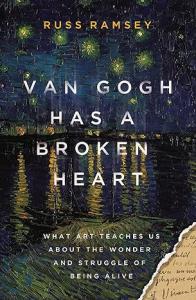
Van Gogh Has a Broken Heart:
What Art Teaches Us About the Wonder and Struggle of Being Alive
by Russ Ramsey
MDS– 709 History, geographic treatment, biography
Art shows us back to ourselves, and the best art doesn’t flinch or look away. Rather, it acknowledges the complexity of struggles like poverty, weariness, and grief while defiantly holding forth beauty—reminding us that beauty is both scarce and everywhere we look. In its scarcity, beauty often surprises us. She walks into the room in her dinner dress, and every head turns. But it is also everywhere if we will just pay attention. It’s in a child’s laugh, in the watercolor sky of the setting sun, and in the aroma of baking bread and brewing coffee.
Beauty pulls us upward toward something that calls for some measure of discretion, something to be treated with dignity and care, something sacred. What does it pull us toward? The truth that we were made to exist in the presence of glory. But as with Moses hidden in the cleft of the rock, true glory is often more than we can bear. This world is filled with sorrows we cannot avoid. How are we supposed to navigate the tension between glory and sorrow?
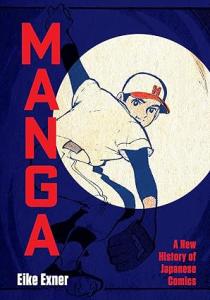
Manga: A New History of Japanese Comics
by Eike Exner (2025)
MDS- 741 Drawing & drawings
Terminology can be tricky. A basic problem with writing a history of manga is that for over two centuries, various things have been called “manga” that do not fit neatly into a single lineage: sketches, caricatures, political cartoons, picture stories, comics, and even what is now more commonly called “anime.” Like other human-made categories, manga is a social construct. It is “constructed” in the sense that there is no absolute, true definition of manga, and it is constructed “socially” in the sense that manga is whatever enough people agree to call “manga.” In other words, there is no unified single thing called “manga” that exists outside of history or the physical world; all that exists are individual objects, among some of which we may identify shared features to varying degrees.
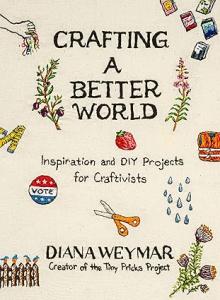
Crafting a Better World: Inspiration and DIY Projects for Craftivists:
A Dynamic Craft Book with Hands-On Projects,
Learn to Make Art that Makes a Difference (2024)
by Diana Weymar
MDS– 745 Crafts & Hobbies
I have created large-scale public art projects, worked with peacebuilders, generated content for political campaigns, reported the news, and collaborated collaborated with other artists and activists. For the past decade, I have stitched my way through presidencies, current events, tragedies, my thoughts, and loss. For my children, I have used textile and thread to weave a story about the world we’re in, how I see it, and what I hope for it. This is a form of documenting in real time. I hope this book shows you that making does not require you to drop everything in your life to clear space for it. It is what happens while you are living. It is a way of life.
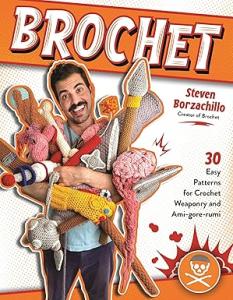
Brochet:
30 Easy Patterns for Crochet Weaponry and Ami-gore-rumi
by Steven Borzachillo MDS- 746 textile arts
Welcome to the wonderful world of Brochet: a place where yarn can be spun into whatever your crocheted heart desires. Seriously, I got one of those!
There are tons of amazingly wonderful uses for fuzzy weapons and plush guts! Props for sketches, toys for the kiddos (let’s be honest—and for you), stitched Halloween costumes, Cozy Con or Ren Faire fares, and even silly, sensory-themed pillows for the war-minded are just the beginnings of the list. Plus, sometimes you don’t need to crochet another beanie; you need to crochet a statement.
Whether you’re already a practiced fiber artist looking to add some fuzzy flair to your WIP list or an intrepid newcomer ready to venture off on your first crafty quest, I hope you find something joyful in this book. And who knows, maybe it can help to weaponize your creativity. Just remember, we’re not just making silly things, we’re crafting adventures. So, grab a hook, crochet yourself a seat belt, and buckle up, folks. Let’s get this ball of yarn rolling.
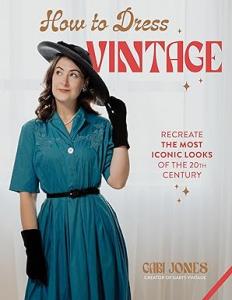
How to Dress Vintage:
Re-Create the Most Iconic Looks of the 20th Century (2025)
by Gabi Jones MDS– 746.92 Fashion & Costume
Clothing varies so much based on virtually every factor: class, age, race, gender, career, location, occasion, culture and so on. And no one is immune—clothing is the one piece of art we all share.
Growing up in theater, I learned early on that costumes tell a story. A dirty apron has probably seen a lot of home-cooked meals; a fancy coat with an opera ticket in the pocket was probably reserved for special occasions. And that’s what I love most about vintage fashion—it’s not just about the clothes; it’s about the lives they lived. I personally believe this to be the key to “dressing vintage”—choosing a story and being consistent and specific about it.
You can always mix and match pieces you love, but if you want to dress vintage “convincingly” or put together outfits that feel coherent, it helps to consider the practicality of an outfit. Although pearls were commonly worn in the 1940s, a factory worker probably wasn’t pairing them with her coveralls on the job. That would be impractical. Here are a few things you can ask yourself when deciding what pieces fit together: Is this outfit formal or casual? Worn in a young, hip style or a more traditional or older style? What season/location/time of day would this outfit be worn?
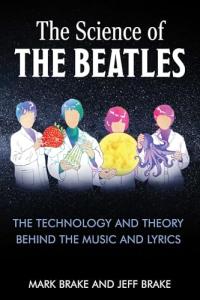
The Science of The Beatles:
The Technology and Theory Behind the Music and Lyrics (2025)
by Mark Brake, Dr. Jeff Brake
MDS–780 Music
The Beatles revolutionized many aspects of music and are often promoted as pioneers of 1960s youth and sociocultural developments. If sales and statistics are as important as aesthetics, then The Beatles triumph here, too. They remain the best-selling music act in history, with estimated global sales of 600 million units. The band are the most successful act on the US Billboard charts. They also hold the record for most number one albums on the UK albums chart, with fifteen. It’s the same story in the singles charts—the band have the most number one hits on the US Billboard Hot 100 chart, with twenty, and the most singles sold in the UK, 21.9 million and counting.
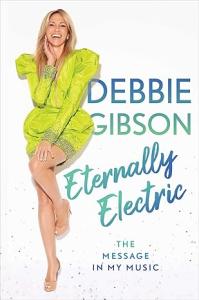
Eternally Electric:
The Message in My Music (2025)
by Debbie Gibson
MDS -782.81 Musical shows – single works, complete and selections
It’s July 26, 2024, a perfectly sunny summer’s day, and I’m celebrating the thirty-fifth anniversary of my #1 album with a live performance at The Town Hall. I know this city by heart and I feel at home in the middle of its chaotic, colorful streets. One of my favorite things about NYC is I can think of a friend, send a text, and within ten minutes we’re walking toward each other, meeting up for a coffee.
I feel my lungs expand… that rush I get when I’m ready to roll. It is a core feeling that connects me to that little girl walking into the first day of kindergarten, ready to play my first original song for the class. It’s a feeling I have whether performing for millions of people on a live television broadcast or for three hundred in an intimate acoustic setting. I take every single person’s time and energy and money spent to be here seriously. I also take a moment to remind myself that I’ve been endowed with the power to make each one of my people’s lives brighter and richer; some may get an energy shift tonight that creates a ripple effect in their own lives and in the world, and that profound impact is never wasted on me.
It’s easy for cynics to downplay the power of pop music, but tonight we get to celebrate, transcending the gatekeepers and naysayers. We did it! What a triumph! Nearly four decades later, we got past the music-business politics to forge and sustain this pure, enduring connection. This is our night to lose ourselves in the music, the universal language that keeps us united and ignited.
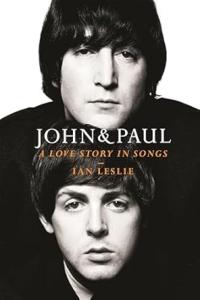
John & Paul: A Love Story in Songs (2025)
by Ian Leslie
MDS– 784 Instruments and Instrumental ensembles and their music
More than half a century after they stopped making music, the Beatles continue to permeate our lives. We listen to their songs while driving and dance to them in clubs and in kitchens; we sing them in nurseries and in stadiums; we cry to them at weddings and funerals and in the privacy of bedrooms. They are not likely to be forgotten anytime soon; if anything of our civilization is remembered a thousand years from now, there is a good bet it will be the chorus of “She Loves You” and an image of four men crossing a street in single file. We’ve barely begun to recognize or understand the wild improbability of the achievement.
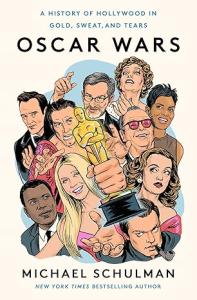
Oscar Wars: A History of Hollywood in Gold, Sweat, and Tears (2023)
by Michael Schulman
MDS–791.3 Public performances
The ostensible purpose of the Academy Awards is to honor excellence in movies. But that lofty goal is what Alfred Hitchcock would have called a MacGuffin—the plot device that gets the real drama going. Each Oscar year is a suspense tale, a choose-your-own-adventure story. Like any good Hollywood screenplay, it has burgeoning conflict, a colorful cast of characters, and a few plot twists—all climaxing on a glittering stage, under the glare of the cameras and millions of viewers. Subplots ricochet down the ages with new players: the neglected masterpiece, the overreaching campaign, the breathless starlet. Elizabeth Taylor becomes Julia Roberts; Citizen Kane cross-fades into Do the Right Thing.
Like Hollywood’s greatest sagas—Star Wars, The Godfather—the Oscars often play out as a drama of generational conflict, as a new cohort shows up to displace the old. A young upstart may recur decades later as an industry heavyweight: the boyish Steven Spielberg who gets snubbed for Jaws becomes the establishment bigwig of Saving Private Ryan.
Around the World in Eighty Games:
From Tarot to Tic-Tac-Toe,
Catan to Chutes and Ladders,
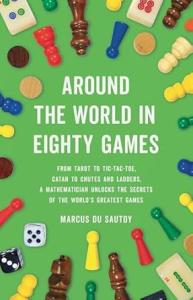
a Mathematician Unlocks the Secrets of the World’s Greatest Games (2023)
by Marcus du Sautoy
MDS– 793 Indoor games and amusements
SIX TO START. Knight to f3. Two no trumps. Black stone on komoku. Take a chance card. Climb the ladder to square 38. These are the opening lines of some of the most wonderful stories that humanity has created. Since ancient times, civilizations have been playing games—some with dice, some with cards, others with pieces that move about on a board or tabletop.
Some have argued that our species should be called homo ludens rather than homo sapiens because it is the ability to play, not think, that has been crucial in our development. Evolution seems to have gifted humanity a penchant for trying out strategies and exploring imaginary worlds in the safety of a game, which allows us to prepare ourselves for real encounters. Among some of the earliest civilizations, sophisticated games emerged alongside the burgeoning of societies. Play is free. It is not real. It has its own location and duration. It is distinct from our ordinary lives. And yet it impacts on the way we behave outside the game: our wars, politics, arts, and sciences.
Like the stories shared around the campfire to bond our kinfolk, the games we have created allow us to share an exciting journey together in safety. Games resemble stories by conjuring up a fictional world, transporting the players into a different temporal dimension whose artificial barriers we enjoy striving to overcome.
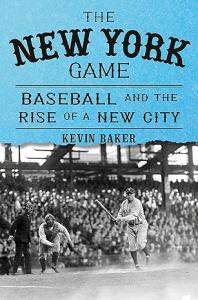
The New York Game: Baseball and the Rise of a New City (2024)
by Kevin Baker
MDS–794
What we think of as baseball today is really an urban game. More precisely, it is “the New York game.” That’s what modern baseball was first called, and where it was first played. New York is where its rules were perfected, and where we first kept score. New York was where the curveball was devised, and the bunt, and the stolen base, and where the home run came into its own. New York was where admission was first charged to see a game, and where the very first all-star game was played, and the first “world championship.”
New York was where the Babe and the Iron Horse, and Joltin’ Joe and the Say Hey Kid, and the Mick, and the Duke, and the Big Chief and the Big Six and the Big Cat, and Wee Willie and the Little Napoleon and Pee Wee, and Doctor K and Tom Terrific and Happy Jack and Twinkletoes, and Mr. October and Mr. November, and Sal the Barber and the Curveless Wonder, and Ducky-Wucky and King Kong, and the Lively Turtle and Death to Flying Things, and Poosh ’Em Up and Old Reliable and Marvelous Marvin, and the Fordham Flash and Grandma, and the Mahatma, and Mex and Donnie Baseball, and the Polar Bear and the Judge, and the Chairman of the Board, all came to play the game.
800 Literature, rhetoric & criticism
Win Every Argument:
The Art of Debating, Persuading, and Public Speaking (2023)
by Mehdi Hasan
MDS 808.53 Rhetoric and collections of literary texts from more than two literatures
Every single person on the face of the planet—every man, woman, and child—has, at some moment or another, tried to win an argument. Whether it is in the comments section on Facebook, or in the marble hallways of Congress, or at the Thanksgiving dinner table. Whether they’ve trounced their opponent or walked away sullen, everyone might then imagine all the things they could and should have said. We’ve all been there. We cannot escape the human urge, need, and—yes—desire to argue.
Philosophically, I consider argument and debate to be the lifeblood of democracy, as well as the only surefire way to establish the truth. Arguments can help us solve problems, uncover ideas we would’ve never considered, and hurry our disagreements toward (even begrudging) understanding. But when it comes down to it, a good argument, made in good faith, can also simply be fun. I actually enjoy disagreeing with others, poking holes in their claims, exposing flaws in their logic. Maybe it makes me an outlier, but I happen to think there is intrinsic value to disagreement. I’m in the same camp as the nineteenth-century French essayist Joseph Joubert, who is said to have remarked: “It is better to debate a question without settling it than to settle a question without debating it.”
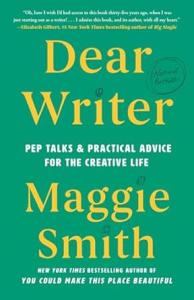
Dear Writer:
Pep Talks & Practical Advice for the Creative Life (2025)
by Maggie Smith
MDS 808 Rhetoric and collections of literary texts from more than two literatures
Dear Writer,
I’m so glad you’re here. The fact that you’re reading these words tells me something about who you are: someone who loves art. You may be a writer or a teacher. You may be a reader and lover of language. Because you’re here, I suspect we’re kindred spirits. I have a feeling—and I hope I’m right—that you’re the kind of person who pays attention, who approaches others and the world with openness and curiosity, and who finds beauty in unexpected places.
Writer, I like you already.
I believe creativity is our birthright as human beings. Yes, all of us. Creativity is life-changing, and we all deserve that kind of transformation. When you read a poem, or listen to a song, or watch a play, you’re not the same person afterward. You’re slightly rearranged. Your DNA is still the same, your fingerprints are still the same, you look the same in the mirror, but you aren’t exactly who you were. Be careful, I might tell someone when handing them a book or a record, you will be different after this.
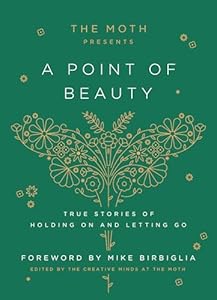
The Moth Presents:
A Point of Beauty: True Stories of Holding On and Letting Go (2024)
by The Moth
These stories show us that even on the darkest of days there is usually something beautiful to observe or discover if you’re open to it. A soldier finding friendship while working as a guard in one of the world’s most notorious prisons. A homeless child taking unexpected solace in her collection of Bratz dolls. Or a mother remembering a tender moment with her son Ben that happened in a Starbucks in Connecticut less than an hour before he was murdered.
These stories help us process what can often feel like an overwhelming stream of sad news that comes at us like a fire hose through our phones, televisions, and radios. Ari continued, “I thought about the Moth show at St. Ann’s where a Sandy Hook mom told a story about her son that made me cry in a way I never did when faced with the numbing impersonal magnitude of it all.”
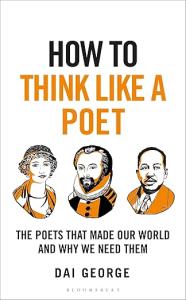
How to Think Like a Poet:
The Poets That Made Our World and Why We Need Them (2024)
by Dai George
MDS 809 History, description, critical appraisal of more than two literatures
Poetry is the art of thinking. At one level, this might sound obvious. Pretty much everything requires thought, so in a sense poetry is no different from any other type of human endeavour, from moving an arm to sending a spaceship into orbit. But there’s a difference between these other activities, important as they are, and the strange cognitive encounter that takes place when someone reads or writes a poem. You could say that movement and aeronautics – or cookery, politics, caregiving, chess – are the products of thought rather than a record of thinking itself. They take the messy impulses of the brain and convert them into something else: something useful and external.
Poetry, meanwhile, brings us as close as we can get to the unmediated sound of the human mind in action. It lets us eavesdrop on all the inklings, tangents, flashes of insight, shouts of joy or grief and complicated, half-formed notions that it would be almost impossible to capture if we didn’t have this art form. Each poem is a public rendering of the mental drama that whirrs away behind the scenes throughout one’s life. It can be about anything and go anywhere. All that matters is that it hits on something striking or beautiful and worth setting down for its own sake. The American poet John Ashbery put it nicely. ‘I don’t look on poems as closed works,’ he said. ‘I feel they’re probably going on all the time in my head and I occasionally snip off a length.’
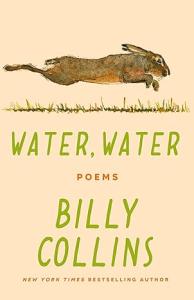
Water, Water: Poems (2024)
by Billy Collins
MDS 811 American poetry in English
Marijuana
When I was young and dreamy,
I longed to be a poet,
not one with his arms
wrapped around the universe
or on his knees before a goddess,
not waving from Mount Parnassus
nor wearing a cape like Lord Byron,
rather just reporting on a dog or an orange.
Ode to Joy
Friedrich Schiller called Joy the spark of divinity,
but she visits me on a regular basis,
and it doesn’t take much for her to appear—
the salt next to the pepper by the stove,
the garbage man ascending his station on the back of the moving garbage truck,
or I’m just eating a banana in the car
and listening to Buddy Guy.
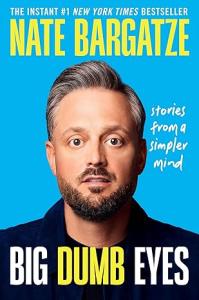
Big Dumb Eyes:
Stories from a Simpler Mind (2025)
by Nate Bargatze
MDS 817 American humor and satire in English
You might be a little nervous opening these pages, because I am very on the record about not liking to read books. It’s a big part of my act, going on about how every book is just the most words. How it never lets up, and there’s just more and more words until it’s like, “What are you talking about? Please, just make it stop.” ‘
And here I am, writing one of my own. But you’re in for a real good time. Real good. Because I have taken everything bad about books and made it the best. So I can personally guarantee that you will love this book. Or at least that it is, in fact, a book. Because that is what I’ve been told.
It’s light. It’s funny. It’s relaxing. It’s full of a bunch of stories about me and my hometown in Tennessee, my friends and my family, my old car named Old Blue, and how I flunked bowling my only semester in college. There’s another chapter about how I was almost a genius, but I swear that is not a contradiction.
You can read this book anywhere or any way you want. You can read it in bed. You can read it upside down. You can read it in the car, but only when you’re driving. That’s a joke, in case that is not clear. When you’re done, you can leave it on your coffee table. I tried to tell the publisher to make it an actual coffee table, like Kramer’s book in Seinfeld, but they said I’d need to write a lot more words for a book that big, so that was out.
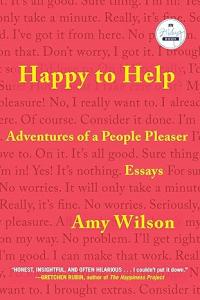
Happy to Help:
Adventures of a People Pleaser (2025)
by Amy Wilson MDS
MDS 817 American humor and satire in English
The day I decided to stop raising my hand, Sister Benedicta was at the blackboard introducing the declension of the verb “to skate.” Learning English back then, at least as the Sisters of the Immaculate Heart of Mary taught it, meant accessing grammar through memorization of its many nested subcategories. Verbs could be perfect and subjunctive and indicative and imperative. Much of it was baffling to my classmates, but its orderliness spoke to me. Know the rules, and then you knew everything. Even when things became complicated.
“Who can decline this verb in the future perfect continuous tense?” Sister Benedicta asked.
It was easy. You just took the regular future continuous tense, then dropped the perfect part into the middle. I shall have been skating. You will have been skating. He or she will have been skating.
“Anyone?” Sister Benedicta said.
The hard part was not raising my hand. But I wanted my classmates to like me more than I wanted to be the one with the answer.
“Does anyone know the future perfect continuous?”
My eyes darted to Diep Tran, the only other kid who might have a clue. I could tell even she had no idea.
“Does anyone know the future perfect continuous?”
Sister Benedicta stood at her lectern. The silence became uneasy.
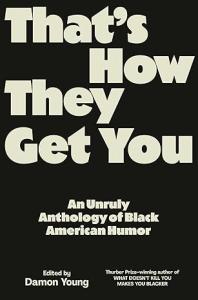
That’s How They Get You:
An Unruly Anthology of Black American Humor (2025)
by Damon Young
MDS 818 American miscellaneous writings in English
Don’t matter if you from Birmingham or Baltimore or Bel-Air. Existing while Black in America provides enough material. Generates enough anxiety. Produces enough demand for microbursts of levity. Places enough punch lines in plain view sometimes, and other times keeps them hidden and hazardous like fault lines. Requires enough catharsis and secret community, where truths are transmitted at frequencies so low they slip under your feet and enter your soul through your soles. Necessitates enough radical truth—an honesty that exists because the luxury of obliviousness just don’t. An honesty that realizes, eventually, that obliviousness ain’t a luxury. An honesty that realizes, eventually, that obliviousness is a crutch. An honesty that realizes, eventually, that the honesty necessary to exist while Black in America is a freedom.












 Ad-Free & Subscriber Log-In