

Most stories consist of people living in a particular time or place, whether real or imaginary. For those how want to keep it real in reading, the people’s lives they digest in the pages of a book can be found in the history, travel, or biography section of the Dewey decimal section. Real life comes alive as we delve into a time long ago or a cultural far away or a live recently lived in our own live times. Learn about the world we live in by browsing these newer selections that have been added to the great reading list of culture.
By looking at this list with brief snippets from the book you will learn about new books, and you can tell people that you are well read without having to take hours to actually do so. So, book lovers, enjoy browsing the 900’s.
900 History
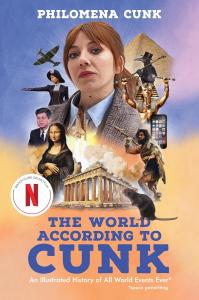
The World According to Cunk:
An Illustrated History of All World Events Ever (2024 )
Philomena Cunk
MDS 909 World history
Yuval Noah Harari’s done it. Niall Ferguson’s done it. A. J. P. Taylor’s done it. Simon Schama loves doing it, and says he does it as often as he can. Today, even some women have done it, and many claim to enjoy it. And now, I’m doing it too. It sounds like I’m talking about sex, because sex sells, apparently, in a way that non-fiction doesn’t; but I’m actually talking about what you have in your hands: A Landmark Complete Shorter History of the World. Nothing left out, everything left in, and yet slim enough to slip into your pocket to read at a boring wedding where you’re sitting on the randoms’ table without a plus one.
It’s the most comprehensive history of the world ever – until a new war happens, in which case you will have to write that in yourself.
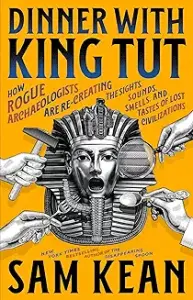
Dinner with King Tut:
How Rogue Archaeologists Are Re-creating
the Sights, Sounds, Smells, and Tastes of Lost Civilizations (2025)
by Sam Kean
MDS 909 World history
As the name implies, experimental archaeology puts ideas about the past to the test, either in the lab or out in nature. Many practitioners even subject themselves to experimentation, safely or not, to replicate different aspects of our ancestors’ lives—their food, clothing, shelter, body art, and more. Put another way, instead of just digging things up and passively theorizing about them, experimental archaeologists do things—actively re-create the past. They brew Viking beer. They make mummies. They drive chariots, play Aztec ballgames, revive ancient yeast and bake the tangy sourdough that King Tut ate. They build rickety ships and plunge out onto the open sea with all the verve of Indiana Jones, to trace the epic journeys of our ancestors. Indeed, some proponents call the field not experimental archaeology but experiential archaeology or even living archaeology. It doesn’t re-create the past as much as resurrect it.
910 Geography and travel
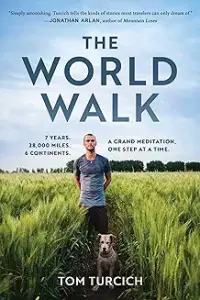
The World Walk:
7 Years. 28,000 Miles. 6 Continents.
A Grand Meditation, One Step at a Time. (2025)
by Tom Turcich
MDS– 910 Travel
You are, and always will be, human. Perhaps an underwhelming revelation, but the road to this knowledge is peppered with joys small and profound. Many are born of serendipity, that fantastic and forgotten virtue which veils itself in the unknown and only graces those willing to bump against it. Serendipity leads to bruises and scrapes, but it also marks the path to wisdom. To know the world, you must exist in it. And to exist in the world, you must accept that you will be wrong, that you will be hurt, and that you will be made a fool a thousand times over.
I traveled in a strange manner, by walking with a companion at my side—my dog, Savannah. For seven years we walked the world, covering thirty-eight countries and twenty-five thousand miles. There were stretches of long solitude, particularly in the deserts of Peru and Chile, but Savannah provided me with a baseline of companionship that filled the gaps of isolation. No matter how poorly a day went, each difficulty was forgiven the moment we sat at our campsite and took in how far we’d come.
My desire is to give you our adventure and the memories that glimmer in my mind, but unfortunately there’s no substitute for being there.
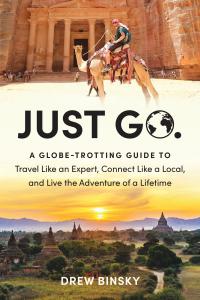
Just Go:
A Globe-Trotting Guide to Travel Like an Expert, Connect Like a Local,
and Live the Adventure of a Lifetime (2024)
by Drew Binsky
MDS– 910 Travel
This life is fragile, and it can be gone in an instant. I knew that day and every day since that I wanted to experience all the world had to offer—and I wanted to experience all of the world.
On April 28, 2015, as I was sitting on the rooftop of my hostel in Jaisalmer, India, looking at the 860-year-old fortress, I discovered Snapchat and began to use it to promote my travels. The more I began to create and share content, the less interested I was in sharing party tips, and the more interested I became in sharing about the people and cultures and communities I was having the chance to meet, creating short videos about the different and diverse countries I was beginning to visit.
I got a massive head start on the platform, before most brands and creators jumped on the bandwagon, and I was able to grow to tens of thousands of followers. All of a sudden, I was collaborating with airlines, tourism boards, and media outlets, creating another income stream to help me travel the world. After India, I went to Eastern Europe to cover all of the countries on the continent that I missed while studying abroad. Finally, I went to Turkey, Egypt, and Georgia before setting off to Bangkok to attend an annual travel blogger conference called TBEX—Travel Blog Exchange.
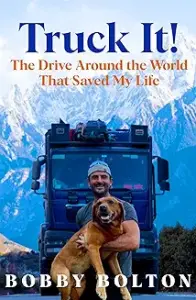
Truck It!:
The Drive Around the World That Saved My Life (2025)
by Bobby Bolton
MDS– 910 Travel
‘Where are you from?!’
‘Why are you here?!’
‘Is this your wife?!’
‘Are you a spy?!’
The questions were relentless. We were surrounded by thirty or more Taliban soldiers with guns as we sat on a rickety old bench blinking in the bright floodlights. Surreally, there was a volleyball court in the field in front of us. I tried to answer but immediately there was another question fired from a silhouette looming over us. By my side was Marie, the amazing French woman who had put her life on hold to come with me on this trip.
Drowning out the fear, there was guilt. That I had dragged Marie and the dogs along with me on this adventure. I mean, who does this? Who gives up everything – their job, their house and belongings, their entire life – to drive from Wigan to Australia? Of course something like this was going to happen. How could I be so stupid?! We had been on a journey of 10,0000 miles and at that moment, I didn’t think we were going to make it a step further.
I thought of my family and friends at home, waking up to the news. I thought of what people would say. Stupid tourists getting themselves killed. So needless. So stupid. So naive. What a waste. A big guy who towered over the others pushed his way towards us.
‘You come now,’ he shouted.
Bobby, how the bloody hell did you end up here?
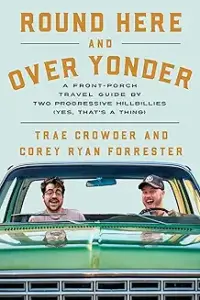
Round Here and Over Yonder:
A Front Porch Travel Guide by Two Progressive Hillbillies (2023)
by Trae Crowder,Corey Ryan Forrester
MDS– 910 Travel
We know that when a lot of you think of the South, you think of racism and a history of violent oppression toward a specific group of people—but don’t you worry, because Helen, Georgia, has a ton of German culture, and the Germans have never done anything wrong! Located in the Blue Ridge Mountains, one of the most gorgeous areas on planet Earth, Helen hosts an annual Oktoberfest and has many Bavarian-style houses, bars, and restaurants, as well as tubing, hiking, and gold panning. It’s like going to a lederhosen-laced fantasy camp while still being close enough to biscuits and gravy to feel safe. For everyone who has said, “It would be nice to visit the South while sorta feeling like we are somewhere different,” Helen is the place for you!
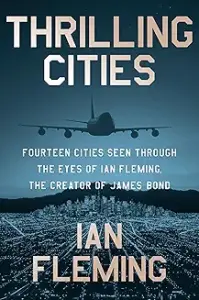
Thrilling Cities:
Fourteen Cities Seen Through the Eyes of Ian Fleming, the Creator of James Bond (2024)
by Ian Fleming
MDS– 910 Travel
If you write thrillers, people think that you must live a thrilling life and enjoy doing thrilling things. Starting with these false assumptions, the Editorial Board of the Sunday Times repeatedly urged me to do something exciting and write about it and, at the end of October 1959, they came up with the idea that I should make a round trip of the most exciting cities of the world and describe them in beautiful, beautiful prose. This could be accomplished, they said, within a month.
So, wishing privately to see the world, however rapidly, while it was still there to see, I purchased a round-the-world air ticket for £803 19s. 2d., drew £500 in travellers’ cheques from the Chief Accountant and had several ‘shots’ which made me feel sore and rather dizzy. Then, on November 2nd, armed with a sheaf of visas, a round-the-world suit with concealed money pockets, one suitcase in which, as one always does, I packed more than I needed, and my typewriter, I left humdrum London for the thrilling cities of the world – Hong Kong, Macao, Tokyo, Honolulu, Los Angeles, Las Vegas, Chicago, New York.
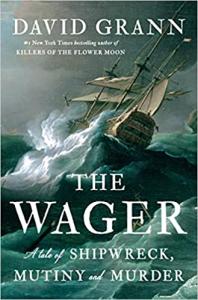
The Wager:
A Tale of Shipwreck, Mutiny and Murder (2023)
by David Grann
MDS– 910 Travel
“Empires preserve their power with the stories that they tell, but just as critical are the stories they don’t—the dark silences they impose, the pages they tear out.”
When the news reached England, it was greeted with disbelief. In September 1740, during an imperial conflict with Spain, the Wager, carrying some 250 officers and crew, had embarked from Portsmouth in a squadron on a secret mission: to capture a treasure-filled Spanish galleon known as “the prize of all the oceans.” Near Cape Horn, at the tip of South America, the squadron had been engulfed by a hurricane, and the Wager was believed to have sunk with all its souls. But 283 days after the ship had last been reported seen, these men miraculously emerged in Brazil.
They had been shipwrecked on a desolate island off the coast of Patagonia. Most of the officers and crew had perished, but eighty-one survivors had set out in a makeshift boat lashed together partly from the wreckage of the Wager. Packed so tightly onboard that they could barely move, they traveled through menacing gales and tidal waves, through ice storms and earthquakes. More than fifty men died during the arduous journey, and by the time the few remnants reached Brazil three and a half months later, they had traversed nearly three thousand miles—one of the longest castaway voyages ever recorded. They were hailed for their ingenuity and bravery. As the leader of the party noted, it was hard to believe that “human nature could possibly support the miseries that we have endured.”
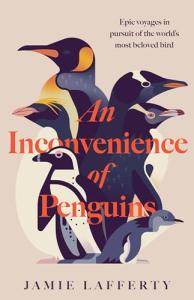
An Inconvenience of Penguins:
Epic voyages in pursuit of the world’s most beloved bird (2025)
by Jamie Lafferty
beach, a long road of golden possibilities: after this voyage I’d have a month in India, three weeks in British Columbia, a month switching between nations in West Africa. I knew nothing about Guinea-Bissau but I was eager to learn. I’d been freelance for four years and this felt like it was finally going to be the one when everything would click into place.
Yet I couldn’t help wonder when I’d get back here – South Georgia, Antarctica; all of it was so vast and chaotic and profound, as magnetic as the pole itself. The other places might be genuinely transcendent and fascinating and all the other adjectives I’d use to write about them, but I knew they wouldn’t be able to trump this. Shackleton echoed again: ‘We were now revelling in the indescribable freshness of the Antarctic that seems to permeate one’s being, and which must be responsible for that longing to go again which assails each returned explorer from polar regions.’
What part the penguins played in that deep southerly current was harder to define. This cold world could be punishing and merciless, but the birds brought levity. Though their brethren often fell around them, they waddled on, appearing soft in a hard landscape, amusing when surrounded by gravitas. Without them here, the place would be a grey void. No penguins, no party.
The Heart Of The Chinese Dragon:
The Funniest Travel Story – That Actually Happened (2025)
by Colin Wanmer
MDS– 915 Geography of and travel in Asia
As we hurtled across the globe, I struck up a conversation with the Chinese lawyer seated next to me. When he asked where I was going, I proudly announced, “Harbin, the capital of Heilongjiang Province in northeast China.” He nodded, saying he’d been there. So, I took it further, explaining that I was headed to Jixi, further north. He looked startled and asked, “Why?”
I explained that Jixi was my wife’s hometown and that I’d be spending my summer vacation there. He laughed, advising me not to go. Later, he explained that Jixi was a coal-mining city he had visited several times on legal business, mostly dealing with mining deaths. “It’s not a place to go to experience China,” he said, “and definitely not a place for a vacation.”
As the hours dragged into what felt like months, we hurtled across Pakistan, India, and China. My thoughts concentrated on the problem of how would I get off a non-stop flight to China.
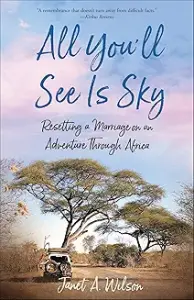
All You’ll See Is Sky:
Resetting a Marriage on an Adventure Through Africa (2024)
by Janet A. Wilson
MDS 916 Geography of and travel in Africa
Calgary, Canada, 2005
In February 2005, twenty-five years after my husband, Tom, and I had immigrated from South Africa to Canada, I stood at our kitchen window and watched the crisp winter sun set over the snowy Rocky Mountains. Though the sight was beautiful, my mind was elsewhere—thousands of miles away—in a place where that same sun would rise a few hours later to illuminate the golden dunes of the Sahara Desert and filter its warm beams through the tangled jungle of the Central African rainforests.
I glanced at my watch. It was 5:53 p.m. Tom would be home from work any minute, but the minutes couldn’t pass quickly enough. The sound of my breathing broke the stillness, and my heart thumped against my chest. No matter how many times I ran through the what-ifs in my mind, I just couldn’t be sure what to expect from the significant, life-altering change I was about to set in motion. But I knew there would be no turning back. My decision had been made.
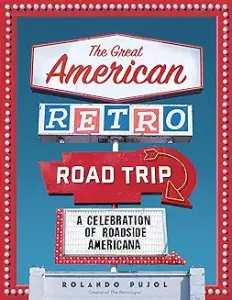
The Great American Retro Road Trip:
A Celebration of Roadside Americana (2025)
by Rolando Pujol
MDS 917 Geography of and travel in North America
I’ve been on the great American retro road trip my whole life, even when I didn’t quite realize it. As a young boy, I adored those orange roofs of Howard Johnson’s, the Holiday Inn “Great Signs,” the McDonald’s PlayPlaces, the Muffler Men, the shiny diners, the mysterious bars with jaunty cocktail glass illustrations, and so much more eye candy that kept me transfixed in the back seat of the family station wagon as this nostalgic parade passed me by.
When those signposts of my youth began to fall, a tiny part of my childhood went with them. I began to appreciate how significant these places were, how almost criminally underappreciated they were by much of society. And so began my determined journey to document them, first in the pages of newspapers and later on news websites, websites, social media, and a Substack newsletter. And now, it is such an honor to do so in the book you are holding.
I treasure the places we’re about to visit. I wrote this book as an act of love for these businesses and the people who keep them alive. Mom-and-pops are not easy to run, and even the many chain establishments here—the supposed enemies of the local business—are often operated by your neighbors trying to make an honest living of their own. The two can and do coexist.
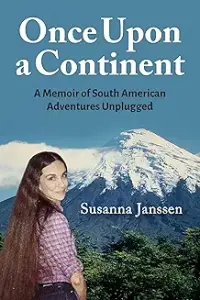
Once Upon a Continent:
A Memoir of South American Adventures Unplugged (2025)
by Susanna Janssen
MDS 918 Geography of and travel in South America
Here you are at just the beginning of our odyssey, but I am looking backward from the end of a saga finally told. I was sorry to have the story end because I reveled in reliving it, gaining momentum along the way and the confidence and conviction that I could, would, and absolutely should tell all. Before we boarded the flight to Chile, if I had known in advance that I would fall into a cannibal-size soup pot in Peru, risk losing toes and fingers while traveling by train through the high Andes, and high-jump my way out of a marriage proposal in a Bolivian discotheque, I might have had a momentary second thought. But I drank yerba mate with the gauchos in Argentina, visited Machu Picchu with only six other tourists, and saw the Galápagos Islands as is never again possible. Yes, it was “the trip of a lifetime,” but that cliché doesn’t begin to describe the wonders, woes, wounds, and wows of my actual experience.
In 1979, I hit the pause button and exited my comfort zone with great trepidation but a heartfelt conviction that I just had to go. With my Spanish teaching career, my moonlighting waitress job, and a rocky romance on hold for months, I signed on the soft-spoken but intrepid Joyce as my traveling companion for a continental odyssey around South America before the invention of cell phones, email, internet—or rolling luggage!
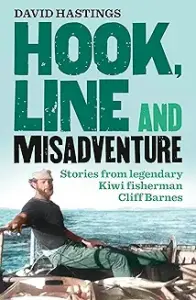
Hook, Line and Misadventure:
Stories from a legendary New Zealand fisherman Cliff Barnes
for fans of Barry Crump and Sam the Trapman (2025)
by David Hastings,David Hastings
MDS 919 Geography of and travel in Australasia, Pacific Ocean islands,
Atlantic Ocean islands, Arctic islands, Antarctica, and on extraterrestrial worlds
He had many boats in his time. They came in all sorts of shapes and sizes. Some were river boats; a couple were mullet boats. Then there were one or two runabouts and a dive boat. What they had in common was that none of them were designed for the kind of fishing that Cliff was doing, mainly after school fish and sometimes crayfish.
Another common feature was that most of them were in poor condition, which meant they needed to be nursed, repaired, fixed and adapted. When he recalls his boats, he still remembers all the minute details of their mechanical troubles and how he managed to improvise various fixes and workarounds without having to spend too much. Money was nearly always very short, especially in the early days. He puts his mechanical knowledge down to desperation. ‘Absolute desperation, because you couldn’t pay for an engineer or anybody to do something for you. You didn’t make enough money out of it for that.’
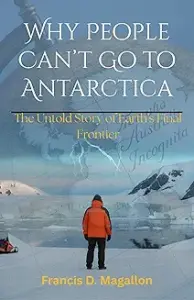
Why People Can’t Go to Antarctica:
The Untold Story of Earth’s Final Frontier (2025)
by Francis D. Magallon
MDS 919
Antarctica. A land of endless ice, where the sun never sets during summer and never rises during winter. A location so isolated and hostile that it is frequently called the “last great wilderness” on Earth. For centuries, it has captivated explorers, scientists, and dreamers alike. Yet, despite its allure, the question persists: why can’t people go to Antarctica?
The frozen continent, the size of the United States, is more than just a geographical marvel. It is a realm steeped in mystery and governed by an array of complex rules and regulations. From the unyielding landscape of glaciers and towering mountains to the quiet expanse of barren snowfields, Antarctica remains an enigma to most of the world. But beyond the icy exterior lies a story of human ambition, scientific discovery, and political tension. There are many reasons why Antarctica is shrouded in secrecy and off-limits to the average person.
920 Biography
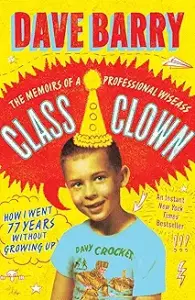
Class Clown:
The Memoirs of a Professional Wiseass:
How I Went 77 Years Without Growing Up (2025)
by Dave Barry
MDS– 920 Biography
So throughout my childhood, the Barry house was basically a working construction site, with unfinished walls and ceilings, building materials lying around and the occasional random electrical wire sticking out from somewhere. Dad spent many, many weekends and evenings working on the house, and although it improved over the years, it was never really 100 percent finished, at least not while I lived there.
Our house had quirks. We got our water from a well, and from time to time the water would stop running, which meant somebody had to prime the pump. This was usually my job, especially if Dad was at work. I’d grab a flashlight and go out to the pump house, which was a dank, low-ceilinged subterranean shack containing the pump and approximately four hundred trillion spiders. I’d climb down in there, unscrew the plug, pucker up and blow air into the pump1 until it was primed, and we had running water again, at least temporarily. Over the years I primed the pump many, many times. The spiders would be like, “Oh, YOU again.”
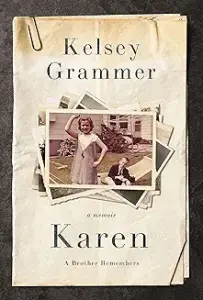
Karen: A Brother Remembers (2025)
by Kelsey Grammer
MDS– 920 Biography
Murder. The word is simple. It is not simple to understand. Short of it being a life sentence for a loved one and for those who love them, it is almost inexplicably difficult to understand through their eyes. The people who love those who have been taken struggle with the idea of what they must have felt and seen and suffered. The dynamics of murder are savage and surreal as we contemplate the nature of the death—its cuts and fissures and blood—its cruelty and finality. So the story of Karen’s life will be told backwards. Starting with her final moments, Karen will come to life for the reader with her husk before us and her life extinguished.
It may perhaps flash across the course of her story as it does in memory. . . fondest moments are often dashed by the image, distorted by it, because of the sheer horror it invokes, the questions it asks over and over of what it must have been like for her. And there is a guilt that comes along as well, regretting that that worst of all nights in her life gets so much attention, so much more than the wonderful memories of her as a child and her days as such an extraordinary person. And such a light. Karen was a wonderful woman, child, sister, friend, granddaughter, daughter. She was definitively alive and excellent in her love, her insights, and her compassion. She was decidedly brave in her choices and her passion. She was artistic and sensitive and genuine. She was kind and caring, and at no time in her story is her victimhood of more value than her life.
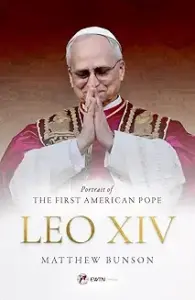
Leo XIV:
Portrait of the First American Pope (2025)
by Matthew Bunson
MDS– 920 Biography
In his Urbi et Orbi, the new pontiff spoke in Italian, Spanish, and Latin. But he began with words that have already formed the heart of his young pontificate: “Peace be with you all!”
Pope Leo XIV arrived at the papacy at the age of sixty-nine with a plea for peace after long decades of service as a priest, a missionary, a bishop, a cardinal, and a dedicated member of the Augustinian Order. He had served in the United States, in the missions and dioceses of Peru, and in Rome. He was chosen on the fourth ballot of the conclave to succeed Pope Francis by the largest and most diverse body of cardinal electors in Church history — who chose the first U.S. born pope, the first North American, and the second consecutive pope from the Americas.
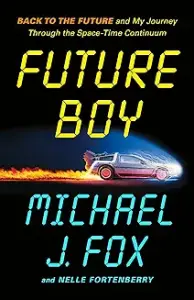
Future Boy:
Back to the Future and My Journey Through the Space-Time Continuum (2025)
by Michael J. Fox
MDS– 920 Biography
The concept of the space-time continuum was first introduced by Albert Einstein in his theory of general relativity, which revolutionized our understanding of gravity and the nature of the universe. It refers to the four-dimensional mathematical model that combines the three dimensions of space and one dimension of time. In Einstein’s theory, space and time are not absolute and unchanging, but instead are affected by the presence of matter and energy, and this in turn affects the behavior of objects within it.
You got that? Good. I have no idea what the hell any of it means. Everywhere I go, someone expects to engage me in a cogent conversation about the space-time continuum, so let’s just get this out of the way right now. Yes, this principle ruled my life during a stretch of 1985, but I require a computer robot to properly define it (and I still don’t understand). Where is Doc when I need him?
Einstein also proclaimed, “The only reason for time is so that everything doesn’t happen at once.” If that’s the case, then time definitely went rogue in the late winter and early spring of 1985, and took me with it. During three long months, I was Alex, I was Marty, and I was Mike. That’s two too many. In order to complete my work, at least one of them had to go, and Mike was the odd man out.
The Grave Robber:
The Biggest Stolen Artifacts Case in FBI History
and the Bureau’s Quest to Set Things Right (2025)
by Tim Carpenter
Don and Sue Miller liked to think of themselves as crackerjack amateur archaeologists, and they were always looking for Indigenous archaeological sites where they could dig up something interesting. Back home in rural Rush County, Indiana, Don and Sue volunteered on local university archaeology digs, picking up valuable pointers on reading terrain to locate old habitation and burial sites. Don was becoming a mainstay of the Indiana Archaeological Society, and in time he’d come to serve as its publications editor, vice president, and president.
Tall tales about Oppie aside, Don’s prosperous engineering career allowed him and Sue to spend weeks each year traveling to Indigenous archaeological sites across North America and dozens of other countries, including Sweden, Mexico, Peru, Papua New Guinea, and China. Class of 1941 high school sweethearts (Sue was eleven months older, but Don skipped a grade because he was so bright), they had to postpone their wedding until 1946, following Don’s discharge from the service. In the first years of their marriage, Don embarked on bachelor’s, master’s, and doctoral degrees in engineering at The Ohio State University, the University of Illinois, and Purdue University, respectively. Sue soon caught the archaeology bug too. They were vigorous people who didn’t mind arduous travel or hours of digging if it meant the chance of a good find, especially when it involved the artifacts of Native Americans—and even more so, their buried remains.
The Black Family Who Built America:
The McKissacks, Two Centuries of Daring Pioneers (2025)
by Cheryl McKissack Daniel
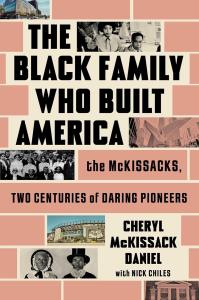
Because of the hostility that now greeted them from many whites, Black businesses increasingly had to rely on Black customers. The cause of racial solidarity became a motivating force for the Black community to patronize these new Black businesses. While Moses II had some early success in Pulaski finding white customers for his construction business, he gradually began to establish a reputation in the Black community. After organizing in Pulaski in 1866, the KKK would target Black people who showed too much independence, such as by establishing schools or serving in leadership positions. But the growth of the KKK apparently did not deter Moses II in the expansion of his business, possibly because the Black McKissacks had gained the grace of some of the more prominent citizens of the town. In Pulaski, Moses and Dolly saw their family grow to a large brood of seven boys and seven girls. Moses II taught his seven sons the skills of the construction trade, including how to design a building. Two of those sons were Moses III and Calvin. The McKissack construction family was poised to jump into its third generation.
STEAL THE SHIP, RETURN THE NATION:
Robert Smalls, From Enslaved to Congressman (2025)
by William Ferrier Jr.
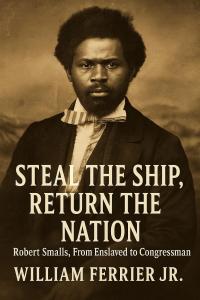
The Planter picked up speed, steam engine churning, paddle wheels throwing spray, carrying seventeen enslaved people toward a horizon that might hold freedom or might hold death, but either way would never hold chains again.
Robert Smalls was done being owned.
At 4:30 a.m., as the sun broke over the Atlantic, a Union sailor aboard the USS Onward spotted a Confederate steamer approaching at full speed. He raised the alarm. Guns were loaded. Fingers found triggers. The Onward’s captain prepared to fire on what appeared to be a Confederate attack.
Then someone noticed the flag.
Not Confederate gray. White.
And standing in the pilothouse, still wearing a stolen captain’s hat, a Black man raised his hand in greeting.
“Good morning, sir!” Robert Smalls called across the water, his voice steady despite everything. “I’ve brought you some of the old United States guns, sir!”
Robert exhaled for the first time in an hour. The sun broke fully over the water now, turning the waves gold. He looked back at Charleston—the city that had held him, used him, denied him.
Then forward, toward the Union ships and whatever came next.
He had done it.
They had done it.
The theft was complete.
The legend had just begun.
The Line of the Ball:
Leadership, Legacy, and Lifelong Lessons in Family, Business, and Sport (2025)
by Beh Chun Chuan
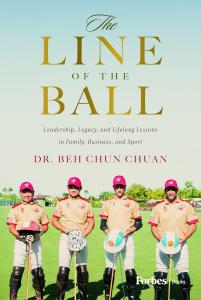
The phrase “the line of the ball” is used in polo when you have hit the ball and an imaginary line is created between you and the ball, giving you the right-of-way to follow it. No other players can cross your line. Correct right-of-way is the most important rule in polo, and crossing the line of the ball is not only considered foul play but is also extremely dangerous and can be fatal because of the risk of a collision of horses and riders.
The line of the ball is also relevant in business, as it not only gives you a line of conduct to follow, but when you are the first to come up with a good idea or a new technology, the line of the ball also gives you a clear pathway to give it your best shot before anyone else. Of course, there will always be competitors following closely behind you to see if you miss the shot or to see if they can overtake you and get a hit of the ball after you, riding on your initial success. Or they might try to impede you altogether, just as the opposition in polo will try to “hook you”—another polo term used to describe a player hooking the mallet of the player taking the shot with their own mallet so the player is restrained from hitting the ball. In polo and business, you must keep pushing forward to claim your line and take your fair chance to hit the ball.
930 History of ancient world (to c. 499)
The Far Edges of the Known World:
Life Beyond the Borders of Ancient Civilization (2025)
by Owen Rees
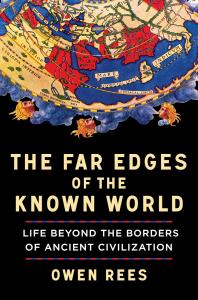
Ovid’s Rome was the Rome of the old history books, a Rome for the elite; something that in exile he sorely missed. To him, it was normal to have seen the great poet Virgil and to have listened to Horace reciting his Odes. The contrast between this and his new home of Tomis, on the west coast of the Black Sea in modern Romania, could not have been clearer to Ovid. Thus, he had a decision to make. He could embrace the situation he was in, soak in the undiluted beauty of the Black Sea coast and explore the peaks and valleys that guide the mighty Danube to the west; or become the victim in his own self-pitying narrative. He picked the latter, and at times his writings read like the petulant protestations of a spoiled teenager. He considered his exile as a brutal punishment, and his views of Tomis were particularly scathing: ‘This bitter place than which there can be nothing more sad in all the world’.
940 History of Europe
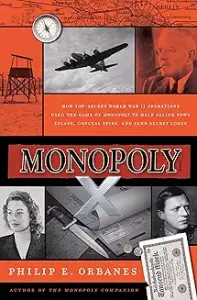
Monopoly X:
How Top-Secret World War II Operations Used the Game of Monopoly to
Help Allied POWs Escape, Conceal Spies, and Send Secret Codes (2025)
(2025) by Philip E. Orbanes
MDS–940 History of Europe
Briefly, during a dark moment in Europe’s conflicted history, an American game was employed to hide secrets. The game was Monopoly. The conflict was the Second World War. The use of this game in subterfuge and espionage proved so successful that knowledge of it was restricted for decades and revealed only sparingly.
Something stirs the heart when contemplating how an “innocent” means of home entertainment affected a global struggle, doubly so because the enemy never discovered the game’s role in their undoing.
The use of Monopoly in spycraft (cover names, secret codes, and passwords) is fascinating; its role in helping prisoners of war escape, profound.
This story is not fictional. The protagonists and antagonists you will meet lacked the benefit of hindsight, were pledged to maintain secrecy, and approached the war uncertain of its outcome.
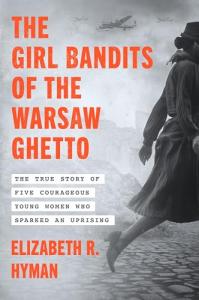
The Girl Bandits of the Warsaw Ghetto:
The True Story of Five Courageous Young Women
Who Sparked an Uprising (2025)
by Elizabeth Hyman
When these couriers arrived at their destinations bearing underground literature, contraband, news of far-flung friends and family,and tales of evading and outwitting the Nazis, the denizens of the Jewish ghettos hailed them as heroes. Indeed, their impact was such that one Ruszka Korczak described Tosia Altman’s December 1941 arrival in the Vilna Ghetto as “a blessing of freedom. Just the information that she came. It spread among the people. That we have Tosia visiting us from Warsaw. As if there was no ghetto. As if there were no Germans. As if there was no death around. . . . A beam of love. A beam of light.” Moreover, according to Zivia Lubetkin, “One cannot possibly describe this work of organizing the Jewish resistance, or the uprising itself, without mentioning the role of these valiant women.”
This generation, the “youth without a future,” fought hard against the fate promised by that appellation. There was no way for them to have anticipated the prophetic tragedy of that moniker; and by 1944, the majority of these bright, passionate, young people were dead, their bodies burnt to ash. Yet these young Jews never stopped fighting for their rights as Jews, Poles, and humans, even after they learned of the fate the Nazis had in store for them. And it was the young women who formed the backbone of their resistance.
Their male comrades in the Jewish underground tended to refer to this female cohort as “the girls,” while the Nazi epithet banditen, or “bandits,” was used to describe any Jew—any individual Nazi racial science deemed as “subhuman”—who stood against the Reich. In the title of this book, I have refashioned these words—born of unquestioned inequalities between the sexes and of Nazi racism—into a badge of honor.
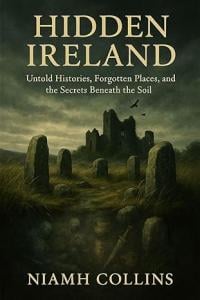
Hidden Ireland:
Untold Histories, Forgotten Places, and the Secrets Beneath the Soil (2025)
by Niamh Collins
MDS–941 British Isles
Ireland is a land many believe they already know. Its image has been painted in postcards and travel guides, in the music of folk ballads and the pages of tourist brochures. Rolling green fields, mist-shrouded mountains, ancient stone ruins and the echoes of a thousand years of storytelling. For many, it is a place wrapped in the warmth of familiarity. Yet beneath that familiar image lies another Ireland, one seldom spoken of in classrooms or coffee table histories. It is an Ireland of forgotten kingdoms and vanished communities, of buried treasures and unexplained mysteries, of stories that have never been granted the dignity of a wide telling.
What we know about Ireland is only a fraction of what has been lived upon its soil. The rest lies scattered like shards of pottery across the centuries, hidden in peat bogs, buried under abandoned fields, tucked away in the yellowing pages of old parish records. Some of it survives only as whispers in half-remembered folklore, waiting for someone to trace the threads back to the truth. Much has been lost through neglect or deliberate erasure. Wars, conquests, religious reformations, and the quiet forgetting of rural life have all played their part in shaping a historical record that is selective at best.
950 History of Asia
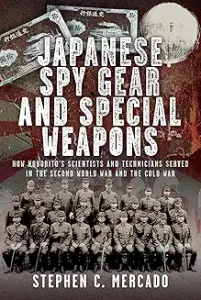
Japanese Spy Gear & Special Weapons:
How Noborito’s Scientists and Technicians Served
in the Second World War and the Cold War (2025)
by Stephen C. Mercado
Spy gear and special weapons are crucial to intelligence and secret operations. A mask disguises an operative’s appearance. Secret ink leaves no visible trace of a message hidden between the lines of a seemingly innocent letter. A camera disguised as a cigarette lighter allows an agent to take pictures without attracting attention. Behind enemy lines, commandos wreak havoc with devices to start fires, explosives built to resemble coal, or pens containing bacteria to infect an enemy’s water supply. Operatives pass through checkpoints with forged documents and buy supplies with counterfeit currency. Such equipment, weapons, and materials come from special laboratories established to support intelligence gathering and clandestine operations.
Who makes all this? Q (short for Quartermaster, chief of Q Branch, later Q Division) and his technicians develop for the British agent James Bond the devices for his missions in the popular spy movies. But audiences have seen much more of the dapper 007 than the snappish Q, whose main role on screen is to call Bond to attention before demonstrating his latest gadgets. In fact as in fiction, details on the technical side of spying and clandestine operations have been scarce.
In the case of Japan, little has appeared in print on the Noborito Research Institute, which developed spy gear and special weapons for the Imperial Japanese Army (IJA). Most of the few books on Noborito are of relatively recent date, published after the end of the Cold War. All have been written in Japanese.
960 History of Africa
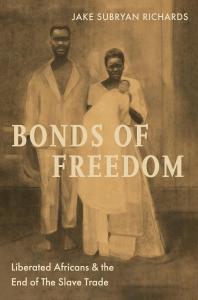
The Bonds of Freedom:
Liberated Africans and the End of the Slave Trade (2025)
by Jake Subryan Richards
From the early sixteenth to the late nineteenth centuries, the trade in enslaved African people was foundational to creating the modern world. Enslavers trafficked more than twelve and a half million people in sub-Saharan Africa. They captured some people in warfare. Other people suffered enslavement as criminal punishment. Still other people were detained as collateral for debt, which morphed into sale as a slave. West and Central African elites used each of these processes to enrich themselves, distorting African societies. Societies in sub-Saharan West Africa often had low population densities. Any use of power that members perceived to be unjust could cause mass departures from the society. Legal processes consequently focused on how to resolve a dispute to restore reciprocal relations among members.
These processes could involve violence, including punishments such as enslavement or death. But the focus of these processes on reciprocity disrupts a teleology toward modernity that is defined by the jurisdiction of nation-states and institutions such as prisons. The market incentives for slave-trading made it profitable for rulers to reconfigure legal systems to produce slaves.6 Enslavers marched these captive people to the coast, where there was still the prospect of redemption in exchange for payment. Most captives suffered sale to transatlantic traders, who embarked them on slaving ships.
970 History of North America
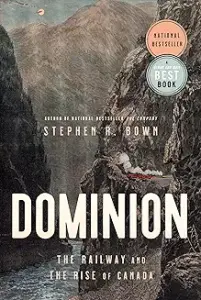
Dominion:
The Railway and the Rise of Canada (2023)
by Stephen R. Bown
MDS–971 Canada
The Canadian Pacific Railway was Canada’s first and greatest megaproject, a political and engineering feat of staggering dimension, with over four thousand kilometres of track, much of it driven through terrain unsuitable for railways. At the time, it was the longest and most difficult railway ever built. The CPR was a great triumph of imagination, vision, politics and engineering, as well as a horrible environmental and social tragedy. The railway presaged a soaring immigrant population and titanic economic expansion and stymied the U.S. dominance of North America by enabling Canada’s consolidation. But it also enabled the often-cruel repression of the land’s original inhabitants and the exploitation of thousands of labourers. To understand the CPR, one must keep that dichotomy in mind.
By the late nineteenth century, the fur trade was in decline. After two centuries adorning the pinnacle of high society, the exalted beaver hat was toppled from its pre-eminence and replaced with something equally frivolous—the silk hat. Beavers from North America were out and silkworms from China were in. This could have spelled economic disaster for the venerable Hudson’s Bay Company, which had managed the economy of Rupert’s Land and the Pacific slope from its headquarters in London and Montreal for two hundred years, but new opportunities presented themselves.
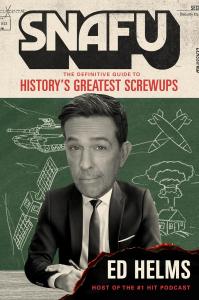
SNAFU:
The Definitive Guide to History’s Greatest Screwups (2025)
by Ed Helms
MDS–973 History of the United States
The SNAFUs in this book are not your run-of-the-mill slip-ups, like accidentally using ranch dressing as coffee creamer (in my defense, it was in a very tiny, fancy-looking carafe). No, these are the big mamas—the epic blunders that unravel like slow-motion train wrecks, except it’s like ten different trains derailing in every direction, with clueless officials insisting, “Everything’s fine!” while entire towns get leveled in the chaos. And these disasters aren’t confined to one poor soul making a bad decision—they’re massive, institution-shaking calamities that drag entire governments, corporations, and far too many innocent bystanders along for the ride. And yet, like rubberneckers at a car crash, we just have to watch. There’s something weirdly irresistible—almost primal—about witnessing a colossal screwup. That’s why I started the SNAFU podcast a few years ago (available wherever you get your podcasts—five-star reviews welcome!).
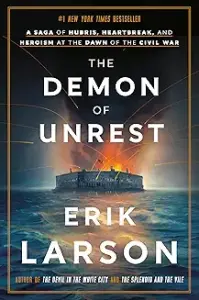
The Demon of Unrest:
A Saga of Hubris, Heartbreak, and Heroism
at the Dawn of the Civil War (2024)
MDS–973 .731 History of the United States
I was well into my research on the saga of Fort Sumter and the advent of the American Civil War when the events of January 6, 2021, took place. As I watched the Capitol assault unfold on camera, I had the eerie feeling that present and past had merged. It is unsettling that in 1861 two of the greatest moments of national dread centered on the certification of the Electoral College vote and the presidential inauguration.
I was appalled by the attack, but also riveted. I realized that the anxiety, anger, and astonishment that I felt would certainly have been experienced in 1860–1861 by vast numbers of Americans. With this in mind, I set out to try to capture the real suspense of those long-ago months when the country lurched toward catastrophe, propelled by hubris, duplicity, false honor, and an unsatisfiable craving on the part of certain key actors for personal attention and affirmation. Many voices at the time of Sumter warned of civil war, but few had an inkling of what that might truly mean, and certainly none would have believed that any such war could take the lives of 750,000 Americans.
At the heart of the story is a mystery that still confounds: How on earth did South Carolina, a primitive, scantily populated state in economic decline, become the fulcrum for America’s greatest tragedy? And even more bewildering, what malignant magic brought Americans on both sides of the Mason-Dixon Line to the point where they could actually imagine the wholesale killing of one another?
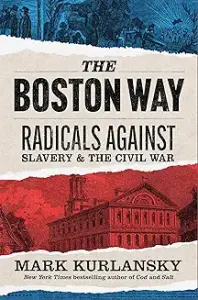
The Boston Way:
Radicals Against Slavery and the Civil War (2025)
by Mark Kurlansky MDS–973 History of the United States
Originally, to be an abolitionist, especially in New England, meant being nonviolent, or, as they liked to say, “nonresistant.” John Brown followed that path at first. He was an early organizer of the Ohio Underground Railroad, aiding the escape of refugee slaves. But he’d grown frustrated, concluding that nonresistants just talked a great deal. What was needed was action, he decided, and the more violent, the more frightening, the better.
Brown was often dismissed as a crackpot, but when he visited in 1859, the Boston abolitionists saw disturbing signs that some people, even their friends, the transcendentalists, were beginning to take him seriously. In February 1857, Ralph Waldo Emerson, a leading transcendentalist who generally opposed violence and even disliked the military, called him Captain Brown, a title only Brown had conferred on himself, and wrote that the captain had given “a good account of himself in Town Hall last night, to a meeting of citizens.”
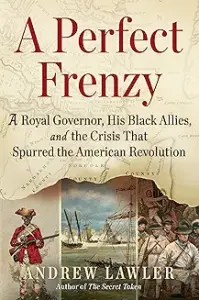
A Perfect Frenzy:
A Royal Governor, His Black Allies,
and the Crisis That Spurred the American Revolution (2025)
by Andrew Lawler –
MDS–973 United States
When I was a child, my grandparents often took me to the scene of the single biggest war crime of the American Revolution. Climbing out of their Chevrolet Impala, we strolled into the shaded churchyard of St. Paul’s in the heart of our hometown, Virginia’s port city of Norfolk. The colonial-era sanctuary, surrounded by tilted tombstones and gnarled water oaks, stood marooned in a bleak urban desert of parking lots, two-story public housing units, and austere high-rise office buildings. We never entered the church. Instead, we walked to one corner of the exterior wall and gazed up. Protruding from the red brick just beneath the eave was a black hemisphere the size of a cantaloupe. A plaque affixed below read, FIRED BY LORD DUNMORE, JAN. 1, 1776.
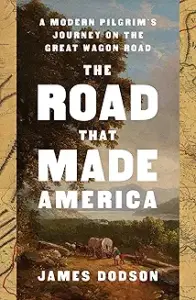
The Road That Made America:
A Modern Pilgrim’s Journey on the Great Wagon Road (2025)
by James Dodson
MDS–973 United States
IF THERE’S ANY TRUTH TO the ancient idea that a good journey begins with a single step—even one delayed many decades—perhaps it’s only fitting that a journey I’ve dreamed of making since I was knee high to a historic road marker begins with an excellent colonial beer and a surprise wedding toast.
Four fine colonial-era-inspired beers sit at my fingertips on a late-August evening, a sampling board of brews that includes Alexander Hamilton’s Federalist Ale, Thomas Jefferson Tavern Ale, George Washington’s full-bodied porter, plus a spruce beer called Poor Richard’s, made from Ben Franklin’s own house recipe. While I await delivery of my period-correct supper, savoring the thought of the long and unknown road ahead, I nibble delicious cinnamon-and-pecan biscuits from Tom Jefferson’s own Monticello recipe book and polish off all four mini-glasses of beer, promptly ordering a full pint of Franklin’s best.
Three hours after my arrival in Philadelphia, I am a party of one but hardly alone in the noisy, candlelit second-floor dining room of historic City Tavern, a place that claims to be the birthplace of American cuisine.
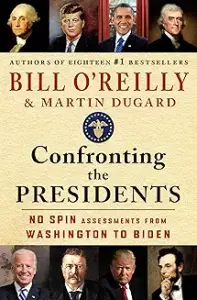
Confronting the Presidents:
No Spin Assessments from Washington to Biden (2024)
by Bill O’Reilly
MDS–973 United States
Imagine being the most powerful person in the world. All your daily needs taken care of, full-time luxury, the ability to change the lives of millions of people, for better or for worse.
There have been forty-five male presidents of the United States. One woman, Hillary Clinton, came close. But who are these people, really? The answer to that seemingly simple question is the quest of this book. And the answer is complicated because so many different circumstances are involved.
There have been bad people elected to the highest office of the land as well as noble ones. It’s sometimes difficult to make the judgment. But we, the authors, will decide based on the facts we have uncovered.
Some presidents were drunks. Some corrupt. A few outright racist. Almost all had hidden eccentricities that may startle you. All endured heartbreak.
And each president has affected you by the way they conducted themselves in office. Decisions made hundreds of years ago resonate today.
Thus, our history book series switches from the “killing” concept to the “confronting” arena. But the style is the same. No fussing around, right to the point. Different eras, strange occurrences, dubious behavior. These will be vividly chronicled as we assess the leaders who made the United States what it is today.
For better or, in more than a few cases, for worse.
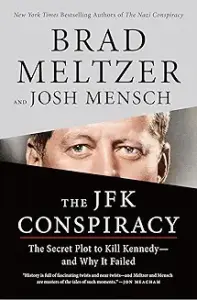
The JFK Conspiracy:
The Secret Plot to Kill Kennedy―and Why It Failed (2025)
by Brad Meltzer
MDS–973 United States
No one notices the car.
It’s been there for a while, parked on one side of a quiet residential street. The morning is bright, with the sun shining through the tall, leafy trees that line the roadside.
If anyone were to look in the car’s direction, nothing about it would seem unusual. It’s a 1950 Buick sedan—not a fancy or noteworthy vehicle. And if anyone happened to glimpse the man sitting behind the wheel, they wouldn’t think anything unusual about him either. He’s an older man, with short white hair and a wide face. His dress and appearance are typical—he looks like many other motorists in South Florida or, for that matter, anywhere else in the United States.
Across the street, President-elect John F. Kennedy takes a few steps toward the sleek black sedan parked by the side of the road. A few of the men in dark suits guide him to it. The sedan has been waiting for him, ready to drive him to somewhere most unusual for an American President: Sunday Mass. For Kennedy is, as almost every American knows, the first person of Catholic faith ever elected to the highest office.
For the man behind the wheel of the Buick, this is the moment he’s been waiting for. It’s why he’s here in South Florida: to be on this street, on this day, with seven sticks of dynamite hidden in the trunk of his car.
It’s a simple plan. Turn the key in the ignition. Put your foot on the gas. And turn the steering wheel just enough to slam the Buick into that sleek black sedan.
That’s all it’ll take to turn this quiet, leafy, sunny Florida street into a scene of horrors beyond imagining—and at this dawn of a new decade, to thrust the nation into unspeakable darkness.
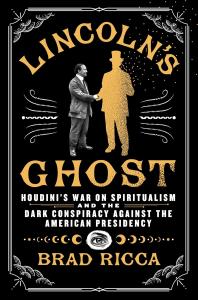
Lincoln’s Ghost:
Houdini’s War on Spiritualism and the
Dark Conspiracy Against the American Presidency (2025)
by Brad Ricca
MDS–973 United States
“What is your full name?” asked Mr. McLeod.
“My name is Harry Houdini,” the man snapped, with just a touch of an accent, most likely German, though some thought it Russian.
“What is your business?”
“I am an author; I am a psychic investigator for the scientific magazines of the world, and then I am a mysterious entertainer.”
“How long have you been a mysterious entertainer?”
“About forty years.”
Mr. McLeod leaned back. “Do you care to make a general statement? I understand you are a proponent of this bill, 8989?”
“Yes, sir,” responded Houdini.
McLeod nodded. “You may proceed to make a general statement.”
Houdini took a deep breath, almost as if he were about to be submerged in one of his underwater torture cells.
“THIS IS POSITIVELY NO ATTACK UPON A RELIGION,” Houdini said. “Please understand that.”
“This thing they call ‘Spiritualism,’” said Houdini, “wherein a medium inter-communicates with the dead, is a fraud from start to finish.” There was some grumbling from the crowd, especially from the row behind him. Those chairs were filled with plump ladies in fur hats and white-haired men who had a certain holiness to their posture.
“In thirty-five years, I have never seen one genuine medium,” said Houdini. “Millions of dollars are stolen every year in America, and the government has never paid any attention to it, because they look upon it as a religion.”
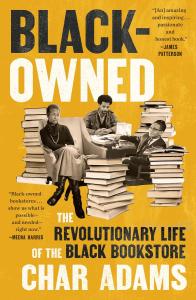
Black-Owned:
The Revolutionary Life of the Black Bookstore (2025)
by Char Adams
I love to tell people’s stories.
That’s often what I say when people ask how I came to write about Black bookstores, let alone the first full-length historical account of the businesses. And what I say is true: my career and passion as a journalist revolve around telling people’s stories, crafting compelling narratives out of people’s experiences in ways they may not have been able to themselves. It began with an article I read in The Atlantic in 2018: “The FBI’s War on Black-Owned Bookstores.” Joshua Clark Davis, a history professor at the University of Baltimore, wrote about the surveillance and espionage the FBI heaped on Black independent booksellers, or “activist entrepreneurs,” during the Black Power era. This war on Black bookstores was a reminder of the ways law enforcement worked to diminish Black literature and political movements throughout US history. My interest was piqued. When I finished the article, I couldn’t help but think about the booksellers. I was curious about their experiences. I wanted to know about their lives under FBI surveillance and what it meant to sell Black literature at such a politically turbulent time in the country. Did agents visit their stores? What books were they most excited to sell? How did Black locals react to having such overtly countercultural businesses in their communities? I had questions. So I set out to get answers.
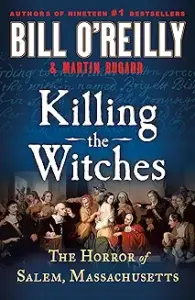
Killing the Witches:
The Horror of Salem, Massachusetts (2023)
by Bill O’Reilly
MDS–974 Northeastern United States (New England and Middle Atlantic states)
There are rumors His Majesty will be in attendance.
In fact, James is here in the Scottish capital on this bright summer morning. Wife, Anne, teenaged queen of Denmark, travels at his side. The paranoid ruler will not attend the execution and has the power to pardon his subject.
But James is determined to rid his kingdom of Satan’s spell.
So Effie MacCalzean must burn.
The time has come. Her jailer approaches. Effie stands. She is barefoot. Her eyes blaze with fear. The condemned woman is led to the cart that will take her the short, steep distance up Castle Hill. Effie does not resist. Her executioner says nothing. If he is afraid the Devil will make him pay for ending Effie’s life, he does not show it.
The journey to the stake begins.
The crowd is close, clamoring for the moment when smoke will rise, followed quickly by flames. Then the screaming. The audience can’t wait. Many have never witnessed something like this. In most Scottish witch executions, the victim is tied to the stake, then strangled to death. After which the fire is lighted. It is believed a witch’s dead body will continue to cast spells unless destroyed by flames.
But Effie MacCalzean will not receive that mercy. She will be burned alive.
980 History of South America
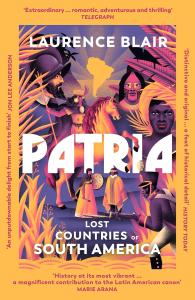
Patria: A spellbinding history of South America,
as heard on hit podcast The Rest Is History (2024)
by Laurence Blair
MDS–980 History of South America
Paraguay is the perfect transit country. Not only because of its geography: long, unguarded borders, rivers flowing down to ports in Uruguay and Argentina. The state is weak and permeable; in South American rankings, only Venezuela is more corrupt.1 SENAD agents are routinely accused of collusion with narcos. They rely on hand-me-down helicopters that saw service against the Vietcong.2 The country has no radar coverage of its north to detect planes landing at clandestine cocaine labs; its customs officials have few scanners to check containers. One in four people lives in poverty. They have little to lose by working as drug mules or growers.
Meanwhile, Paraguay’s crammed jails are ideal recruiting grounds for the cartels. Their commanders live it up in ‘VIP cells’ with sex workers on call, and regularly tunnel to freedom – or simply walk out the front door. A full legalisation of marijuana, at least, could undercut the gangs and provide poor campesinos with an honest living. But Paraguay is probably too conservative. Ninety per cent of the population is Catholic: a statistic only rivalled by San Marino, East Timor and the Vatican.
990 History of other areas
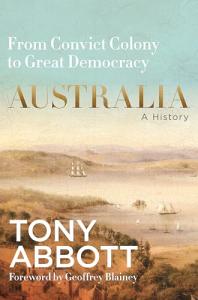
Australia: A history (2025)
by former Prime Minister Tony Abbott with a foreword by Geoffrey Blainey,
now a major documentary on Sky News Australia
by Tony Abbott
MDS–994 Australia
When modern Australia began in 1788, it didn’t emerge in a vacuum. Modern Australia involved the collision of two worlds: the ancient Aboriginal one and the modern British one. Over time, they would blend into what has become, arguably, the world’s most successful immigrant nation.
In 1788, the modern world erupted into an ancient continent that had been substantially undisturbed for over 10,000 years – since the seas had risen after the last ice age, broken the land bridge from Southeast Asia and separated Tasmania from the mainland. Some 50,000 years before that, the first discoverers and pioneers had walked and paddled from the Asian landmass, through what’s now Papua New Guinea (PNG) to northern Australia and thence throughout the continent, which they’d proceeded to occupy for many hundreds of generations. Since long before the beginning of recorded history, other than a bit of canoe traffic around northern Queensland and some trepang trading with Indonesian fishermen, the Aboriginal people of Australia, and the Aboriginal people of Tasmania, were entirely isolated from the changes slowly taking place elsewhere in the world.











 Ad-Free & Subscriber Log-In