

Did You Know?
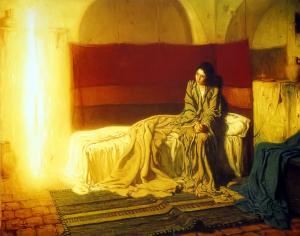
Did You Also Know?
men He sought out the simple-hearted: among the simple-
hearted He sought out children. Simpler than children,
and milder, the beasts of burden welcomed Him.
– Giovanni Papini ,Life of Christ
Theology
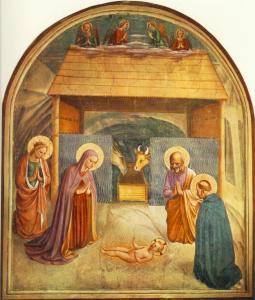
What is theology? What is our role as theologians? How can theology be done well? We have heard that our Lord praises the Father because he concealed the great mystery of the Son the Trinitarian mystery, the Christological mystery from the wise and the learned, from those who did not recognize him. Instead he revealed it to children, the nèpioi, to those who are not learned, who are not very cultured. It was to them that this great mystery was revealed. Pope BenedictXVI December 1 2009:Holy Mass with the Members of the International Theological Commission

Santa Claus
The gratuitous nature of goodness is the message of Santa Claus – that we are here through no merit of our own and live lives filled with breathtaking beauty and undeserved blessings. These things are true, even if there are no such things as flying reindeer to deliver them by sleigh, or a workshop full of elves somewhere above the arctic circle busily crafting them for our enjoyment. The truth is, there are better things even than these – nine choirs of flying angels bearing God’s gifts, and an eternal kingdom full of saints drawn from the lowliest places of the earth, praying for our salvation somewhere above the heavens.
Steve Skojec The Ethics of Jolly Old Elfland (November 30, 2018)

The Shepherds
From the Angels who sang we pass to the Shepherds who heard their heavenly songs, a simple audience, yet such as does not ill assort with a divine election. Simplicity comes very near to God, because boldness is one of its most congenial graces. How beautifully too is Our Lord’s attraction to the lowly represented in the call of these rough, childlike, pastoral men! Outside the Cave, He calls the Shepherds first of all. They are men who have lived in the habits of the meek creatures they tend, until their inward life has caught habits of a kindred sort.’
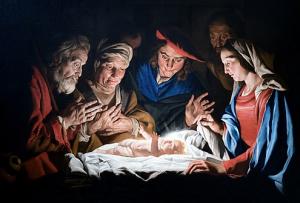
They lie out at night on the cold mountain-side, or in the chill blue mist of the valley. They hear the winds moan over the earth, and the rude rains beat them during the sleepless night. The face of the moon has become familiar to them, and the silent stars mingle more with their thoughts than they themselves suspect. They are poor and hardy, nursed in solitude and on scant living, dwellers out of doors and not in the bright cheer of domestic homes. Such are the men the Babe calls first; and they come as their sheep would come to their own call. Bethlehem, by Father Frederick William Faber
Cave of Bethlehem
The calendar year draws onward to its end even as we Christians find ourselves already living the new liturgical year. Time is not the same in the City of God as it is in the city of man. We below, angelically aided, strive after Christ, who holds the secret of time and eternity and draws us to Himself, to His eternal vantage point.
In Him, the light of seven suns becomes one. The single great Christmas feast comprises twelve days. The dawn from on high approaches. Even so, in being called aloft with Christ, we find ourselves now drawn down, down into the cooling earth, down into the cave at Bethlehem, into the warmth of beasts’ breath and virginal birth.
–Daniel Fitzpatrick, The Cave, the Phone, and Christmas – Crisis Magazine
The Mystery of a Place Called Nazareth
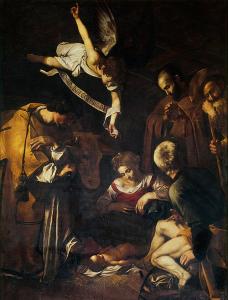
The vision of God is rarely revealed through grand monuments, signs in the clouds, or miraculous visions, but through subtle threads that run through the fabric of civilization. The Lutheran theologian Dietrich Bonhoeffer reminds us, “a God that could be known would become an idol.” This reality can easily be forgotten in our image conscious world. However, nowhere is this more clearly seen than in Nazareth itself. By all accounts, it appears to have been an entirely unremarkable Galilean village, scarcely worth mentioning. Yet, it became the home of the greatest mystery in human history: the Incarnation.
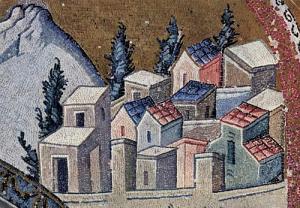
The divine presence dwelt in an unnoticed and provincial backwater, sanctifying the ordinary world by inhabiting it. The obscurity of Nazareth is not accidental, but essential. It reveals something of the nature of God. The God of Israel does not compete with the self-congratulatory grandeur of empires or the spectacles of the political world. Instead, He is found in what the world calls insignificant — in the livery stable, the workshop, and the peasant home in the frontier of empire. –D.P. Curtin – The Mystery of a Place Called Nazareth – Where Peter Is




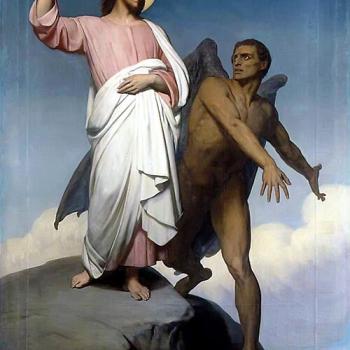
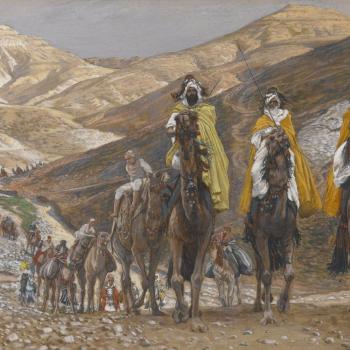
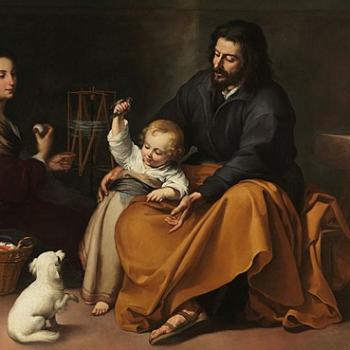







 Ad-Free & Subscriber Log-In