

The Manner of the Receiver
I find it interesting that two people can look at the same data and come to two absolutely different conclusions about the same thing. But yet at the same time they can also find some commonality about the same thing. This is especially true with the different conclusions about God. How people come to believe in God is always a mystery.
Pope Paul recalled a Scholastic axiom that captures the importance, as well as the difficulty, of knowing one’s audience: Whatever is received, is received in the manner of the receiver (Quidquid recipitur ad modum recipientis recipitur). This axiom stems from the observation that whatever is communicated to another will only be received by that other insofar as he or she is open or disposed to the message. Just try talking to a foreigner, an infant, or a pet and you’ll experience the truth of the axiom. In addition to the more obvious instances, the axiom is also evident when a conversation is attempted amid generational, social, ethnic, economical, political, cultural, religious or sexual differences.
Not only do there exist the more obvious hurdles of foreign languages and idioms, but there also exist certain conditions, presuppositions, and even prejudices that one encounters when communicating or hearing the Word of God, and these can act as barriers to this truth.
–Timothy Herrman –Quidquid Recipitur … (Whatever is received …) — FAITH & CULTURE
Ehraman and Graham
Bible scholar Bart Ehrman was a Christian at one point but eventually became an atheist. But he always retained a love and appreciation for the beauty of the bible.
I have no trouble with people who find rich meaning in the words of the Bible, just as I have no trouble with people who find rich meaning in the words of Euripides, Marcus Aurelius, Seneca, Lucretius, Chaucer, Milton, Shakespeare, Dickens, Eliot, and John Irving, for God’s sake. Literature, in my view, can be enlightening and ennobling. I myself revel in the words found in all these authors, including the ones who wrote books that eventually came to be considered the Bible, not because they are the inspired word of God, but because they make me think and reflect on life and realize that there is more to my existence than the mere fact of my existence. These writers make me thoughtful, self reflective, concerned about the universe I live in, eager to help those in need and to work to make this world a better place for both myself and especially for others.
–Finding Value in Writings You Don’t “Believe” In (In response to my Newsweek article on Christmas)
Evangelist Billy Graham also finds beauty and truth in the bible but has come to the conclusion that it is the word of God.
The Bible was written by 40 writers, over a period of 1,600 years, in 66 books. And the great theme from one end of the Bible to the other is redemption—God’s love for the human race and God redeeming man and bringing man back to Himself after man had rebelled against God. That’s what the Bible is all about.
Down through the years it’s been ridiculed, burned, refuted, destroyed, but it lives on. It is the anvil that has worn out many hammers. Most books are born, live a few short years, then go the way of all the earth; they’re forgotten. But not the Bible. The Bible is preserved. It lives on.
Why I believe the Bible is the Word of God – The Billy Graham Evangelistic Association of Canada
Someone can look at the truth, goodness and beauty of faith and appreciate it, but never cross over into faith. Two different people with backgrounds in faith can come to appreciate similar aspects of the same faith but come to ultimate different conclusions.
Roger Ebert and Raiders
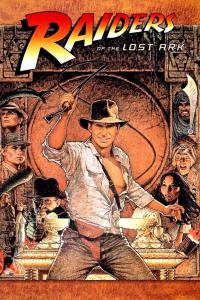
Roger Ebert was one of the most influential film critics of all time. When you wanted to know an opinion about a film, he was the guy you read or watched on TV. For example, he had this to say about Steven Spielberg’s 1981 masterpiece of action and adventure ‘Raiders of the Lost Ark’.
Steven Spielberg’s “Raiders of the Lost Ark” plays like an anthology of the best parts from all the Saturday matinee serials ever made. I think; it contains the kind of stuff teenage boys like, and it also perhaps contains the daydreams of a young Jewish kid who imagines blowing up Nazis real good.
Consider. The plot hinges on Hitler’s desire to recapture the long-lost ark. “Hitler’s a nut on the subject,” Indiana Jones (Harrison Ford) is told by a government recruiter. “Crazy. He’s obsessed with the occult.” But not just anything occult. The ark, if found, would be the most precious Jewish artifact imaginable — the chest that held the Ten Commandments that God gave Moses on the mountain top. “An army which carries the ark before it is invincible,” Indy says; Hitler wants to steal the heritage of the Jews and use it for his own victory. –Raiders of the Lost Ark movie review (1981) | Roger Ebert
Deacon Steve and Raiders
In the secular world at large, Roger Ebert stands large and in charge when it comes to opinions about movies. In the Catholic world Deacon Steven D. Greydanus reigns as the man to consult about film and how a devout Catholic might think about it. He had this to say about the same film.
While it offers lovingly elaborate homage to the swashbuckling serials of the past, Raiders of the Lost Ark transcends them as absolutely as Star Wars transcends the exploits of Buck Rogers and Flash Gordon.
What this story offers is the ultimate antisemitic villains getting blown up by the Jewish God, for daring to desecrate a Hebrew sacred artifact. The 20th-century persecutors of the Jews are undone by the same numinous power that destroyed the firstborn of the Hebrews’ Egyptian slave-masters, that smote the Philistines when they captured the ark in 1 Samuel 4–6. (Compare the holy fire from the ark with the similarly ethereal heavenly destroyer of Egypt’s firstborn in DreamWorks’ much later The Prince of Egypt. Compare, too, the foreshadowing of the shot in which the Nazi swastika is burned off the crate holding the ark with the biblical story of the statue of Dagon falls on its face before the ark in the Philistine temple: In the presence of the ark, heathen images are thrown down.)
–Raiders of the Lost Ark (1981) – Decent Films
In Deacon Steve’s essay he references Ebert and pays him respect for his earlier review of the same movie.
Spielberg’s Jewish Faith
Both men viewed the same film (Raiders) and found the quality of film making good. Both men’s viewpoints were influenced by their Catholic upbringing as Spielberg’s was influenced by his Jewish upbringing.
People go to the movies for a lot of reasons: entertainment, escapism, a need to see ourselves reflected on the big screen, and a desire for language to express the things we don’t know how to say. Whether you love them or hate them, Spielberg’s movies fulfill all of those needs.
His most critically acclaimed films don’t shy away from exploring heavy topics. They are specific, detailed and personal. They stare head-on at all the things that make him who he is — the alienation, shame, and pain of being an outsider — all of which are directly bound up in his Jewish identity.
Like Judaism, his films also celebrate how beautiful and complicated life can be. They balance trauma with hope and pain with love. Whether he’s writing about sharks or aliens or animated mice, he’s got the secret sauce: curiosity. Above all, he commits to asking the tough questions, which is the most Jewish trait of all. Are all of Steven Spielberg’s films Jewish? – Unpacked
Ebert’s Influence
It would be an understatement to say that Ebert influenced Deacon Steve in his writings.
It’s true but trivial to say that Ebert was an enormous influence on me and my work; the same is true of practically my whole generation of critics. I will say this: I was interested in writing long before I was interested in writing film criticism, and Ebert the writer has influenced me as much as, or more than, Ebert the critic.
The traces of Ebert’s Catholic heritage in his film writing were one thing I loved about his work. For viewers who suffered through some of the more misguided iterations of Hollywood Catholicism, his reviews could be downright cathartic. I try to do something similar in my work, in a more systematic and integral way, of course. The Catholic Film Critic: 18 Questions for Steven Greydanus | America Magazine
Ebert’s Faith Experience
Ebert was raised Catholic.
The nuns at St. Mary’s were Dominicans They lived in a small square convent behind the school, holding six nuns (some taught two grades) and a cook and their housekeeping nun, who kept a sharp eye trained on us through her screen door. It was from these nuns, especially Sister Nathan and Sister Rosanne, that I learned my core moral and political principles. I assumed they were Roman Catholic dogma. Many of them involved a Social Contract between God and man, which represented classical liberalism based on empathy and economic fairness.
Through a mental process that has by now become almost instinctive, those nuns guided me into supporting Universal Health Care, the rightness of labor unions, fair taxation, prudence in warfare, kindness in peacetime, help for the hungry and homeless, and equal opportunity for the races and genders. It continues to surprise me that many who consider themselves religious seem to tilt away from me.
–How I am a Roman Catholic | Roger Ebert | Roger Ebert
The influence of his Catholic upbringing seeped into his moral foundations but never produced a living faith in God.
Catholicism made me a humanist before I knew the word. When people rail against “secular humanism,” I want to ask them if humanism itself would be okay with them. Over the high school years, my belief in the likelihood of a God continued to lessen. I kept this to myself. I never discussed it with my parents. My father in any event was a non-practicing Lutheran, until a death bed conversion which rather disappointed me. I’m sure he agreed to it for my mother’s sake.
Did I start calling myself an agnostic or an atheist? No, and I still don’t. I avoid that because I don’t want to provide a category for people to apply to me. I would not want my convictions reduced to a word. Chaz, who has a firm faith, leaves me to my beliefs. “But you know you’re one or the other,” she says. “I have never told you that,” I say. “Maybe not in so many words, but you are,” she says.
But I persist in believing I am not. During in all the endless discussions on several threads of this blog about evolution, intelligent design, God and the afterworld, now numbering altogether around 3,500 comments, I have never said, although readers have freely informed me I am an atheist, an agnostic, or at the very least a secular humanist–which I am. If I were to say I don’t believe God exists, that wouldn’t mean I believe God doesn’t exist. Nor does it mean I don’t know, which implies that I could know.
I’ve spent hours and hours in churches all over the world. I sit in them not to pray, but to gently nudge my thoughts toward wonder and awe. I am aware of the generations there before me. The reassurance of tradition. At a midnight mass on Christmas Eve at the village church in Tring in the Chilterns, I felt unalloyed elevation.
-How I believe in God-– Roger Ebert’s Journal: Archives
Deacon Steve’s Faith Experience
Deacon Steve grew up with a Dutch Reformed background and had anti-Catholic prejudices and yet he ended up converting to Catholicism. Like Roger his faith was a big part of his upbringing and also like Roger he loved movies. His faith and love of film led him to start a website (www.decentfilm.com) write movie reviews from a Catholic perspective. His faith stirred him to the point he became a permanent deacon. Both Roger and Steve were raised in a Christian environment. Both were influenced heavily by Catholicism. Both men love film and has applied the Catholic worldview in their reviews. But while Ebert’s religious influence did not result in explicit faith in God, Deacon Steve’s has.
The biggest question of all, as I see it, is “God, or nothing?” Another way to put it is “Meaning and moral truth, or moral nihilism?” I’m aware of various approaches to moral thinking by atheists, like Sam Harris’s The Moral Landscape. I’m unconvinced. My answer to this question—God, not nothing—is my fundamental starting point in thinking about questions of religion and truth.
- Goodness exists. It is real. Judgments of good and evil are statements about reality. Truth and beauty exist. Life is meaningful. Every person matters. Our existence, our actions, how we treat each other—these things really and truly matter.
- God exists. The good, the true, and the beautiful are rays of God, of ultimate reality or absolute being. It is because God exists that our existence and our actions matter.
- I love and trust God. Only love and trust will do for God; not to love and trust God is like, or actually is, preferring evil to good, lies to truth, and ugliness to beauty.
A religious epistemic hierarchy: What I believe in 18 theses, ranked
Two people can look at the same data and both can appreciate similar aspects of it and yet come to two different conclusions at the end. One comes to explicit faith and the other lives in a limbo of not knowing what to believe but yet presses on with the little light that they have.
Yet, despite his loss of faith, Ebert’s continued identification with his Catholic heritage, and the moral outlook it instilled in him, were touchstones of his warm humanism, in the best sense of that word. How Ebert thought of the Catholic faith: He couldn’t believe it any more himself, but he was somehow pleased that it endured, and that other people continued to believe it. I’d like to think my own writing, when and where he ran across it, gave him this pleasure.
I believe that he has not gone away, not as absolutely as he thought. I believe he is still “present,” somewhere … and I’m confident that he wouldn’t have begrudged me this belief even in his last moments on earth. (Perhaps — who knows? — he may even be able to read this essay after all.) I have no brief for his current condition. But I pray for him, with warmth, gratitude and hope, in the Latin he loved as a boy:
Requiem Aeternam dona eis, Domine, et lux perpetuae luceat eis. Requiescant in pace.
In Conclusion
To the person who has the eyes of faith, they can find the truth, beauty and goodness everywhere and in anything and in anybody. Deacon Steve found that in Roger Ebert while not neglecting or forgetting the parts that were not godly or did not fit in with authentic Catholic faith. But his focus and emphasis were on what they shared in common and what was there, not what was not there. When you focus on what good is there, you can see God alive and well and then you can hope that He will spread the rest of his spirt on the parts that are lacking Him.
It is still a mystery to me why someone can look at the same data as someone else and come to different conclusions. It is with certainty that faith is a gift and that God loves everyone and wants everyone to have it. How that happens is beyond my grasp and those people like myself are in God’s hands. It is best to remember that faith is a gift and you don’t get it by being super clever or good. It has been gifted to you. This means you should always treat others with respect hoping those without faith God will grant it to them and realizing that if God didn’t grant it to you, you would be in the same boat as the non-believer. So treat those with no faith with charity and kindness. God’s goodness cans still be seen regardless of your faith meaning God is always present even behind the cloud of doubt.














 Ad-Free & Subscriber Log-In