

A century ago on December 11, 1925 Pope Pius XI‘s released an encyclical called Quas primas, on the Feast of Christ the King which promulgated the feast.
Quas Primas (December 11, 1925)
7. It has long been a common custom to give to Christ the metaphorical title of “King,” because of the high degree of perfection whereby he excels all creatures. So he is said to reign “in the hearts of men,” both by reason of the keenness of his intellect and the extent of his knowledge, and also because he is very truth, and it is from him that truth must be obediently received by all mankind. He reigns, too, in the wills of men, for in him the human will was perfectly and entirely obedient to the Holy Will of God, and further by his grace and inspiration he so subjects our free-will as to incite us to the most noble endeavors.
He is King of hearts, too, by reason of his “charity which exceedeth all knowledge.” And his mercy and kindness which draw all men to him, for never has it been known, nor will it ever be, that man be loved so much and so universally as Jesus Christ. But if we ponder this matter more deeply, we cannot but see that the title and the power of King belongs to Christ as man in the strict and proper sense too. For it is only as man that he may be said to have received from the Father “power and glory and a kingdom,” since the Word of God, as consubstantial with the Father, has all things in common with him, and therefore has necessarily supreme and absolute dominion over all things created.
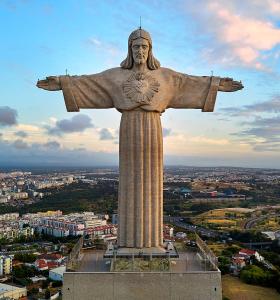
8. Do we not read throughout the Scriptures that Christ is the King? He it is that shall come out of Jacob to rule, who has been set by the Father as king over Sion, his holy mount, and shall have the Gentiles for his inheritance, and the utmost parts of the earth for his possession. In the nuptial hymn, where the future King of Israel is hailed as a most rich and powerful monarch, we read: “Thy throne, O God, is for ever and ever; the scepter of thy kingdom is a scepter of righteousness.” There are many similar passages, but there is one in which Christ is even more clearly indicated. Here it is foretold that his kingdom will have no limits, and will be enriched with justice and peace: “in his days shall justice spring up, and abundance of peace…And he shall rule from sea to sea, and from the river unto the ends of the earth.”
33. The faithful, moreover, by meditating upon these truths, will gain much strength and courage, enabling them to form their lives after the true Christian ideal. If to Christ our Lord is given all power in heaven and on earth; if all men, purchased by his precious blood, are by a new right subjected to his dominion; if this power embraces all men, it must be clear that not one of our faculties is exempt from his empire. He must reign in our minds, which should assent with perfect submission and firm belief to revealed truths and to the doctrines of Christ. He must reign in our wills, which should obey the laws and precepts of God.
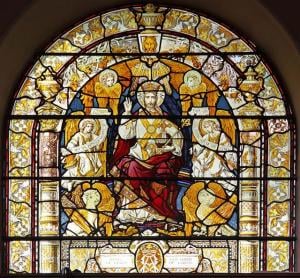
He must reign in our hearts, which should spurn natural desires and love God above all things, and cleave to him alone. He must reign in our bodies and in our members, which should serve as instruments for the interior sanctification of our souls, or to use the words of the Apostle Paul, as instruments of justice unto God.[35] If all these truths are presented to the faithful for their consideration, they will prove a powerful incentive to perfection. It is Our fervent desire, Venerable Brethren, that those who are without the fold may seek after and accept the sweet yoke of Christ, and that we, who by the mercy of God are of the household of the faith, may bear that yoke, not as a burden but with joy, with love, with devotion; that having lived our lives in accordance with the laws of God’s kingdom, we may receive full measure of good fruit, and counted by Christ good and faithful servants, we may be rendered partakers of eternal bliss and glory with him in his heavenly kingdom.
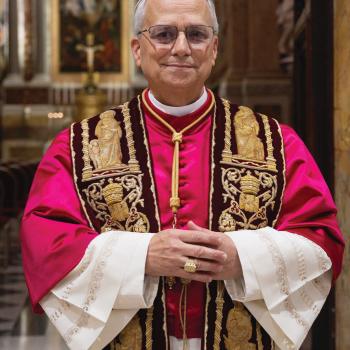
A century later Pope XVI continued the tradition of celebrating Christ the King.
Solemnity of Our Lord Jesus Christ, King of the Universe
– Holy Mass (November 23, 2025)
In the responsorial Psalm, we have sung, “Let us go rejoicing to the house of the Lord” (cf. Ps 122). Today’s liturgy invites us, therefore, to walk together in praise and joy towards the encounter with the Lord Jesus Christ, King of the Universe, gentle and humble Sovereign, the One who is the beginning and end of all things. His power is love, his throne the Cross, and through the Cross his Kingdom shines forth upon the world. “From the wood he reigns” (cf. Hymn Vexilla Regis) as Prince of Peace and King of Justice who, in his Passion, reveals to the world the immense mercy of God’s heart. This love is also the inspiration and motive for your singing.
Dear choristers and musicians, today you celebrate your jubilee and you show thanks to the Lord for granting you the gift and grace to serve him by offering your voices and talents for his glory and for the spiritual edification of your brothers and sisters (cf. Constitution on the Sacred Liturgy Sacrosanctum Concilium, 120). Your task is to draw others into the praise of God and to help them to participate more fully in the liturgy through song. Today, you fully express your “iubilum,” your exultation, which flows from hearts overflowing with the joy of grace.
Great civilizations have given us the gift of music in order to express what we carry deep in our hearts and what words cannot always convey. Music can give expression to the whole range of feelings and emotions that arise within us from a living relationship with reality. Singing, in particular, constitutes a natural and refined expression of the human being: mind, feelings, body and soul come together to communicate the great events of life. As Saint Augustine reminded us: “Cantare amantis est” (cf. Sermo 336,1), that is, “singing belongs to those who love.” Those who sing give expression to love, but also to the pain, tenderness and desire that dwell in their hearts, while at the same time, loving those to whom they address their song (cf. Enarrationes in Psalmos, 72,1).








 Ad-Free & Subscriber Log-In