

Easter 2026 Begins
Here are what some popes have said on Easter Sunday
Things you can reflect and meditate on.
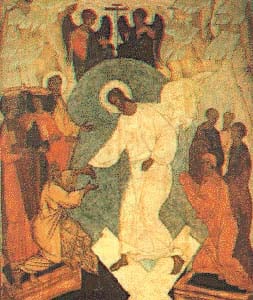
St John Paul 2
The word “death” sticks in one’s throat. Although humanity has, during so many generations, become accustomed in a way to the reality of death and to its inevitability, it is, however, something overwhelming every time.
Christ’s death had entered deeply the hearts of those closest to him, and the consciousness of the whole of Jerusalem. The silence that followed it filled the Friday evening and the whole of the following Saturday. On this day, in accordance with Jewish regulations, no one had gone to the place of his burial. The three women, of whom today’s Gospel speaks, well remember the heavy stone with which the entrance to the sepulchre had been closed. This stone, of which they were thinking and about which they would speak the next day on their way to the sepulchre, also symbolizes the weight that had crushed their hearts. The stone that had separated the Dead One from the living, the stone that marked the limit of life, the weight of death. The women, who go to the sepulchre in the early morning of the day after the Sabbath, will not speak of death, but of the stone.
When they arrive at the spot, they will see that the stone no longer blocks the entrance to the sepulchre. It has been rolled back. They will not find Jesus in the sepulchre. They looked for him in vain! “He is not here; for he has risen, as he said” (Mt 28:6). They are to go back to the city and announce to the disciples that he has risen again and that they will see him in Galilee. The women are not able to utter a word. The news of death is spoken in a low voice. The words of the resurrection were even difficult for them to grasp. Difficult to repeat, so much has the reality of death influenced man’s thought and heart.
Since that night and even more so since that morning which followed it, Christ’s disciples have learned to utter the word “resurrection”. And it has become the most important word, the central word, the fundamental word in their language. Everything takes its origin again from it. Everything is confirmed and is constructed again: “The stone which the builders rejected has become the chief cornerstone. This is the Lord’s doing; it is marvellous in our eyes. This is the day which the Lord has made: let us rejoice and be glad in it” (Psalm 117 (118): 22-24). – 14 April 1979, Easter Vigil
Benedict XVI
“You seek Jesus of Nazareth, who was crucified. He has risen, he is not here” (Mk 16:6). With these words, God’s messenger, robed in light, spoke to the women who were looking for the body of Jesus in the tomb. But the Evangelist says the same thing to us on this holy night: Jesus is not a character from the past. He lives, and he walks before us as one who is alive, he calls us to follow him, the living one, and in this way to discover for ourselves too the path of life.
“He has risen, he is not here.” When Jesus spoke for the first time to the disciples about the Cross and the Resurrection, as they were coming down from the Mount of the Transfiguration, they questioned what “rising from the dead” meant (Mk 9:10). At Easter we rejoice because Christ did not remain in the tomb, his body did not see corruption; he belongs to the world of the living, not to the world of the dead; we rejoice because he is the Alpha and also the Omega, as we proclaim in the rite of the Paschal Candle; he lives not only yesterday, but today and for eternity (cf. Heb 13:8).
This is the joy of the Easter Vigil. The Resurrection is not a thing of the past, the Resurrection has reached us and seized us. We grasp hold of it, we grasp hold of the risen Lord, and we know that he holds us firmly even when our hands grow weak. We grasp hold of his hand, and thus we also hold on to one another’s hands, and we become one single subject, not just one thing. I, but no longer I: this is the formula of Christian life rooted in Baptism, the formula of the Resurrection within time. I, but no longer I: if we live in this way, we transform the world. It is a formula contrary to all ideologies of violence, it is a programme opposed to corruption and to the desire for power and possession.
Thus we can sing full of joy, together with the Church, in the words of the Exsultet: “Sing, choirs of angels . . . rejoice, O earth!” The Resurrection is a cosmic event, which includes heaven and earth and links them together. In the words of the Exsultet once again, we can proclaim: “Christ . . . who came back from the dead and shed his peaceful light on all mankind, your Son who lives and reigns for ever and ever”. Amen! – 15 April 2006: Easter Vigil in the Holy Night
Francis
After the death of the Master, the disciples had scattered; their faith had been utterly shaken, everything seemed over, all their certainties had crumbled and their hopes had died. But now that message of the women, incredible as it was, came to them like a ray of light in the darkness. The news spread: Jesus is risen as he said. And then there was his command to go toGalilee; the women had heard it twice, first from the angel and then from Jesus himself: “Let them go to Galilee; there they will see me”. “Do not fear” and “go to Galilee”.
Galilee is the place where they were first called, where everything began! To return there, to return to the place where they were originally called. Jesus had walked along the shores of the lake as the fishermen were casting their nets. He had called them, and they left everything and followed him (cf. Mt 4:18-22).
To return to Galilee means to re-read everything on the basis of the cross and its victory, fearlessly: “do not be afraid”. To re-read everything – Jesus’ preaching, his miracles, the new community, the excitement and the defections, even the betrayal – to re-read everything starting from the end, which is a new beginning, from this supreme act of love.
For each of us, too, there is a “Galilee” at the origin of our journey with Jesus. “To go to Galilee” means something beautiful, it means rediscovering our baptism as a living fountainhead, drawing new energy from the sources of our faith and our Christian experience. To return to Galilee means above all to return to that blazing light with which God’s grace touched me at the start of the journey. From that flame I can light a fire for today and every day, and bring heat and light to my brothers and sisters. That flame ignites a humble joy, a joy which sorrow and distress cannot dismay, a good, gentle joy. – 19 April 2014: Easter Vigil
Leo XIV
“This holy night […] it expels hatred, it brings harmony, it bends the powerful” (Easter Proclamation).
Thus, dear brothers and sisters, at the beginning of this celebration, the deacon praised the light of the Risen Christ, symbolized in the Paschal Candle. From this one candle we have all kindled our lights, and each carrying a small flame taken from the same fire, we have illuminated this great basilica. It is the sign of the Easter light, which unites us in the Church as lamps for the world. To the deacon’s announcement we have responded “amen”, affirming our commitment to embrace this mission, and shortly we will repeat our “yes” by renewing the baptismal promises.
Dear Brothers, this is a Vigil full of light, the oldest in the Christian tradition, called “mother of all vigils”. In it we relive the memorial of the victory of the Lord of life over death and hell. We do so after having recovered, in the last days, as in a single great celebration, the mysteries of the Passion of the God made for us “a man of sorrows” (Is 53:3), “despised and rejected by men” (ibid.), tortured and crucified.
Is there a greater charity, a more total gratuitousness? The Risen One is the same Creator of the universe who, just as at the dawn of history gave us existence from nothing, so also on the Cross, in order to show us his boundless love, he gave us life.
Sisters and brothers, there is no lack of tombs to be opened in our day, and often the stones that close them are so heavy and so well guarded that they seem immovable. Some oppress the human heart, such as mistrust, fear, selfishness and resentment; others, as a consequence of the former, break the bonds between us, such as war, injustice and isolation between peoples and nations. Let’s not let them paralyze us! Many men and women, down the centuries, with God’s help, have removed them, perhaps with great effort, sometimes at the cost of their lives, but with good fruits from which we still benefit today. They are not unattainable characters, but people like us who, strengthened by the grace of the Risen One, in charity and truth, had the courage to speak, as the Apostle Peter says, with “the words of God” (1 Pt 4:11) and to act “as one who receives this power from God, so that God may be glorified in all things” (ibid.).
Easter Sunday “Resurrection of the Lord” – Easter Vigil on Holy Night (April 4, 2026)







 Ad-Free & Subscriber Log-In