


This went up yesterday on the website of the Interpreter Foundation: “The Interpreter Foundation Podcast — August 21, 2025: Wresting the Scriptures.”
For the 21 August 2025 episode of the Interpreter Foundation Podcast, Bruce Webster, Kris Frederickson, and Martin Tanner discussed the wresting of the scriptures by critics.
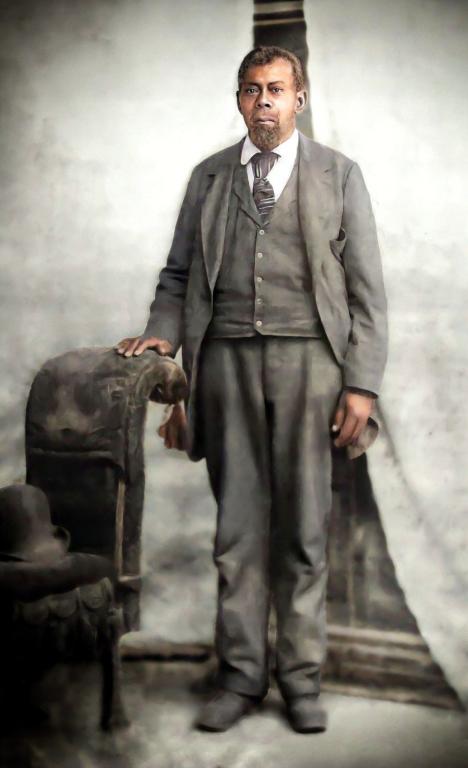
I continue to draw ignorant (and, thus, poorly aimed) fire from certain quarters regarding the position that I took in a recent FAIR presentation and a recent Meridian Magazine article on the subject of Brigham Young and slavery. Just this morning, for instance, a critic writes that he “imagines” that, if someone like me had told the black Latter-day Saint pioneer Green Flake (1828-1903) that Brigham Young was opposed to slavery, Brother Flake would have been, umm, a bit skeptical of the claim.
This, though, is a wonderful example of where actually knowing something about the topic might have helped the critic. (“It isn’t what we don’t know that gives us trouble,” said Will Rogers. “It’s what we know that ain’t so.”). For “imagination” is the operative word in the critic’s claim.
Green Flake was born enslaved on the Jordan Flake Plantation in North Carolina. His enslavers eventually joined the Church of Jesus Christ of Latter-day Saints and he did, as well. He was baptized on 7 April 1844, and he and his enslavers moved to Nauvoo in 1845.
Like Brigham Young, Green Flake was a member of the vanguard pioneer company that established the settlement at Winter Quarters, Nebraska, and that then went on to arrive in the Valley of the Great Salt Lake in July 1847. (He had been dispatched by his enslavers to go ahead and prepare a house for them.) Soon after their arrival, Brigham reputedly turned to Brother Flake and told him that he was just as free as every other member of the company.
Many Latter-day Saints were re-baptized when they reached the Salt Lake Valley, in order to show their commitment to their faith in this new place. Green Flake was among them: He was re-baptized on 8 August 1847 by Tarleton Lewis and was confirmed later that same day by Elder Wilford Woodruff of the Quorum of the Twelve Apostles.
What happened thereafter is not altogether clear, but what is apparent from the historical record is the fact that the widowed Agnes Flake, who had gone down to the new Latter-day Saint settlement at San Bernardino in California, wrote to Brigham Young, asking him to send Green Flake to her so that she could sell him there, and that Brigham refused to do so. Brigham rented Green Flake’s labor for a year and then, having set him up with a farm in Union, Utah, officially freed him somewhere between 1852 and 1854. One account says that, after their marriage, Green and Martha Flake continued to supply produce to her former enslavers as the price of her freedom — until Brigham Young, hearing of their continued payments, told them to stop: “You owe them nothing,” he reportedly told Green and Martha. The 1860 census lists Green, Martha, and their two children as free residents of Union, Salt Lake County. (The nineteenth-century Union settlement is divided today between modern Midvale, Cottonwood Heights, and Sandy.) According to some sources, when Brigham Young died in 1877, Green Flake insisted — out of affection and respect — on being the one to dig President Young’s grave.
As one of the original 1847 pioneer company, Green Flake was a revered member of the Latter-day Saint community in Utah and Idaho for over half a century and often spoke at Pioneer Day celebrations. Among his descendants was Lucille Bankhead, a civil rights activist in Utah and the first Relief Society president of the Genesis Group.
Incidentally, while I’m once again on the topic of Brigham Young: My wife and I had a Zoom meeting today with Mark Goodman, James Jordan, and Russell Richins about the production schedule for our forthcoming series of short Becoming Brigham video-documentaries. We have filmed about thirty of them, thus far, but post-production is (of course and pretty much by definition) lagging behind. Only about eight are currently complete. Our initial goal was to do fifty-two of them and to release them on a weekly basis. We’re acquiring such good material, though — notably in excellent interviews with fine scholars — that the eventual number of episodes may increase substantially. Anyway, we’ve determined to aim at launching our weekly releases at the beginning of 2026.
I’m excited about this project. More and more so, in fact, as it proceeds. I’m learning a great deal from it, and I’m confident that its audience will, as well. We’re still in need of funding to complete it, though. Small and large contributions are both very welcome. If you would like to help, please go to the donation page on the Interpreter Foundation website and indicate the purpose of your contribution. (This is all, of course, tax exempt.)
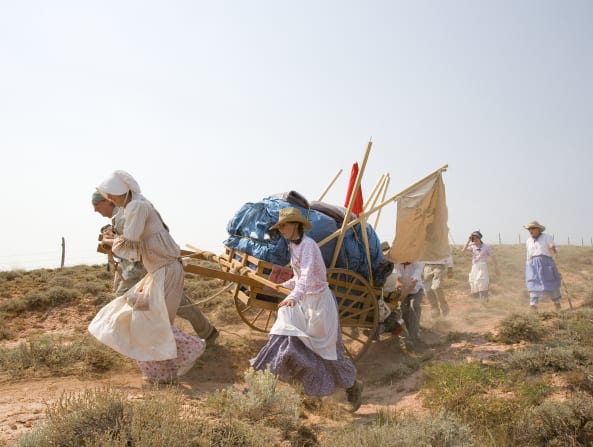
I very much appreciated this article by Meagan Kohler in the Deseret News and I commend it to you: “Answering my critics about issues facing women of faith: Certain questions and criticisms about my writing have come up more frequently than others. Here are some responses.” I always try to read what Meagan Kohler writes.
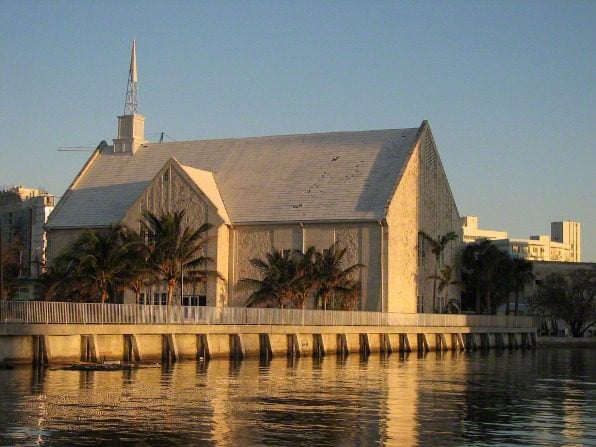
Finally, from the Christopher Hitchens Memorial “How Religion Poisons Everything” File™, here’s yet another illustration of how theism and theists continue to blight innocent people around the world: “How EnglishConnect Is Opening Doors and Changing Lives: The Church provides the global program in more than 50 languages.” I know that at least a few of the readers of this blog out there are members of the Church of Jesus Christ of Latter-day Saints, and I suppose that, if they decide to join in such an evil cause as EnglishConnect, there is nothing — at least as the laws are constituted right now — that we can do to stop them.
Posted from Depoe Bay, Oregon













 Ad-Free & Subscriber Log-In