

Can Interfaith Children Be Raised in Two Faiths?

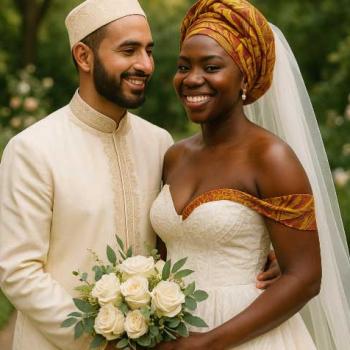
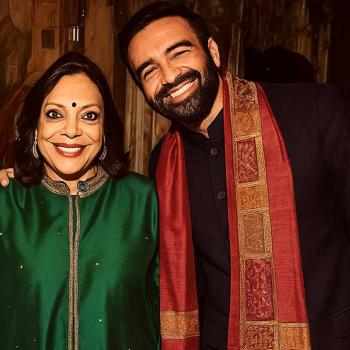
Can an interfaith child be raised in two faiths? An exclusivist might say this would “confuse” the child and insist the child must belong to one, and that is mine. A true pluralist would ask instead: Why not raise children in two faiths?
Why This Question Matters Now
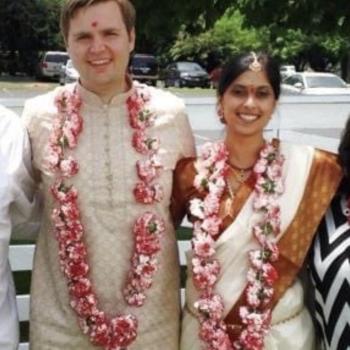
Vice President JD Vance recently announced that his three children will be raised Christian and expressed hope that his Hindu wife, Usha Chilukuri, will convert. While he appears to “respect” her faith, he prefers his family “belong” to a single tradition—his. In contrast, a pluralist like Usha might be entirely comfortable raising children with a sense of belonging to both Hinduism and Catholicism.
An interfaith leader recently defined pluralism as giving children exposure to both traditions but ultimately raising them in one: respect both, follow one.
But must pluralism mean “tolerating” the other partner’s tradition until it quietly assimilates into the dominant one? Why can’t a truly pluralist household celebrate both faiths equally and give children a genuine sense of belonging to both?
The Exclusivist Mindset
Abrahamic traditions have deeply rooted theological boundaries.
- Jews do not accept Jesus as Messiah.
- Christians believe Jesus is the only way to salvation.
- Muslims reject the possibility of Allah taking human form.
These are not subtle differences; they are mutually exclusive theological claims. A ten-year-old interfaith child would understandably find these contradictions confusing. Thus, many Abrahamic parents conclude that an interfaith child must “belong” to only one faith and merely “respect” the other.
Among Dharmic faiths—Hinduism, Jainism, Buddhism, Sikhism—this problem is rare. Many interfaith children grow up calling themselves Hindu-Jain or Sikh-Hindu without conflict. For most Dharmic families, revering Krishna, Buddha, Mahavira, and Guru Nanak together is not contradictory; it is an expression of the underlying unity of truth.
The Question of God’s Name
Allah literally means “God” in Arabic. Linguistically, Allah, God the Father, and Ishvara can all refer to the same Supreme Being.
Yet exclusivist attitudes can override this commonality. In Malaysia, non-Muslims are legally barred from using the word “Allah.” Pastor Franklin Graham once wrote, “Muslims do not worship the same God the Father I worship,” and added that salvation cannot come through Hinduism or Buddhism.
These statements reveal that the issue is not vocabulary—but theology, and the insistence that salvation comes only through one authorized path.
Bible–Quran Conflicts
Most Christians believe that Jesus is the Son of God and that faith in Jesus is the only way to achieve salvation and to enter heaven. Jesus said: “I am the way, the truth, and the life. No one comes to the Father except through Me.” (John 14:6) However, quite contrary to that belief, Quran teaches to have faith only in Allah. According to the Quran, Jesus, the son of Mary, was no more than God’s apostle. Allah forbids that He Himself should beget a son! Further, those who say, “the Lord of Mercy has begotten a son” preach a monstrous falsehood.
Christian–Muslim Marriages: No Middle Ground
Consider a devout Christian–Muslim couple and their children:
- To marry by Islamic Nikah in a mosque, the Muslim may wish the Christian (and their children) recites the shahadah, declaring Muhammad to be God’s messenger and rejecting Jesus’ divinity.
- To marry in a church, the Christian may wish the Muslim (and their children) accept baptism and accept Christ as the savior.
There is no theological middle ground that both institutions consider valid, especially while raising their children.
A Hindu, however, can comfortably accept Allah and God the Father as manifestations of Ishvara, the One Reality. But a Christian–Muslim couple, if both devout, cannot easily share a unified religious worldview in their home.
Conflicting Rituals and Identity
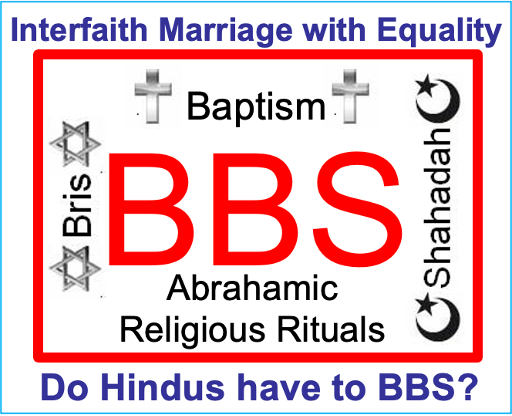
The most defining Abrahamic rituals—Baptism, Bris/Bar Mitzvah, and Shahadah/Sunat—mark which “camp” one belongs to. A child can be baptized, or undergo bris/bar mitzvah, or take shahadah/sunat—but not all three. The exclusivist worldview requires a black-and-white choice. Where do a Hindu fits in an interfaith marriage with an Abrahamic?
Will Two Faiths Confuse the Child?
Abrahamic parents often worry that dual exposure will confuse children. How can a child engage in Hindu murti puja on Saturday and then hear on Sunday that worship of multiple forms is wrong? How can they be taught that Allah, God the Father, and Ishvara are the same God if their religious communities say otherwise?
This tension is faced mainly by the exclusivist partner, not the pluralist one.
Could a Christian (or Muslim)–Hindu family pray to both Jesus (or Allah) and Ma Durga side by side—what the author calls a “double Divine dose”? Could an interfaith child be raised in both traditions?
Only when the world embraces the idea that Allah, God the Father, and Ishvara are equally valid names for the One Divine can true interfaith harmony emerge.
A Dharmic Perspective
Raised as a Hindu, the author was taught “Ishvara Allah tero nam”—Ishvara and Allah are names of the same God. Salvation depends on karma, not religious labels. Hindu Dharma upholds one Supreme Reality while allowing many forms of worship. Therefore, Hindus usually have no difficulty honoring Jesus, Buddha, or Allah and considering them divine.
A journalist Lisa Miller notes: For Hindus, Jesus is one way to God, the Quran another, yoga a third; all paths are valid. This inclusive attitude contrasts sharply with traditions that teach “ours is the only true path.”
Religion scholar Stephen Prothero once described some pluralist American spiritual life as a “divine deli cafeteria,” where people choose what works for them—a mindset very much aligned with Hindu pluralism.
Can Children Be Raised in Two Religions?
It is challenging only if one partner has an exclusivist mindset.
Children exposed to two contradictory exclusivist theologies may struggle. But children raised within pluralist worldview often flourish—they see differences not as contradictions, but as multiple expressions of truth.
Let Children Choose at 21
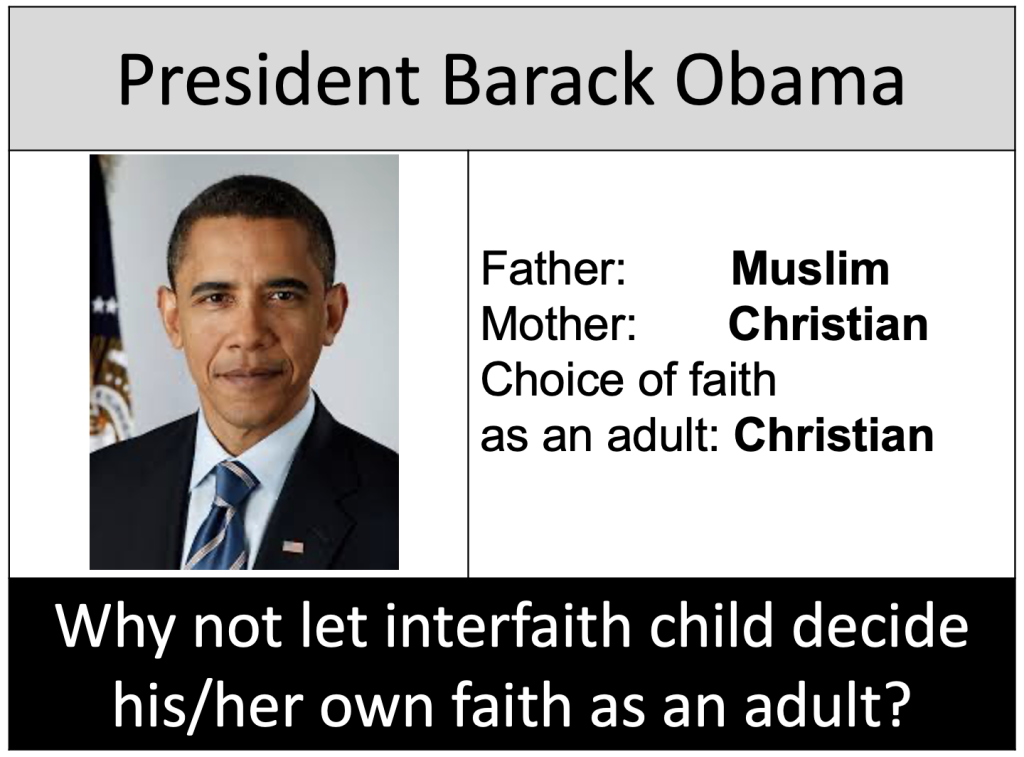
President Barack Obama had a Muslim father and a Christian mother. His childhood included exposure to both traditions, and he grew into a balanced, thoughtful adult. In college, he freely chose baptism. What is wrong with granting such freedom to interfaith children?
Conclusion
If both parents are genuinely pluralist, the question “Which one should the children be?” never arises. Raising children in two faiths becomes natural, spontaneous, and harmonious.
The real challenge arises only when one partner holds an exclusivist belief that salvation is possible through one path alone–that is mine!
Where pluralism thrives, dual belonging becomes not only possible—but enriching for the entire family.
Please share your views
Please express your views by going all the way at the bottom of this page. Look for…

More reading:
Muslim-Hindu Relationships
Hindu-phobia and Muslim-phobia in Intermarriage
Book review: Hindu-Muslim Marriages (video)
Christian-Hindu Marriages
Navigating Hindu‑Catholic Interfaith Marriage Challenges
Will Usha Chilukuri Convert to the Faith of JD Vance?
Jewish-Hindu Marriages
Legal Implications in Interfaith Marriages
Myth: I converted by my own choice





 Ad-Free & Subscriber Log-In