


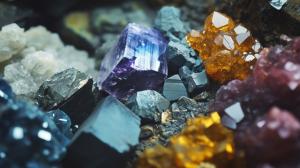
The United States is dependent upon China across multiple supply chains. President Trump announced this week that the U.S. is launching a $12 billion strategic stockpile of critical minerals, designed to protect American industry from supply disruptions and reduce dependence on China. This initiative is called Project Vault. Let’s take a look.
What is Project Vault?
A public-private partnership funds the initiative. Initial funding comprises a $10 billion loan from the U.S. Export-Import Bank and up to $2 billion in private capital. The scope of the project includes all minerals designated “critical” by the U.S. Geological Survey — more than 50 materials such as rare earths, lithium, cobalt, uranium, and copper. The purpose is to build a reserve of minerals for:
- Defense systems
- Electronics and semiconductors
- Electric vehicles and batteries
- Aerospace and energy technologies
Here is how the stockpile will operate:
- Companies commit to buying minerals later at a fixed price and pay upfront fees.
- Project Vault purchases and stores the minerals in U.S. warehouse facilities.
- Manufacturers may withdraw minerals as needed, provided they replace them at the same price later.
- In a major supply disruption, companies can access their full stockpile.
We classify the stockpile as a strategic reserve, analogous to the U.S. Strategic Petroleum Reserve.
What Other Dependencies Exist on China?
The dependencies on China extend far past minerals and include:
- Pharmaceuticals and drug ingredients.
- Semiconductors.
- Lithium-ion batteries and components.
- High-tech manufacturing and electronics.
- Industrial inputs and machinery.
The pharmaceutical dependency was identified during the COVID-19 pandemic. Chinese state media openly noted that China had created a strategic chokepoint in pharmaceuticals during the early COVID‑19 shortages. This showed in real time how easily supply chains can be weaponized. During the COVID‑19 pandemic, India temporarily blocked exports of critical pharmaceutical ingredients, further underscoring the limited redundancy in the U.S. supply chain. Critical minerals and pharmaceuticals are considered national security risks. The remaining areas on which we are overly dependent on China may pose risks today, but without diversifying the supply chain, they will certainly pose risks in the future.
There is a discussion in Congress about a similar stockpile of critical pharmaceuticals. Pharmaceuticals and drugs pose a different set of challenges:
- Cost and shelf life: drugs expire, minerals don’t.
- Fragmented pharmaceutical supply chains: starting materials and finished drugs are often made in different countries.
- Federal strategy: Minerals are covered by a national‑security framework. The U.S. regulates pharmaceuticals as healthcare, not strategic infrastructure. This is beginning to change.
The Catholic View
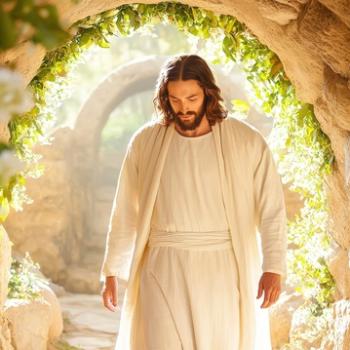
Jesus consistently exposed realities people preferred to ignore — unjust systems, misplaced trust, and fragile foundations. A nation that depends heavily on any single foreign power for essentials like medicine, minerals, or technology is building on sand, not rock. Jesus often warned against false security and fragile structures. There is a moral question about how we could become so dependent on China, putting our citizens at risk.
God calls us to be stewards of our environment and to build systems that sustain life. Scripture teaches that Joseph interprets Pharaoh’s dream and prepares Egypt for the coming famine by storing grain (Genesis 41:33-36). A strategic stockpile — if done ethically — aligns with the biblical pattern of prudent preparation, not fear-driven hoarding.
Dependency is not just an economic issue; it is a spiritual issue as well. As we build this stockpile, we cannot replace existing injustices with new ones, exploit other nations, and we must always look out for the poor, the sick, the elderly, and the vulnerable who depend upon these systems. Jesus always focused the conversation on the people, not power.
Please share your thoughts about this article in the “Comments” section.
Peace
If you like this article, you might enjoy:
Holiness Through Mercy, Humility, And Public Witness
America’s Public Discourse: How Did We Get to This Point?
SAVE Act: Controversy Surrounding Citizenship Proof









 Ad-Free & Subscriber Log-In