

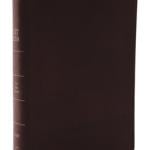
Craig Keener, who wrote the Foreword to my new book that tells the entire story of the New Testament church in chronological order, is the editor of a new commentary series on the New Testament called “Word and Spirit.” This post is a review of the Romans commentary in the series.

Sam Storms delivers a refreshing and accessible commentary on Romans that successfully bridges rigorous biblical scholarship with practical, Spirit-centered application.
As part of the Word and Spirit Commentary on the New Testament series, this volume fulfills its promise to serve “laypeople and students who desire to study God’s Word from a Spirit-centered approach” while maintaining scholarly integrity.
Storms’ approach is distinctly verse-by-verse, making the commentary easy to follow for both personal study and sermon preparation. What sets this work apart from traditional evangelical commentaries is its consistent emphasis on “how we listen alongside ancient audiences for the Spirit’s voice in our time and contexts”.
Throughout the commentary are gray excursus called “Pentecostal Interest.” For instance, Storms has one called “Responding to the Danger of Charismatic Gnosticism” which I thought was valuable.
Rather than simply explaining what Paul meant to first-century readers, Storms skillfully connects Paul’s theology to contemporary Christian experience, particularly for those in the charismatic and renewalist traditions.
The commentary excels in its pastoral sensitivity. Storms writes as both theologian and pastor, offering insights that feel grounded in real ministry experience. His treatment of complex theological concepts like justification, sanctification, and the role of the Spirit is both academically sound and practically applicable. The writing style is clear and engaging, avoiding unnecessarily technical jargon while not sacrificing depth.
One of the commentary’s greatest strengths is its balance. While clearly written from a Spirit-filled perspective, Storms doesn’t force pneumatological interpretations where they don’t naturally fit. He demonstrates careful exegesis before drawing applications, maintaining credibility with readers across denominational lines.
For pastors, Bible study leaders, and serious students seeking a Romans commentary that combines sound scholarship with charismatic sensibility, Storms’ work fills a genuine gap in the market. It successfully demonstrates that Spirit-centered interpretation need not compromise biblical fidelity, making it a valuable addition to any theological library focused on practical exposition.
This commentary is a helpful supplement to my new book The Untold Story of the New Testament Church: Revised and Expanded, which uniquely unlocks all 21 epistles in the New Testament within the overarching narrative of the story told from the Gospels to Revelation.











 Ad-Free & Subscriber Log-In