

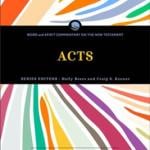
Ben Witherington III’s contribution to the Word and Spirit Commentary series on 2 Corinthians is a new contribution in Spirit-filled biblical scholarship.

This commentary bridges academic research with pastoral sensitivity, making Paul’s complex second letter to the Corinthians accessible to both scholars and Spirit-filled practitioners.
Mastery of socio-rhetorical analysis shines throughout, as the author contextualizes Paul’s arguments within first-century Greco-Roman culture while maintaining focus on the text’s transformative power for contemporary believers. His approach acknowledges what he terms the “enchanted worldview” of Scripture, recognizing supernatural elements that more secular commentaries often minimize or explain away.
The commentary excels in its practical application, consistently asking how ancient audiences would have heard Paul’s words and how the Spirit speaks through these same passages today. The commentary demonstrates skill in balancing rhetorical reading with contextual insights, helping readers understand both Paul’s sophisticated argumentation and its spiritual implications for modern Christians.
Particularly valuable is the author’s treatment of Paul’s theology of weakness and divine power, core themes in 2 Corinthians. Paul’s personal struggles and ministry challenges become vehicles for demonstrating God’s sufficiency in human frailty—a message especially relevant for Spirit-filled believers navigating contemporary ministry challenges.
I also like how the commentary blends historical stories from the Church Fathers as well as contemporaries like Derek Prince.
While some readers might find the commentary’s pace occasionally rushed, with assertions sometimes replacing detailed argumentation, the overall work represents a significant contribution to Pentecostal and charismatic biblical scholarship. While my view on Paul’s thorn in the flesh differs drastically, there are many good insights provided in this commentary.










 Ad-Free & Subscriber Log-In